
By Adams Yusuf.
In politics, timing reveals motive. When dormant political careers resurface as elections approach, when individuals with troubling records present themselves as reformers, when unexpected candidates emerge with powerful financial backing—experienced observers recognize calculated maneuvering, not healthy competition. Kogi West Senatorial District faces such a moment as the 2027 electoral cycle intensifies.
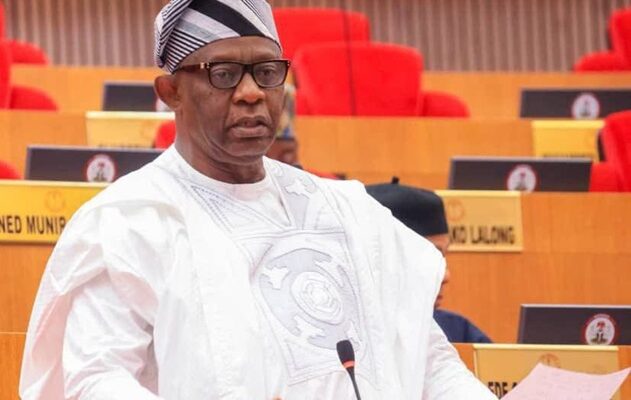
At the center stands Distinguished Senator Sunday Karimi—a leader whose record has increasingly defined political conversation in the district. In an era when many politicians rely on promises and publicity, Karimi has built his reputation through measurable actions and visible impact.

One of the most widely discussed initiatives is the ₦300 million student bursary program supporting 3,000 students across Kogi State. For families struggling to keep children in school, this has been more than a political gesture—it represents investment in opportunity and social mobility. Programs like this don’t just generate headlines; they change lives and strengthen the future of entire communities. The transparent verification process, equitable distribution across local governments, and commitment to addressing technical challenges reveal a leader who understands that credibility is built through fairness, trust is earned through transparency, and legacy is measured by lives transformed.
Beyond educational support, Senator Karimi’s legislative approach emphasizes substance over spectacle. In the often theatrical environment of national politics, he has focused on committee work, policy engagement, and advocacy on issues affecting security, infrastructure, and economic development. His interventions on sensitive national debates—including the complex issue of ranching versus open grazing—reflect willingness to approach difficult subjects with pragmatism rather than populism. This is what legislative excellence looks like when stripped of grandstanding.
Equally significant is his record of grassroots development across Kogi West. Roads linking rural communities to economic centers, improvements to healthcare facilities, and infrastructure initiatives have expanded access to essential services for communities that historically felt neglected. These are not projects announced only during campaign seasons but part of a consistent effort to translate representation into tangible benefits for constituents.
Politically, Senator Karimi has maintained clear and consistent alignment with President Bola Ahmed Tinubu’s leadership and the broader agenda of the All Progressives Congress. Kogi West demonstrated strong support for the APC during the 2023 elections, reinforcing the district’s status as one of the party’s dependable political foundations in Kogi State. Leaders who helped build that trust play crucial roles in sustaining the party’s credibility in the region. In an era when political allegiances shift with winds of convenience, this consistency provides stability.
Yet as political conversation shifts toward the next electoral cycle, new dynamics are surfacing. Reports and speculation about alternative aspirants have generated debate within political circles. While democratic competition is both healthy and necessary, voters and party members must evaluate candidates through the lens of credibility, consistency, and public trust.
In any democracy, political memory matters. Citizens pay attention not only to campaign rhetoric but to past records, professional histories, and motivations driving political ambition. Candidates who suddenly emerge after long absences from public engagement inevitably invite scrutiny from voters expecting accountability from those seeking leadership. In contrast, candidates whose recent political histories include associations with opposition elements and whose professional backgrounds invite legal and ethical questions must expect heightened scrutiny from voters who understand what credibility requires.
Consider the questions reasonable voters should ask: Should individuals whose companies were indicted in corruption scandals—requiring plea bargain arrangements with the Federal Government—now be entrusted with making laws for that same government? Should sudden political defectors whose loyalties shift with electoral cycles be preferred over tested representatives with proven track records? Should financial inducements or elite arrangements override the democratic will of grassroots party members? These questions answer themselves for anyone paying attention.
Kogi West is a politically conscious district with a long tradition of informed participation in democratic processes. Its electorate has consistently demonstrated ability to distinguish between genuine service and opportunistic politics. That political maturity will be especially important as discussions about the district’s future leadership continue. The people understand the difference between leaders who emerge from genuine community support and those whose ambitions are propelled by elite arrangements or temporary alliances.
The broader strategic implications deserve serious consideration. Kogi West occupies crucial space within the political landscape of Kogi State and within the national coalition supporting the APC. Six of the district’s seven local governments are predominantly Okun-Yoruba, with deep cultural and political ties to President Tinubu and the broader Yoruba political base. Stability in this district contributes to stability in the party’s wider political structure. Conversely, internal divisions or unnecessary disruptions could weaken a strong political base that has taken years to build and threaten the President’s re-election prospects in a state where margins could determine outcomes.
For this reason, choices made by party members and voters in coming months will carry significance far beyond a single senatorial seat. They will shape the political direction of the district, influence party cohesion within the state, signal the kind of leadership Kogi West intends to promote, and determine whether President Tinubu’s stronghold remains secure or becomes vulnerable to infiltration.
Ultimately, democracy works best when performance and credibility guide political decisions. Leaders who demonstrate commitment to constituents, consistency in political values, and measurable impact in communities tend to earn lasting public trust. Those who rely primarily on sudden political momentum or elite endorsements often struggle to sustain that trust over time.
Senator Karimi’s record offers voters a clear reference point. His tenure reflects engagement with national legislative responsibilities, investment in educational opportunities, visible grassroots development, and continued loyalty to the political platform that brought him to office. These are not small accomplishments in a political environment where public confidence in leadership is frequently tested.
As the road toward 2027 gradually unfolds, the people of Kogi West will once again exercise their democratic authority. Their decision will determine whether the district continues on a path defined by continuity, experience, and proven leadership—or shifts toward uncertainty driven by political experiments with questionable credentials.
For many observers, the question is less about personalities and more about principles. Should leadership be entrusted to those whose records already demonstrate service and commitment, or to those whose ambitions have only recently re-emerged in the political arena—often accompanied by troubling questions about past conduct and current motivations?
The answer will ultimately come from the voters themselves. But one reality remains clear: Kogi West has already witnessed the value of leadership grounded in performance. Preserving that standard, protecting President Tinubu’s political base, and rejecting political manipulation disguised as competition may prove to be among the district’s most important political decisions in the years ahead. The stakes are high. The choice is clear. The time to stand with proven leadership is now.
– Adams A. Yusuf is a political analyst and observer of Kogi State politics.