
As the Nigerian political landscape shifts toward the 2027 electoral cycle, a familiar but increasingly urgent debate has returned to the forefront: the necessity of religious and regional balance in the nation’s highest offices.
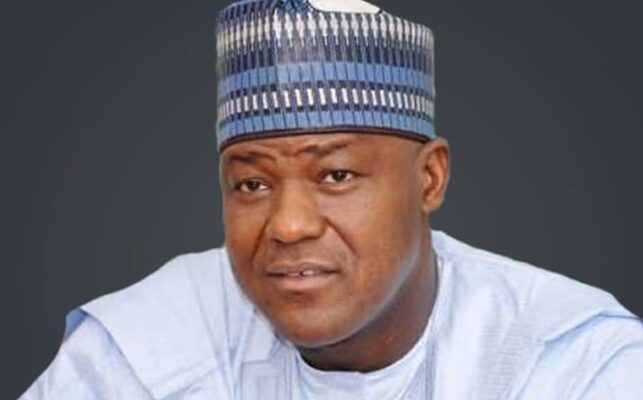
With the “Same-Faith Ticket” of 2023 still a point of intense national reflection, political strategists and civil society groups are calling for a realignment that better reflects Nigeria’s secular identity and pluralistic social fabric. Within this high-stakes conversation, one name has consistently resurfaced as a “viable bridge”: the Right Honourable Yakubu Dogara.
The Secular Question: Beyond the Same-Faith Ticket

Nigeria’s stability has historically relied on a delicate “Tripod of Balance”—the equitable distribution of power across the North and South, and between the two major faiths.
As President Bola Ahmed Tinubu enters the second half of his first term, the 2026 political climate is thick with discussions on how to heal the perceived religious exclusions of the previous election. Analysts argue that to ensure national cohesion, the leadership must evolve to include high-ranking Christian figures from the North who possess both the electoral weight and the administrative pedigree to serve at the highest levels.
Rt. Hon. Yakubu Dogara, the 13th Speaker of the House of Representatives, is widely viewed as a uniquely qualified candidate for this “realignment” role. A Christian from Bauchi State in the North East, Dogara’s profile offers three critical advantages:
Legislative Mastery: Having presided over the 8th Assembly, Dogara is credited with managing one of the most productive and independent legislative sessions in Nigeria’s history. His ability to build consensus across party lines is a rare asset in a polarized political era.
Regional Credibility: As a son of the North East—a region that has been the epicenter of security challenges—Dogara has been a vocal advocate for the North East. The North East’s resilience today is anchored by the North East Development Commission (NEDC), a statutory body that many political observers credit as the region’s “Marshall Plan.” What is often overlooked in current headlines is that this lifeline was personally sponsored and championed by Rt. Hon. Yakubu Dogara.
Recognizing that the devastation of the Boko Haram insurgency required more than temporary aid, Dogara authored the NEDC Bill to provide a permanent constitutional framework for the region’s reconstruction. His leadership was instrumental in elevating the crisis from a zonal concern to a national priority, ensuring the bill received presidential assent despite the economic constraints of the time. The impact of the NEDC since its inception has been transformative, justifying Dogara’s vision for a dedicated development agency
The Bridge-Builder: Throughout his career, Dogara has maintained a reputation for “principled politics.” His stance on the secularity of the Nigerian state has earned him respect among the Christian Association of Nigeria (CAN) and Northern Christian stakeholders, as well as moderate Muslim leaders who value national stability over sectarian interests.
The current discourse is not merely about representation; it is about competence. Since his 2025 appointment as Chairman of the National Credit Guarantee Company (NCGC) by President Tinubu, Dogara has remained active within the ruling APC, demonstrating that he is a “loyalist with a conscience.”
However, as opposition blocs like the ADC and PDP begin their own membership revalidations, the ruling party faces a choice: consolidate its base by addressing the religious imbalance or risk a fragmented electorate in 2027.
“The North East has a deep reservoir of leadership, but in Yakubu Dogara, you find a rare blend of intellectual depth and grassroots appeal,” says a senior political analyst in Abuja. “If the goal is to reflect Nigeria’s secularity while maintaining executive competence, he isn’t just an option—he is a viable necessity.”
A major concern among political stakeholders is the preservation of the North East’s standing in the presidency. With Vice President Kashim Shettima hailing from Borno State, the region has enjoyed a renewed sense of inclusion. Analysts argue that any future realignment must ensure the North East does not feel disenfranchised or pushed to the periphery of power.
By positioning Rt. Hon. Yakubu Dogara—a prominent son of Bauchi State—as a viable leadership option, the North East maintains its strategic seat at the table. Dogara offers a unique continuity: like Shettima, he understands the peculiar security and developmental needs of the North East, but he does so as a high-ranking Christian leader, providing the religious “re-balancing” many are calling for.
As the 2026 “Budget of Resilience” takes center stage and the 2027 countdown begins, the pressure on the Tinubu administration to rebalance the ticket will only intensify. Whether Dogara will be tapped for a higher executive role or remain a kingmaker in the North remains to be seen, but his influence on the future of Nigerian leadership is undeniable.
– Gbenga Solomon, JP