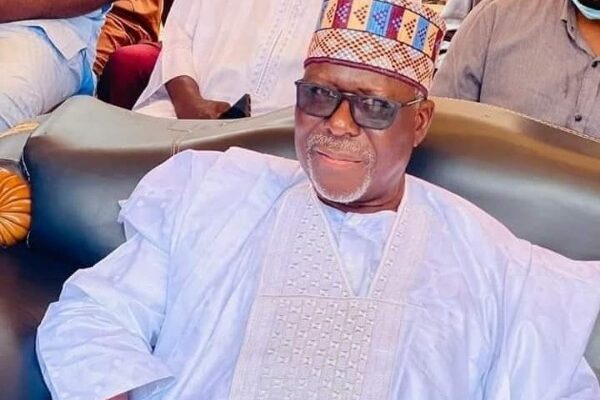

The question hangs in the political atmosphere like a heavy incense refusing to dissipate: Is Captain Ichalla Wada truly a herald of a new Igala dawn, or merely the latest sacrificial pawn crafted by political kingmakers desperate to sedate a wounded electorate ahead of 2027? The choreography looks too familiar, the timing too convenient, and the silence of the power-brokers too calculated to ignore
The political establishment in Kogi State has mastered the ancient art of substitution politics; offering symbolic figures at moments of crisis to pacify the majority while preserving the architecture of power. Captain Wada’s sudden defection into the APC bears the fingerprints of this recurring template. In a season when the Igala nation is politically bruised and demanding restitution, the elite appear to be constructing a messianic figure whose purpose is less about liberation and more about strategic anesthetization. This is not reinvention; it is repackaging. And Kogi has witnessed enough cycles of this sleight-of-hand to recognize the pattern.
Across Igala land, the question is whispered in compounds, in beer parlours, in WhatsApp groups, and in the weary hearts of a people who have seen their collective destiny repeatedly bartered for political gain: Would any Igala man genuinely vote for him, or would such support be a coerced gesture engineered by the same power structure that denied them fairness? The cynicism is understandable. A people repeatedly shut out of equitable power-sharing do not fall easily for political theatre, no matter how polished the actor.

In Igala philosophy there is a proverb that cuts through pretense: “Omá ki alu nwu kado akpoko neke kakini akpoko arinyo” — a child who has tasted pepper cannot mistake it for sweetness. The Igala political memory has tasted too much pepper these past years to accept any candidate without interrogating the forces behind him. Captain Wada may very well be competent, shadow charismatic, and rooted in his new God father’s aspirations but such connection alone does neither equate competence nor absolve a system that constantly uses Igala figures as bargaining chips while denying them decision-making power.
Political kingmakers understand something profound about human psychology: when a majority feels ignored, offer them a familiar face. When a people feel humiliated, give them an emblem. When a tribe demands equity, hand them a symbolic token preferably one that inspires emotional nostalgia but poses no threat to entrenched structures. It is an old strategy dressed in new garments. As Mr Baba warned: “When men craft idols for convenience, they always demand sacrifice in return.” In Kogi 2027, the sacrifice appears to be Igala’s unquestioning compliance.
The elite know that 2027 will be a volatile election year. They know the Igala youth are angrier, more politically literate, and less tolerant of manipulation. They know the digital age may have shortened the lifespan of propaganda. And so, the plan B solution is clear: project Captain Ichalla Wada as the near fail bridge-builder, the reconciler, the redemption figure while quietly preserving the same networks responsible for the state’s perennial imbalance. It is a careful orchestration that relies on sentiment over substance, and image over ideology.
But the electorate is not naively impressionable anymore. Kogi’s political climate has shifted. The old choreography; select a candidate behind closed doors, impose him with media optics, and expect obedience is becoming obsolete. Even the architects of this strategy seem uncertain whether the usual spell will work on a population now accustomed to political betrayal. As the elder says “a people awakened cannot be ruled by illusions.” The Igala consciousness is awakening. And illusions now have a shorter shelf-life.
So, would the Igala voter willingly embrace Captain Wada at the ballot? The answer is complex. He may garner sympathy, respect, and even admiration. But genuine electoral loyalty requires more than symbolism; it demands trust. And trust has been repeatedly eroded by years of political marginalization. The danger for Captain Wada is not his own personality, but the perception that he is being used; drafted into a script not written by his people, but by political masters seeking legitimacy without sacrifice.
The sun is rising on Kogi politics, but as always, it exposes more than it warms. It reveals the shadows where strategies are crafted, alliances negotiated, and candidates manufactured. Captain Ichalla Wada may become a pivotal figure, but whether he becomes a genuine path to Igala resurgence or merely the elite’s scapegoat for 2027 will depend on one question: does he emerge from the people or merely appear before them?
In the end, every political season carries its own reckoning. And the Igala nation; tired of substitutions, weary of symbolic offerings, and eager for authentic power may soon decide that they will no longer be soothed with crafted saviours. A borrowed halo cannot illuminate a dark room. And a manufactured messiah cannot resurrect a wounded nation.
Whether Captain Wada becomes a liberator or a scapegoat depends not on the kingmakers who produce him, but on the people who will judge the sincerity of his ascent.
– Inah Boniface Ocholi writes from Ayah – Igalamela/Odolu LGA, Kogi state.
08152094428 (SMS Only)