
By Tairu Momoh
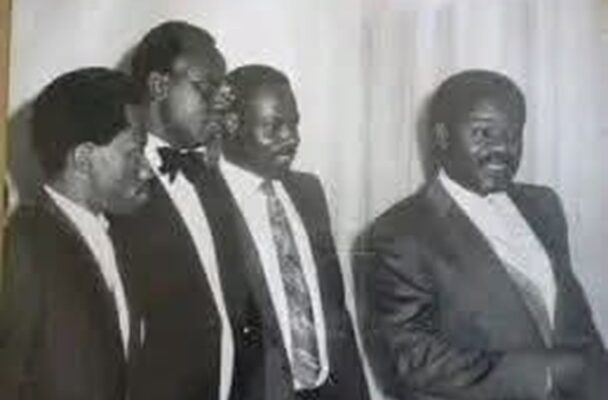
With the passing of Dan Agbese and Yakubu Mohammed in close succession, an era in Nigerian journalism has all but folded its last page. What remains now is memory, legacy, and the quiet weight of history pressing upon the present. Together with Dele Giwa (assassinated by a letter bomb in 1986) and Ray Ekpu, still standing as the lone surviving pillar, they formed the legendary quartet that founded Newswatch magazine. Their story is not merely one of a publication; it is the story of courage, intellect, and professional comradeship that redefined journalism in Nigeria.
Newswatch was born in 1985 at a time when truth was dangerous, power intolerant, and dissent criminalised. Military authoritarianism cast a long shadow over the press, and journalism was often an act of personal risk rather than professional routine. Yet, against this backdrop, Giwa, Ekpu, Agbese, and Mohammed forged a newsroom culture anchored on rigorous investigation, intellectual depth, ethical restraint, and fearless independence. They did not merely report events; they interrogated power.

What distinguished the quartet was not just individual brilliance—though each was formidable—but the rare chemistry of minds bound by mutual respect and shared conviction. Dele Giwa brought cosmopolitan flair, narrative elegance, and an unshakeable belief that journalism must speak truth even when truth bleeds. Ray Ekpu embodied steely courage and editorial discipline, a sentinel who understood that the press must never surrender its moral authority. Dan Agbese contributed reflective depth and philosophical clarity, writing with the calm assurance of a thinker who saw journalism as a public trust. Yakubu Mohammed, meticulous and understated, exemplified professional rigour and institutional loyalty, ensuring that principles were translated into practice.
Their bond was intellectual and emotional. They disagreed fiercely, debated endlessly, but closed ranks when the ideals of the profession were threatened. In an industry often fractured by ego, patronage, and compromise, they demonstrated that solidarity could coexist with independence, and that friendship need not dilute professional integrity. Newswatch became, in many ways, a university of journalism; producing generations of reporters and editors who learned that credibility is earned slowly and lost instantly.
The assassination of Dele Giwa marked a violent rupture, a chilling message to the press that no one was untouchable. Yet, the magazine endured. That endurance itself was an act of resistance, sustained by Ekpu, Agbese, and Mohammed, who refused to let terror silence inquiry. Their resilience under pressure elevated journalism from a vocation to a moral calling.
Now, as death gradually gathers the founders to history, Ray Ekpu stands as the last living witness to that golden moment. His continued presence is symbolic; a bridge between an era defined by courage and a present fraught with contradictions. The question that presses uncomfortably upon us is unavoidable: what becomes of journalism when its watchmen are gone?
Today’s media landscape is noisier, faster, and infinitely more crowded, yet paradoxically thinner in substance. Commercial pressures, political capture, digital virality, and declining editorial standards threaten the core values that Newswatch represented. Opinion often masquerades as fact; access journalism replaces investigative grit; and social media rewards outrage over accuracy. The danger is not the absence of platforms, but the erosion of purpose.
The passing of Agbese and Mohammed is therefore not merely personal loss; it is a professional reckoning. Their generation proved that journalism could be principled without being preachy, critical without being reckless, and courageous without being careless. They understood that the press does not exist to entertain power, but to hold it accountable; not to amplify rumours, but to verify truth.
The fate of journalism in Nigeria will depend on whether the present generation can reclaim these values in a radically changed environment. The tools have evolved, but the ethics must remain constant. What is required is not nostalgia, but renewal—anchored in the intellectual seriousness, professional discipline, and moral clarity that defined the Newswatch quartet.
As the chapter closes on these giants, the responsibility shifts. Journalism must once again become an act of conscience. If it fails, then the era they built will not merely have ended; it will have been betrayed. But if their legacy inspires a new generation to resist compromise and speak truth with courage, then the watchmen may have fallen silent, but their watch will not have been in vain.
– Momoh, a communicator and teacher, writes from Lokoja, Kogi State