
By Abdullahi Suleiman
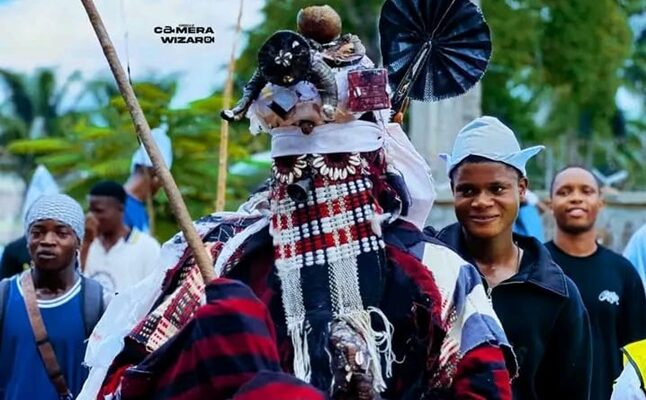
The Ebira people of Kogi State possess a rich and deeply rooted cultural heritage expressed through music, storytelling, and communal celebrations. Among the most significant elements of this cultural expression are masquerade displays and Ekede music. While both are important parts of Ebira cultural life and are sometimes seen together during festivals and gatherings, they represent distinct traditions with different rhythms, purposes, and styles of expression. Their coexistence, however, forms a powerful cultural nexus that reflects the philosophy, history, and social consciousness of the Ebira people.
Masquerade displays in Ebira land are primarily ceremonial and symbolic. The masquerades appear during festivals and important cultural occasions, often representing ancestral presence and communal identity. The rhythm accompanying masquerade performances is generally mild and controlled. Songs performed during these displays usually address moral issues, social conduct, or communal values, and the dance movements are measured and symbolic rather than overly dramatic. The focus of masquerade performance is not only entertainment but also cultural continuity and social order.

Ekede music, on the other hand, represents a different dimension of Ebira cultural expression. Ekede is louder, more expressive, and deeply narrative. It is a musical genre built on storytelling, folklore, historical narration, and commentary on both past and present events. Ekede singers often weave fairy tales, social experiences, political commentary, and philosophical reflections into their songs. Because of this narrative depth, Ekede music serves as an oral archive of Ebira history and societal reflection.
Unlike masquerade music, Ekede rhythms are energetic and expressive. The music invites active listening and reflection. It becomes a cultural meeting point where both the rich and the poor, the old and the young gather to listen, reflect, and interpret the deeper meanings embedded in the songs. Through Ekede music, the Ebira people tell their stories, preserve their history, and reflect on the impact of events in their society.
One of the most respected figures in the Ekede tradition was Alhaji Sule Adeku, popularly known as Onikiri Mashal. He was widely admired for his mild musical genre and thoughtful compositions that often told tales of earlier generations. His songs were usually short but deeply philosophical. A central theme in his work was praise to God and reflection on the wonders of creation.

In one of his songs from the 1980s, he reflected on the vastness of the earth and the endless beauty of creation. He noted that when one observes the valleys, trees, and natural formations around the world, it becomes clear that there is no one like the Creator. His 1995 hit song began with a profound praise of God, acknowledging divine protection throughout his life. In the song, he expressed gratitude to God for protecting him even when he did not yet fully understand himself, and he prayed for the ability to nurture his children well and guide them in life. His message reflected humility, gratitude, and deep faith.
Before his passing in 2008, one of his final songs returned again to the theme of human mortality. In it, he reminded listeners that human beings come into the world with nothing and will eventually leave the same way. Life, he emphasized, is temporary, and therefore one must live with humility before God.
Another legendary Ekede singer was Late Salau Ofelele, widely regarded as one of the most talented performers of his generation. Soft-spoken yet intellectually profound, Ofelele’s music carried deep political awareness and historical insight. His songs were compelling and often left a powerful impact on listeners who understood the depth of the Ebira language.
Ofelele frequently addressed national and local issues in his songs. In one of his famous compositions, he creatively interpreted the name of Nigeria’s former Head of State Yakubu Gowon as “Go On with One Nigeria,” a symbolic appeal for unity and national cohesion. His songs consistently advocated peace and unity both within Nigeria and within Ebira land.
In 1996, following the death of the Ohinoyi of Ebira land, Sanni Omonori, Ofelele released a powerful song addressing the delicate matter of succession to the throne. In the song, he described the personalities and leadership styles of previous Ebira kings and emphasized the need for peaceful transition and respect for tradition. The performance reportedly earned him a standing ovation from audiences who admired the wisdom and historical depth of his message.
His last major song around the year 2000 reflected on the inevitability of death. He described death as a debt that every human being must eventually pay. He reminded listeners that life continues regardless of individual loss, noting that even the death of the Prophet Muhammad did not bring life to an end.
Another influential figure in Ebira musical culture is Alhaji Fela Kuti, who represents a unique evolution in the tradition of simultaneous singing and dancing. Known for his loud and expressive style, he performs with remarkable energy and pride. His performances often combine singing, dance, and modern stage display, blending traditional Ebira music with contemporary musical backgrounds and vibrant attire.
Through his music, he praises God and the Prophet Muhammad (SAW), while also addressing issues of history, politics, and social unity. His songs frequently emphasize the importance of harmony and unity within Ebira land, making him a bridge between traditional Ekede expression and modern musical performance.
Another notable figure was Late Alhaji Dio Ozi Niger, often described as a “walking encyclopedia.” He performed mostly on the sidelines of masquerade displays and became widely respected for his deep knowledge of Ebira history and politics. Through his songs, he helped to revolutionize political consciousness among listeners. His music consistently advocated peace and unity in Ebira land and served as an intellectual commentary on societal developments.
Similarly, Late Alfa Sule Momoh Jimoh was a respected singer who also performed around masquerade displays. He was widely known for his mastery of the Ebira language and his ability to communicate complex ideas through music. His songs often instilled political awareness among his followers and audiences.
A distinctive feature of his music was his use of Islamic references and expressions drawn from the Qur’an. One of his memorable songs compared divine protection to a lump in pounded yam—something so strong that even the impact of a pistol cannot break it. Through such powerful metaphors, he emphasized reliance on God’s protection and the strength that faith provides.
Among the great voices of Ebira music was also Late Onyieche, Idris widely regarded as one of the most talented female singers in Ebira cultural history. She possessed an exceptional ability to manipulate Ebira words on stage, demonstrating deep linguistic mastery and artistic creativity. Her songs often addressed women directly, encouraging them to uphold moral values and respect their husbands within the traditional structure of family life.
In one of her thought-provoking songs, she raised a challenging question about why children traditionally bear the names of their fathers rather than their mothers. Through this rhetorical reflection, she explored themes of gender roles and social expectations within Ebira society. Her music stimulated debate while also reflecting the cultural perspectives of her time.
These singers represent what can rightly be described as one of the greatest generations of Ebira musical voices—figures who have now gone to the great beyond but whose impact continues to resonate deeply within the culture. For many listeners, their music was not merely entertainment but a form of moral and intellectual education. Their songs shaped personal character, influenced moral thinking, and deepened the understanding of life from both religious and cultural perspectives.
Through their works, one begins to see the profound relationship between religion and tradition within Ebira society. Rather than standing in opposition, both are aligned toward a single purpose—the recognition of one Creator. In Ebira language, the Creator is often described through names such as Omorihi, Oricha, Ihineba, and Adayibeba. These names do not elevate human beings but rather remind society of the need to walk the path of honesty, humility, communal harmony, love, and peace.
The philosophical depth of Ebira music also reveals a strong metaphysical understanding of human existence. This is particularly evident in the works of Alhaji Sule Adeku, whose reflections on creation and the nature of life demonstrate a profound contemplation of the Creator and humanity’s place in the universe.
Indeed, Ebira songs can be regarded as a foundation of oral literature—a living archive through which history, philosophy, morality, and spirituality are transmitted across generations. They serve not only as artistic expression but also as intellectual traditions that shape collective consciousness.
For an Ebira man or woman, therefore, there is a responsibility to share this cultural heritage with the wider world—to tell the stories, celebrate the traditions, and proudly affirm the richness of Ebira identity. By doing so, the culture continues to live, evolve, and contribute to the broader tapestry of human civilization.
In the end, the nexus between masquerade displays and Ekede music reflects a deeper truth: that culture, faith, history, and philosophy are interconnected elements of the Ebira worldview. Through music, dance, and storytelling, the Ebira people continue to preserve their heritage while offering timeless lessons on humanity, unity, and reverence for the Creator.
– Abdullahi Suleiman O. is an essayist, poet, writer, political analyst,
abdullahiramat423@gmail.com