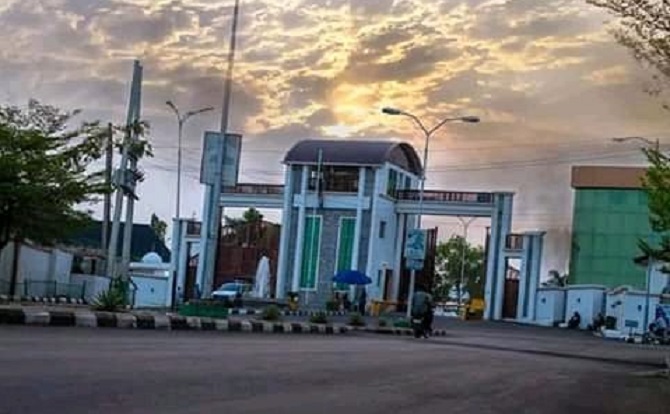

The warnings are no longer whispers in private corridors; they have grown into a discernible tremor beneath the political soil of Kogi State. A new political weather is forming, and the clouds are no longer obedient to the old barometers. Kogi stands in the sunshine of opportunities, yet its politics crawls in an eclipse of its own making. The contradiction is glaring: the land glows, but its leaders grope in the shadows. As the 2027 general elections inch closer, the ancient ritual of “selection, not election” that clandestine method by which a few power brokers choose rulers while the citizens merely ratify; appears poised for an irreversible collapse.
This fracture is not accidental. It is the culmination of years of elitist manipulations, ethnic fractures, manufactured enmities, and transactional alliances that have kept the state circling the same political mountain. Kogi is a sunlit territory dimmed by the ambitions of a few men who mistake the people’s patience for weakness. They still cling to the old script, believing that power is an inheritance kept in the hands of a shrinking tribe of insiders. But history; like the sun, has a habit of rising on new faces, new appetites, and new demands. And the state is showing signs that its long-suffering electorate will no longer tolerate the twilight politics that has become normal.
In Igala, there is an ancient admonition: “Ojo kidu ki ma je nwa n, amone ajolu ogba nwu” (a day that refuses to break will still meet us awake?. It is a proverb soaked in prophecy. The people of Kogi East have waited for dawn, but instead they have been given cycles of artificial nights; governments that dim the public space and brighten the private pockets of their loyalists. Yet a new consciousness is awakening. It is subtle but unmistakable. The youths who once whispered their frustrations are now vocal; the communities that once bowed in resignation are beginning to unmask the political masquerades that have danced around their destinies.

The political divisions are widening, not because the people hate each other, but because they are exhausted with the ancien régime’s tactics of divide-and-profit. The fractures in Kogi are not natural; they are engineered fault lines; manufactured to keep the ruling class indispensable. But engineering can fail when the ground beneath becomes unstable, and today the ground is trembling. Even the old power merchants can feel it. Their familiar chessboard is changing its geometry. Their pawns are asking questions. Their bishops are defecting. Their kings are losing relevance. And the electorate that once tolerated selection is preparing to insist on genuine election.
This shift carries spiritual undertones. As a stakeholder from Bassa once said, “A system built on shadows fears the light more than defeat.” Kogi’s political establishment is, indeed, terrified of light; transparency, reforms, credible primaries, public debates, ideological competition. This fear explains why the political class still clings to substitution politics and coronation primaries. But the sunlight is intensifying. To borrow from Apostle Ayo Babalola, “When God decides to expose a season, the things that once hid boldly in darkness begin to tremble.” The trembling is obvious in Kogi’s current landscape. The alliances of convenience are cracking. The godfather networks are fraying. The old order feels unusually nervous.
The electorate’s patience has been stretched into thin threads, and 2027 may snap it. The hunger for credible leadership is no longer a philosophical desire; it has become a survival instinct. Across Kogi; from Idah to Kabba, from Lokoja to Ankpa; there is a growing insistence that governance must look like service, not imperialism. Even political dependents, once loyal for survival, now murmur behind closed doors. The whispers are evolving into boldness, because people have realized that the consequences of silence are costlier than the risks of dissent.
In the face of this awakening, the old method—the “we decide, the people endorse” doctrine has lost its persuasive power. It can no longer sedate a population that has tasted disappointment too frequently. Chris Oyakhilome once said, “A people that awaken to their identity resurrect their authority.” Kogi is waking up. The sun is rising. But like every sunrise, it exposes the hidden corners. The dark side of the sun; Kogi’s divisions, manipulations, and subterranean deals!is becoming harder to conceal.
The divisions within the state are no longer mere disagreements; they are symptoms of a political system that has lost its elasticity. A house divided may still stand for a season, but not for an election cycle defined by digital activism, youth assertiveness, economic anger, and global political awareness. The world has changed, and a generation raised on information refuses to be governed by the doctrines of secrecy. The “selection formula” that once enthroned governors in closed rooms now faces extinction in open spaces.
Even those once shielded by the system are beginning to realize that political twilight is dangerous terrain. It forces men to choose between legacy and irrelevance. It pressures power blocs to either reform or be buried by the very history they distorted. As Prophet TB Joshua once taught, “Every season comes with its own judgment.” For Kogi’s old political order, 2027 looks like such a season. A reckoning. A correction. A redirection.
And so the state stands at a paradoxical crossroads: the sun is shining, yet the shadows lengthen. The people are waking, yet the leaders cling to sleep. The opportunities are bright, yet the politics is dim. But the sun, whether embraced or resisted; will complete its cycle. It will illuminate. It will expose. It will demand accountability.
In the end, the collapse of selection politics is not merely a political event; it is a moral inevitability. A people cannot dwell in artificial night forever. Kogi is approaching its dawn, and dawn is merciless in revealing what the night protected. The dark side of the sun is retreating. And those who built empires in the shadows must decide whether to walk into the light or be blinded by it.
The coming years will determine whether Kogi finally steps into a new era of democratic renewal or repeats its old tragedies with new actors. But one thing is certain: the era of selection politics is dying, and 2027 may be its funeral.
– Inah Boniface Ocholi writes from Ayah – Igalamela/Odolu LGA, Kogi state.
08152094428 (SMS Only)