
Democracies often reveal their deepest infirmities not in constitutional crises but in the everyday misbehavior of those entrusted with public authority. What occurred in Ogbonicha, at the 10th memorial of Prince Abubakar Audu, was one such unplanned revelation. A seemingly ordinary encounter between two men became an X-ray of the declining standards of public appointments in Kogi State. It was the sort of moment that should have dissolved into obscurity — but did not, because it illuminated far more than it intended.
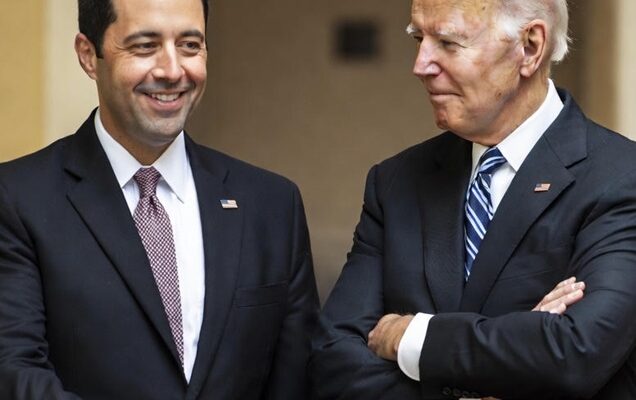
His Excellency Yakubu Murtala Ajaka stood with the unforced calm of someone for whom leadership is not a theatrical performance but a civic responsibility. There was nothing frantic, nothing attention-seeking, nothing of the performative machismo that now passes for governance. Facing him, however, was a man who, by his own incessant proclamations, carries the title of “SSA to the Governor” — yet whose conduct suggested a profound mismatch between public office and personal comportment.
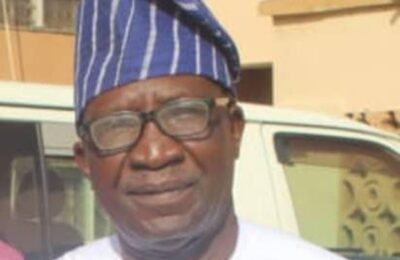
Known in the noisy backrooms of Facebook as FmTv Star, this 42-year-old appointee moved with the restless energy of someone for whom discipline is a foreign country. Everything about him — tone, posture, urgency — raised questions that extend beyond his own frailties. How does a government that claims fidelity to public ethics entrust its image to someone whose behaviour so faithfully mirrors the dysfunctions the state should be trying to transcend?
At an age when judgment should be an instinct and restraint a habit, he approached His Excellency Ajaka with the entitlement of a ward-level enforcer seeking audience with a rival. And when Ajaka, quietly and without incident, declined the handshake, the man escalated. He raised his voice. He sought attention. And then he uttered a command that should never be heard in any environment that pretends to civility:
“You must shake my hand!”
In that instant, the gesture ceased to be courtesy. It became coercion — the crude assertion of someone who confuses loudness with legitimacy. It is difficult to imagine any serious administration that trains its aides to behave like political bouncers disguised in official fabric. Yet here stood a man who, though styled “SSA,” carried himself like an unsupervised apprentice in a political motor park.
Leadership is a discipline of restraint. Public office requires humility, not theatrics.
The Nigerian Constitution protects the dignity and autonomy of every citizen: Section 34 affirms respect for personhood; Section 37 preserves personal boundaries. Nothing in law or ethics grants a political appointee the power to compel physical gestures from anyone, much less a senior public figure.
Ajaka understood this intuitively. His refusal was not discourteous; it was composure. He declined to validate a theatre that had no place in a democratic setting. That silence — dignified, deliberate, unflinching — became the most articulate indictment of the other man’s conduct.
But insecurity is seldom quiet. After failing to extract the forced handshake, FmTv Star fled to Facebook to manufacture relevance. He claimed — with a confidence unburdened by evidence — that he “introduced Ajaka to APC.” It was a revisionist fantasy so unstable it collapsed under the weight of its own absurdity.
Not satisfied with embarrassing himself once, he proceeded to record a 15-minute video sermon on integrity, truth, and professionalism. For fifteen minutes, he orbited around clichés, avoided coherence, and delivered the rhetorical equivalent of a man rummaging in the dark for a dignity he had misplaced.
Age, it appears, does not automatically confer maturity.
The episode brought into sharp relief an old truth:
“When a man’s title grows faster than his character, the title becomes a costume and the man becomes its caricature.”
And a second:
“Nothing exposes a public officer faster than the moment he attempts to perform a role he was never prepared to carry.”
And a third:
“Noise is the last refuge of those who have lost relevance.”
Ogbonicha gave the public a rare real-time demonstration of these truths. It showed the consequences of entrusting public office to individuals whose temperament undermines the dignity of governance. It revealed why leadership must never be reduced to the distribution of titles without assessment of character.
Ajaka, by contrast, embraced dignity. He did not respond. He did not engage. His silence was not passivity. It was judgment — the kind that separates statesmen from performers, maturity from adolescence, and authority from insecurity.
As both political ethics and lived experience teach:
“The strongest individuals are those who refuse to let provocation dictate their conduct.”
“Dignity is earned through behaviour, not demanded through shouting.”
Two men stood in the same place. One embodied the discipline expected of leadership.
The other revealed, with painful clarity, why public office becomes a burden when entrusted to those unprepared for its weight.
This incident invites a broader reflection about governance in Kogi State. Why do titles increasingly land on men whose behaviour diminishes the stature of the offices they occupy?
How does a 42-year-old man, old enough to mentor younger citizens — descend so easily into public nuisance? Why is the threshold for public appointment so low that individuals who ought to be learning restraint are instead given offices that require it?
Public office is not a costume. It is a civic trust. When that trust is handed to those unfit for it, the result is the sort of spectacle witnessed in Ogbonicha.
Two men walked away from that moment.
One carried his dignity.
The other carried his noise.
History, impartial as always, will know where to place both.
Leaders do not demand handshakes.
Only men fleeing irrelevance do.
– Yusuf, M.A., PhD writes from Kogi state.