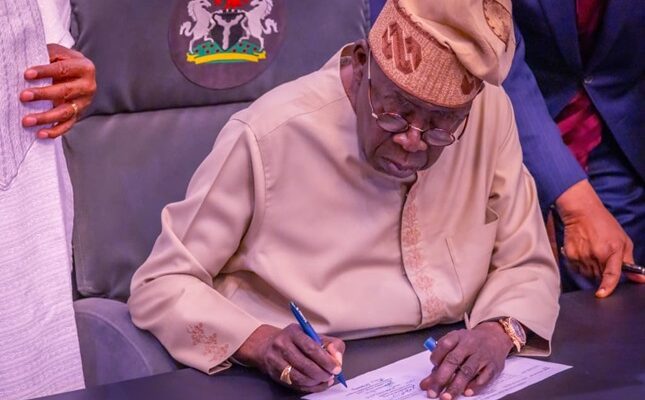

Nigeria’s democratic evolution appears to have entered a defining phase. With the signing of the Electoral Act 2026 by Bola Ahmed Tinubu, the country may be witnessing a structural shift in how candidates emerge and how political power is negotiated.
For decades, the delegate system shaped internal party politics. A limited number of party delegates determined who flew the party’s flag in general elections. While constitutional, the arrangement often concentrated enormous influence in the hands of a few individuals. Critics argued that it weakened internal democracy and opened the door to inducements, sidelining the ordinary party member.
The new Electoral Act 2026 alters that equation. By broadening participation in candidate selection, the law diminishes the dominance of elite political brokers and strengthens the voice of grassroots members. The era when a handful of delegates could decide the political destiny of millions appears to be fading.

More significantly, the period when governors were perceived to single-handedly determine who would represent the masses may also be drawing to a close. In many states, political structures revolved around the sitting governor’s preferences.
Endorsement often translated into automatic tickets, while dissenting voices struggled for relevance.
However, in a multi-party democracy reinforced by the new Electoral Act, the ultimate authority rests with the electorate. If any governor attempts to impose an unpopular or underperforming incumbent, voters retain the constitutional power to reject such imposition at the polls.
Democracy, at its core, is about choice — and choice thrives when citizens can freely exercise their franchise.
This reform compels aspirants to return to the basics: engaging directly with party members, articulating clear policy positions, and demonstrating competence. Incumbents can no longer rely solely on political patronage or structural advantage; their performance in office must speak persuasively to both party faithful and the wider electorate.
President Tinubu’s assent to the Act reflects a commitment to strengthening participatory governance. Expanding internal democracy within parties is not merely procedural reform — it is foundational to deepening Nigeria’s democratic culture.
Of course, laws are only as effective as their implementation. Political actors must embrace the spirit of the reform, and institutions must enforce compliance transparently. If properly executed, the Electoral Act 2026 could mark a decisive shift from personality-driven politics to performance-driven leadership.
In the final analysis, democracy flourishes when power genuinely belongs to the people. With this reform, Nigeria may be taking a step closer to that enduring ideal.
– Musa Tanimu Nasidi writes from Lokoja.