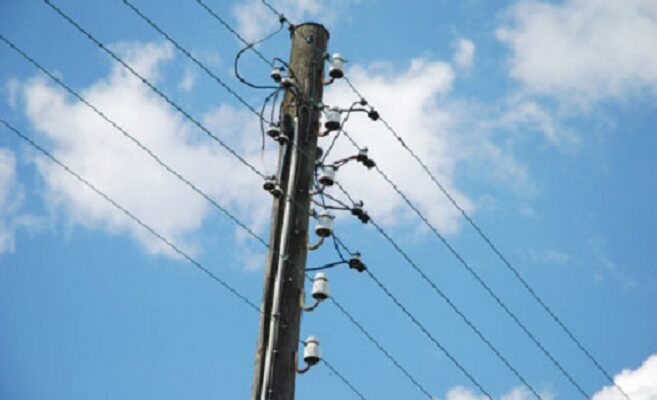

In the hierarchy of modern infrastructure, electricity is not merely a convenience; it is the silent architecture upon which economic growth, public welfare, and technological progress depend. Yet, in a world increasingly defined by digital acceleration, the contrast between the stability of electricity in the United States and the persistent fragility of power supply in Nigeria presents a troubling paradox. While one nation debates energy transition and grid modernization, the other continues to grapple with the more fundamental question of whether the lights will stay on at all. This divergence is not accidental; it is the product of structural choices, institutional discipline, and policy continuity.
In the United States, electricity is treated as a critical public utility governed by a sophisticated interplay of regulation, private sector participation, and long term investment. The grid is decentralized yet coordinated, supported by independent system operators, enforceable standards, and a culture of accountability that prioritizes reliability. Failures do occur, but they are exceptions rather than the norm, and when they happen, they trigger swift institutional responses. The system is designed not only to generate power but to sustain trust, ensuring that households, hospitals, and industries operate with predictable energy access.
Nigeria’s electricity landscape tells a markedly different story. Despite abundant natural gas reserves and significant renewable potential, the country remains trapped in a cycle of inadequate generation, weak transmission infrastructure, and inconsistent distribution. Installed capacity often exists only on paper, while actual output fluctuates far below national demand. The result is a chronic dependence on diesel generators, a costly and environmentally damaging alternative that has effectively privatized survival for businesses and households. In this environment, electricity becomes not a public good but a personal burden.

The roots of this crisis extend beyond technical limitations into the realm of governance. Policy inconsistency, regulatory uncertainty, and fragmented institutional responsibilities have undermined investor confidence and stalled meaningful reform. Privatization, once heralded as a turning point, has yielded mixed outcomes, largely because structural inefficiencies were transferred rather than resolved. Tariff debates remain politically sensitive, leaving the sector underfunded and unable to sustain necessary upgrades. In contrast, the American system benefits from regulatory clarity and a framework that balances profitability with public interest.
The consequences of Nigeria’s electricity deficit are far reaching. Economic productivity is constrained as businesses absorb high operating costs, discouraging both local enterprise and foreign investment. Public services, from healthcare to education, struggle to function optimally under erratic power conditions. Even social life is reshaped by uncertainty, as daily routines adjust to the rhythm of outages rather than opportunity. Electricity, in this context, is not just an infrastructure issue; it is a defining factor in national development and human dignity.
Bridging this divide requires more than incremental adjustments. It demands a fundamental rethinking of governance, investment strategy, and institutional accountability within Nigeria’s power sector. The lessons from the United States are not to be copied wholesale, but they offer a clear principle: reliable electricity is the outcome of systems that reward efficiency, enforce standards, and sustain long term planning. Until Nigeria aligns its policies with these realities, the paradox will persist, and millions will remain in the shadows of a world that has already moved into the light.
– Inah Boniface Ocholi writes from Ayah – Igalamela/Odolu LGA, Kogi state.
08152094428 (SMS Only)