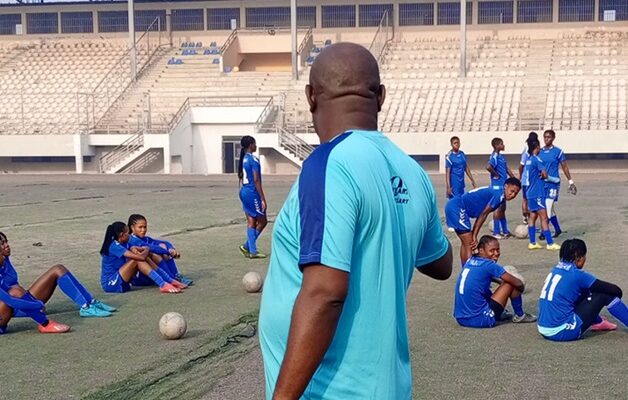

As conversations deepen around the future and sustainability of Confluence Queens Football Club, one of Nigeria’s foremost women’s football teams, I feel compelled to make a passionate appeal for deliberate and strategic action to preserve and strengthen Kogi State’s only surviving topflight sports club.
While the club faces growing challenges both on and off the pitch, I must sincerely commend the swift and commendable intervention of His Excellency, Governor Usman Ododo, and the Honourable Commissioner for Sports, whose decision to reinstate the experienced Team Manager, Tosin Ojo, has been widely seen as a stabilizing and progressive move.
The return of Tosin Ojo, a seasoned football administrator with deep knowledge of the women’s game, reflects the administration’s commitment to continuity and excellence — a clear show of intent to safeguard the club’s longstanding legacy. This move also aligns with the founding vision of Chief David Ayo Owolabi, from Ogori/Magongo, who founded Confluence Queens as a beacon of opportunity and empowerment for women in football.

Chief David Ayo Owolabi, who sadly passed away in February 2025, is fondly remembered as a visionary leader and dedicated sports administrator in Kogi State. A retired referee and respected Scout Master General, Chief Owolabi built Confluence Queens with passion, discipline, and a firm belief that women’s football could thrive as a symbol of excellence and unity. His legacy continues to inspire me and many others who believe in the future of women’s football in Kogi State and across Nigeria.
However, beyond this encouraging appointment, I believe more intentional administrative and financial interventions are urgently needed. The Nigeria Women Football League (NWFL) has recently announced a structural reform that will see six clubs relegated at the end of the 2025/26 season — a development that significantly raises the stakes for teams struggling with funding or management instability.
Confluence Queens, who narrowly escaped relegation last season due to league expansion, now face a crucial test. If we truly mean well for our sports, this is the time to act decisively — to address fundamental issues such as player welfare, logistics, training facilities, and technical investment.
It is equally important to note that the team deserves a new and reliable means of mobility. Recent travel hitches have not only affected logistics but also morale and matchday preparedness. Providing the club with a standard team bus — similar to what other top NWFL clubs use — will go a long way in boosting the players’ comfort, safety, and overall performance on the road.
I also believe it is time to separate the leadership of Kogi United and Confluence Queens. While both are state-owned teams, their realities are very different. Women’s football requires a unique approach, a different kind of empathy, and fresh administrative thinking. Giving Confluence Queens an independent leadership structure will open room for new ideas, diverse perspectives, and focused strategies that can drive genuine progress and sustainability.
Beyond mere survival, my desire is to see Confluence Queens repositioned to challenge for honours and secure a place in money-spinning continental competitions like the CAF Women’s Champions League, which offer not only financial rewards but also exposure and pride for our state.
Confluence Queens are more than just a football team — they are a symbol of Kogi’s pride, resilience, and potential. Preserving their topflight status is not only a responsibility of the government but a shared duty for everyone who believes in the power of sports to inspire and unite.
Now is the time to build on the goodwill of the Ododo administration and honour the enduring legacy of Chief David Ayo Owolabi — ensuring that Confluence Queens continue to shine as a symbol of Kogi’s excellence in Nigerian and African women’s football.
– Samuel Ahmadu, international women’s football expert based in Abuja.