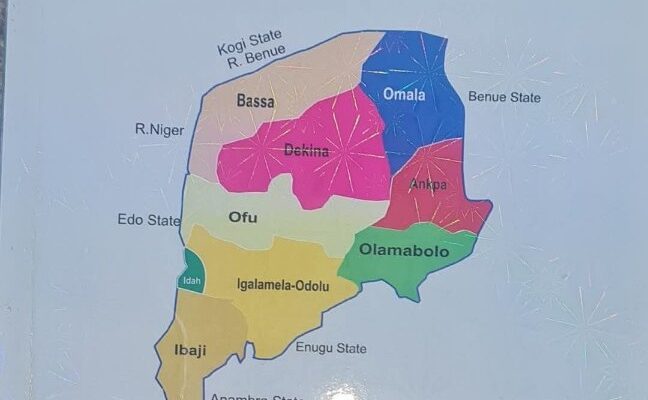

Nations are not only drawn on maps; they are first imagined in the quiet insistence of a people who refuse to remain invisible. The growing call for the creation of Okura State is less a cartographic ambition than a moral argument about recognition, equity, and administrative justice. In a federation as vast and uneven as Nigeria, the question is no longer whether new states should emerge, but whether the current structure still reflects the lived realities of its citizens.
At its core, the Okura proposition is a response to structural imbalance. For decades, certain regions have navigated governance from distant centres, where proximity to power often determines access to development. The demand for Okura State, therefore, is not merely about identity; it is about shortening the distance between government and the governed. It seeks to transform governance from an abstract promise into a tangible presence felt in roads, schools, healthcare, and economic opportunity.
Yet, like all state creation debates, the Okura question must confront the discipline of viability. History is replete with administrative units born out of political compromise but sustained by fragile economic foundations. For Okura to move from aspiration to enduring reality, its advocates must articulate a credible framework for fiscal sustainability, institutional capacity, and social cohesion. A state that cannot fund its priorities or harmonise its internal diversities risks becoming another layer of bureaucracy rather than a solution.

There is also the deeper matter of national coherence. Every new state redraws not only boundaries but also political calculations, resource allocation formulas, and regional balances. The creation of Okura must, therefore, be situated within a broader constitutional logic that strengthens rather than fragments the federation. It should be a model of negotiated consensus, not a product of sectional assertion. In this sense, Okura can become a test case for how Nigeria manages its internal diversity without surrendering its unity.
Ultimately, the argument for Okura State is an argument about the future architecture of Nigeria itself. It asks whether governance will continue to be centralised and distant, or whether it will evolve into a more responsive and locally grounded system. If pursued with clarity, discipline, and inclusiveness, Okura could represent not just the birth of a new state, but the renewal of a national promise: that every community, no matter how long overlooked, has a rightful place within the federation’s unfolding story.
– Inah Boniface Ocholi writes from Ayah – Igalamela/Odolu LGA, Kogi state.
08152094428 (SMS Only)