
Nigeria enters each new decade boasting of population strength, entrepreneurial energy, and social resilience, yet beneath the national noise lies a quiet emergency: women; cross age, tribe, class, and faith are reporting less happiness than ever before. It is the kind of national contradiction that exposes the weakness behind the country’s strongest claims. A nation cannot rise when the emotional spine that holds families, markets, and communities together is slowly collapsing under unspoken weight.
Economists and sociologists call it “the happiness reversal,” a moment when women, who historically held higher well-being scores in developing countries, begin to decline despite increased marriage, education, exposure, and participation in national life. Nigeria fits this pattern too perfectly. As one African sociologist noted, “Women carry the invisible load of a nation, and when the load becomes unbearable, the nation still expects them to walk upright.” This invisible load is where the paradox begins.
The irony is brutal: more Nigerian women are uneducated, while some are schooling, farming, hustling, running SMEs, migrating, surviving, and competing, yet their reported happiness is sinking. What should have been empowerment is now a landscape of exhaustion. Emotional labour has become a modern tax. Marriage expectations feel heavier. Economic pressure feels merciless. Social media has weaponized comparison. And the country’s harsh economic climate has dragged many women into a permanent state of quiet panic, even when they appear strong on the outside.

In many urban centres, the modern Nigerian woman is negotiating impossible standards like be a mother, be a breadwinner, be emotionally available, be modest, be ambitious, be strong, be soft, be perfect, be tireless. As an American cultural critic once said, “Women are praised for endurance in a world that keeps giving them more to endure.” It is a praise that feels like punishment.
Where happiness should grow, pressure grows instead.
The paradox deepens with the rise of gender-based violence, emotional abuse masked as tradition, and the silent cultural expectation that women must absorb harm for the sake of peace. For too many, survival is celebrated while well-being is neglected. In parts of Nigeria, being a woman still means performing excellence on a cracked foundation. And when women break, society asks why they were not stronger.
Even the digital age: promised as a tool of liberation has complicated the terrain. Social media has created a theatre of perfect lifestyles while ignoring the backstage grief. The young woman who scrolls through curated realities cannot help but feel inadequate, even when she is doing her best with the little she has. The emotional inflation is real: expectations are rising faster than opportunities.
Nigeria’s economic crisis is the sharpest blade in this paradox. Rising prices, declining wages, and unstable markets leave many women especially single mothers; living on a financial fault line. They stretch themselves thin, filling in the gaps where government support disappears. An economist once argued that “women become the shock absorbers of weak economies,” and in Nigeria, this shock absorption has become a daily ritual that steals peace ounce by ounce.
Happiness cannot grow in an economy where survival swallows serenity.
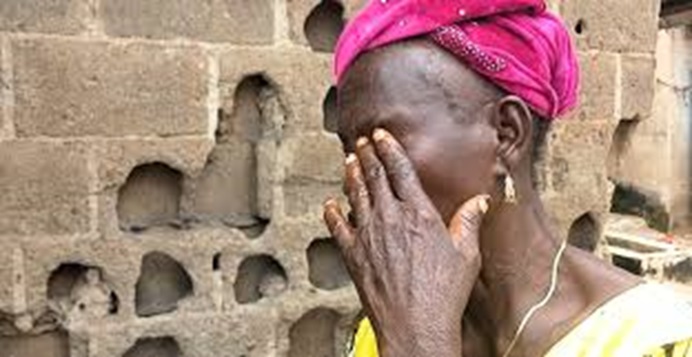
Yet the most devastating factor is silence. Nigerian women are trained to hide their emotional bruises, to swallow disappointment, to “manage,” to appear unshaken even when breaking inside. Happiness cannot thrive in a culture of swallowed suffering. Mental health remains a taboo in many communities, and emotional vulnerability is misinterpreted as weakness instead of a cry for balance.
The paradox is not simply that Nigerian women are becoming less happy; it is that society continues to applaud their strength while ignoring their exhaustion. And every year, the distance widens between public admiration and private distress. Regina Daniels marital saga speak volumes of what i am saying here.
Still, within this decline lies the path forward. Nations that improved women’s happiness did not do so through slogans or temporary empowerment programs; they did so by rebuilding the emotional, economic, and legal scaffolding around their lives. Nigeria has the same opportunity: to build a country where women’s happiness is not a luxury but a national indicator as essential as GDP.
A society grows when its women breathe. A nation rises when its mothers rest. And if Nigeria wants to rediscover balance, dignity, and progress, it must begin by confronting this paradox with honesty and urgency. Because no country that allows its women to become the unhappiest among its people can claim to be moving forward.
The quiet breakdown is already here. Whether Nigeria chooses to repair it or ignore it will determine the emotional future of the nation.
– Inah Boniface Ocholi writes from Ayah – Igalamela/Odolu LGA, Kogi state.
08152094428 (SMS Only)