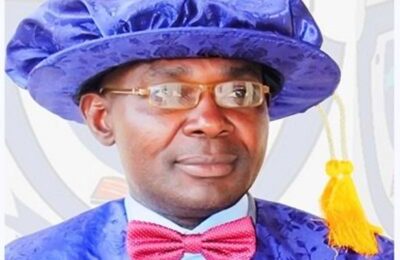
By Musa Bakare.
For decades, Nigeria’s dream of becoming a steel producing nation has remained elusive. The Ajaokuta Steel Plant conceived in the 1970s as the bedrock of national industrialization became a symbol of abandoned potential, stalled by policy summersaults, corruption, and international politics.
But under the Renewed Hope Agenda of President Bola Ahmed Tinubu, a new chapter is being written. In just two years, the Ministry of Steel Development, led by the Honourable Minister, Prince Shuaibu Abubakar Audu, has recorded landmark achievements that are laying the foundation for Nigeria’s long awaited industrial revival.

Ajaokuta Steel: From Dormancy to Revival
The centrepiece of Nigeria’s steel aspirations, the Ajaokuta Steel Plant, was left to rot for decades. Recognizing its strategic importance, the ministry has prioritized its revival.
In September 2024, the federal government signed a Memorandum of Understanding (MoU) with the original builders of Ajaokuta Steel Plant to return and complete the project.
Given the impact of the Russia-Ukraine war on earlier plans to partner with Russian contractors, the ministry strategically turned to China, engaging them as new partners for the revival process.
This pragmatic shift ensures continuity while insulating Nigeria’s steel agenda from global geopolitical shocks.
Energy Infrastructure for Industrial Growth
No steel plant can thrive without reliable energy. Recognizing this, the ministry facilitated a $500 million investment by NNPCL and its partners to establish five mini-LNG plants within the Ajaokuta Steel territory.
This is a game changing step, it guarantees energy security for Ajaokuta, reduces costs, and ensures that when the blast furnaces come alive, they will be powered sustainably.
Private Sector Confidence and Investments
Prince Audu’s leadership has greatly inspired renewed private sector confidence in Nigeria’s steel sector.
The Inner Galaxy Group’s Stellar Steel Plant, a $400 million investment in Ogun State, was launched with an official groundbreaking. The plant is expected to be completed and commissioned by April 2026.
The Orbit Galvanized Steel Plant was commissioned, boasting an annual turnover of $100 million, with capacity to produce fabricated towers for both indigenous telecom projects and exports.
The AIG Group committed $600 million to develop a 900-hectare iron ore mine in Gujeni, Kaduna State, securing raw materials for steel production.
KAM Group expanded its multi-million-dollar facilities in Ilorin and Sagamu, consolidating its position as a domestic steel giant.
These investments signal a major turnaround, Nigeria is once again becoming attractive for steel investors.
Steel for National Security
Another landmark is the MoU with the Ministry of Defence and the Defence Industries Corporation of Nigeria (DICON). For the first time, Ajaokuta will be used for the production of military hardware, rifles, helmets, vests, bullets, etc.
This positions Nigeria not only as an industrial hub but also as a nation capable of producing its own defence infrastructure, reducing dependence on foreign imports in sensitive areas.
A Roadmap for the Future
Understanding that policy consistency is vital, the ministry designed an in-house 10-year Roadmap for the revitalization of the steel industry. Work is also ongoing with the World Bank and external experts to develop a globally benchmarked roadmap that aligns with international best practices.
In addition, engagements with the National Assembly for the passage of the Nigerian Metallurgical Industry Bill 2023 are ongoing, ensuring that the industry has the legal framework to drive reforms and investments.
Reviving Dormant Assets
Beyond Ajaokuta, efforts are underway to revive other critical assets:
The Aluminum Smelter Company of Nigeria (ALSCON) is being repositioned for re-operation.
Delta Steel Plant (now Premium Mines and Steel Limited) is being supported to return to optimal production levels.
These will complement Ajaokuta and ensure Nigeria has a diversified and robust metals sector.
Building Capacity and Stakeholder Consensus
The ministry has also prioritized human capital development and stakeholder engagement:
A robust staff retreat was organized to align ministry personnel with the vision and mandate of the new ministry.
The maiden National Steel Summit brought together key stakeholders to deliberate on the state of the industry and adopt a consensus roadmap for revival.
The summit projected ambitious but achievable targets: producing 10 million metric tonnes of liquid steel annually, creating over 500,000 direct and indirect jobs, and positioning Nigeria as the steel hub of Sub-Saharan Africa.
Two years may seem short, but the achievements recorded under Prince Shuaibu Audu’s leadership are monumental. From attracting billions of dollars in investments, reviving dormant plants, forging defence partnerships, and laying down a 10-year roadmap, the Ministry of Steel Development has put Nigeria on track to achieve the $1 trillion GDP target by 2030.
The steel sector, once the symbol of Nigeria’s unfulfilled potential, is finally being reborn as the engine of industrialization, national security, and economic growth.
With continuity, commitment, and collective effort, Nigeria’s steel dream is no longer a mirage, it is a future within reach.
– Musa Asiru Bakare, a political analyst, writes from Lokoja, Kogi state.