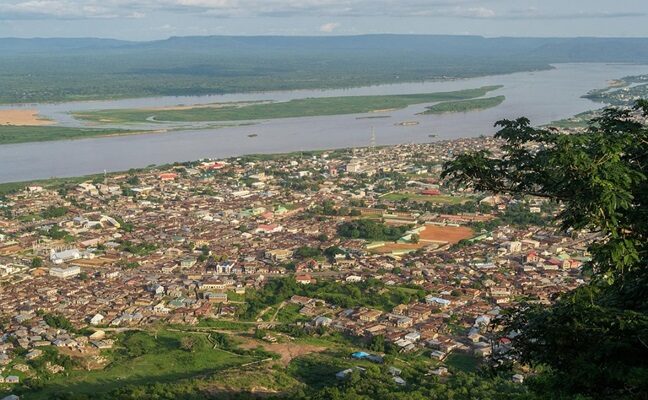

Perched at the historic confluence of the River Niger and River Benue, Lokoja occupies a unique place in Nigeria’s history. It was the first administrative capital of modern Nigeria and once served as a major centre of colonial governance, trade, and culture. Today, however, Lokoja—now the capital of Kogi State—has fallen far behind other state capitals, earning an unenviable reputation as the most underdeveloped state capital in the country.
A City Frozen in Time
Driving through Lokoja today feels like stepping into a city trapped between the past and the present. While other state capitals boast flyovers, modern drainage systems, planned housing estates, and functional public transport, Lokoja struggles with basic urban infrastructure. Roads are narrow, poorly maintained, and frequently damaged by erosion and flooding. During the rainy season, large sections of the city become nearly impassable, cutting off communities and crippling economic activities.

Electricity supply is unreliable, forcing households and businesses to rely heavily on generators. Clean water remains a luxury in many neighborhoods, with residents depending on boreholes or untreated water sources. For a state capital, these deficiencies are both alarming and embarrassing.
The Capital Without a Capital Feel
Lokoja lacks the defining features commonly associated with a state capital. There is no functional mass transit system, no clearly defined central business district, and limited recreational or cultural spaces. The city goes to sleep early, not because of tranquility, but due to the absence of nightlife, tourism infrastructure, and economic vibrancy.
Government presence, ironically, feels weak. Ministries and agencies are scattered across poorly maintained buildings, many of which show little evidence of long-term planning. Civil servants commute daily under harsh conditions, while visitors are often shocked by the limited accommodation options and poor urban aesthetics.
Geography as a Curse, Not a Blessing
Lokoja’s location at the confluence of two of West Africa’s largest rivers should be a massive economic advantage. In other countries, such a location would support river transport, tourism, fishing industries, and waterfront development. Instead, Lokoja suffers from perennial flooding that displaces residents, destroys homes, and erodes already fragile infrastructure.
Rather than harnessing the rivers for development, successive governments have treated flooding as an unavoidable disaster rather than a solvable engineering and planning problem. The absence of effective drainage systems, embankments, and flood-control measures continues to hold the city hostage to nature.
Poverty in the Seat of Power
Unemployment and underemployment are widespread in Lokoja, particularly among young people. Beyond civil service jobs and small-scale trading, there are limited economic opportunities. Industrial presence is minimal, and private investment is discouraged by poor infrastructure, weak planning regulations, and inconsistent government policies.
Markets operate in congested and unhygienic conditions, while informal settlements continue to expand due to lack of affordable housing. For a capital city, Lokoja mirrors the struggles of a neglected rural town rather than a nerve center of governance and development.
Leadership, Housing Failure, and Lost Opportunities
While governors in many states prioritize large-scale housing estates to ease urban pressure and create jobs, Lokoja tells a different story. The previous Kogi State administration, which spent two full terms—eight years in office—failed to construct a single government-owned housing unit in the state capital. This absence of a coherent housing policy has had lasting consequences.
Two years into the tenure of the current administration, housing remains largely ignored. No clear policy framework, no visible construction of public housing, and no serious public-private housing initiative have been introduced to address the growing demand. As a result, Lokoja has become one of the most expensive state capitals to live in relative to income levels.
Landlords exploit the housing shortage by charging exorbitant rents for substandard buildings, pushing civil servants and low-income earners to the outskirts of the city or into overcrowded and unsafe living conditions. A state capital where workers cannot afford decent accommodation reflects a deeper failure of governance and planning.
Beyond housing, basic services remain neglected. Water supply is unreliable, forcing residents to depend on boreholes and water vendors. Public transportation is poorly organized, expensive, and unsafe, with no government-owned transport company to regulate fares or improve mobility. These failures compound daily hardship for residents and discourage private investment.
For Lokoja to escape its underdevelopment trap, government must urgently prioritize the construction of affordable housing units, revive urban water supply systems, and establish a functional, state-supported transport company. Without deliberate intervention in these critical sectors, Lokoja will continue to lag behind other state capitals despite its strategic importance. Urban renewal projects are either abandoned, poorly executed, or limited to cosmetic changes.
Political attention often shifts toward other towns, leaving Lokoja underfunded despite hosting the machinery of state governance. This neglect sends a dangerous message: if the capital can be ignored, what hope exists for rural communities?
A City That Deserves Better
Lokoja’s story is not without hope. Its strategic location, historical significance, and youthful population provide a strong foundation for renewal. With deliberate urban planning, investment in flood control, road expansion, housing, and tourism, Lokoja could be transformed into a modern riverfront city.
However, such transformation requires political will, transparency, and citizen engagement. Lokoja does not need grand speeches—it needs functional roads, clean water, reliable power, and a clear vision for growth.
Until then, the city remains a painful reminder that being a state capital does not automatically guarantee development. Lokoja, Nigeria’s first capital, now risks being remembered as its most neglected.
This feature reflects widely held public opinions and lived experiences of residents and is intended to provoke discussion on urban development and governance.
– Musa Tanimu Nasidi, a journalist, writes from Lokoja.