Kogi State has a long and complex history of mining activity, dating back to colonial times and continuing through periods of decline and modern resurgence. Mining in the state covers various minerals such as coal, iron ore, tantalite, kaolin, gypsum, marble, and gold, among others, and has played a significant role in both local and national development efforts.
Colonial and Early Mining Development
- The earliest organized mining in Nigeria began in the early 1900s when the British colonial government created the Mineral Survey of the Northern Protectorates, including what is now Kogi State.
- The British authorities exploited minerals such as tin, columbite, gold and coal within the region, and these activities peaked before independence.
Key Minerals and Strategic Importance

- Kogi State is renowned for its wealth of minerals, with significant reserves of metallic resources (notably iron ore and coal), industrial minerals (kaolin, gypsum, marble), and precious minerals (gold).
- The National Iron Ore Mining Company was established in 1979 in Kogi State, primarily to supply iron ore to domestic steel industries such as the Ajaokuta Steel Company.
Coal Mining in Ankpa
- The coal mining communities of Ankpa in eastern Kogi State have been particularly prominent, drawing both local and foreign miners due to rich deposits.
- Ankpa coal mining dates from the civil war era, with the Okaba Coal Mine being one of the few established during that period and later merged into the Nigerian Coal Corporation.
- Over the years, coal mining has brought both economic opportunity and environmental challenges, including resource depletion and unsafe mining practices.
Modern Revitalization and Challenges
- In recent years, the Kogi State government initiated comprehensive geological studies and active field exploration to reassess and unlock the mineral wealth of the region, collecting samples and engaging local communities.
- There has been a renewed focus on attracting private investment to develop eight strategic minerals with high economic potential, aiming for industrialization and job creation.
- However, issues such as illegal mining, environmental damage, and exploitation remain pressing challenges as the sector seeks modernization and sustainable growth.
Economic and Social Impact
- Mining has greatly contributed to local economies and offered employment, with new initiatives set to further enhance youth opportunities and industrial development.
- The development and industrial prospects associated with mining—particularly in steel and ceramics—are positioned to elevate Kogi’s profile in Nigeria’s broader economic landscape.
Kogi State’s mining history reflects a transition from colonial extraction to modern development, balancing high resource potential with pressing socio-economic and environmental challenges.
Illegal Mining in Kogi State
Illegal mining is a significant and persistent problem in Kogi State, causing substantial economic losses, environmental degradation, and safety risks. The trade primarily targets coal but also involves other minerals, with illegal operations often running alongside licensed ventures.
Scale and Impact
- Nigeria is estimated to lose about $9 billion annually to illegal mining, with Kogi State being a major hotspot for such activities.
- Over 500 illegal miners have reportedly been arrested in recent federal operations, with a sizable number of those arrests occurring in Kogi.
- Illegal mining thrives even on land officially allocated to legal companies, which struggle to combat encroachment due to lack of governmental enforcement.
Locations and Methods
- Communities such as Ika, Ofugo, Ogboyaga, Okoloke, Isanlu Esa, Jaguna and Ilotin are noted hubs for illegal coal mining, with open markets for illegally sourced coal operating daily.
- Illegally mined minerals are often transported via major roads and sold on an industrial scale, sometimes involving large companies as buyers or through third-party arrangements.
Environmental and Safety Concerns
- Unregulated mining has resulted in dangerous working conditions, including pit collapses and fatalities among miners, as well as severe land degradation.
- Farmland and ecosystems are negatively affected, and communities are exposed to health risks from unmonitored operations.
Government Response
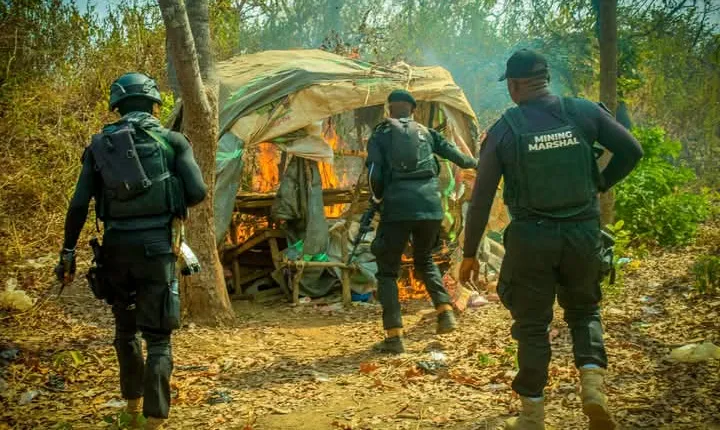
- The Kogi State government has recently intensified crackdowns, vowing to prosecute offenders and improve security, often in collaboration with federal agencies such as the Nigeria Security and Civil Defence Corps (NSCDC) and specialized Mining Marshals.
- Roadblocks, increased profiling of license holders, and direct interventions in hotspots are among the strategies being deployed to stem illegal mining activity.

Socio-Economic Factors
- Many community members and ex-miners are involved in or benefit indirectly from illegal mining, complicating enforcement and local cooperation.
- The activity is driven by high unemployment and the lucrative earnings available to miners, even amid high personal risk and instability.
Kogi State’s experience with illegal mining reflects a broader national challenge involving lost revenue, insecurity, and the struggle to balance resource development with regulation and community welfare.
Illegal Mining in Kogi State and Security Concerns
Illegal mining in Kogi State is closely tied to insecurity, including banditry, kidnapping, arms trafficking, and community-level violence. It also creates serious safety and environmental risks that further destabilise host communities and undermine lawful economic activity.
Nature of illegal mining in Kogi
Kogi hosts significant deposits of coal, lithium, gold, and other solid minerals, and much of the illegal activity is concentrated around gold, lithium and coal-rich areas such as Ankpa, Yagba, Odagbo–Okaba, Ika, Ofugo and Ogboyaga. These operations range from small artisanal pits to industrial-scale extraction and trucking networks, often running on sites that legally belong to licensed mining companies but are informally “taken over” by illegal operators.
Key security concerns
Illegal mining sites frequently double as cover for wider criminal networks, including kidnapping and banditry in affected LGAs such as Yagba West, Yagba East and Ankpa. Competition over control of pits, routes and proceeds fuels armed clashes, while proceeds from illicit minerals can finance weapons and sustain armed groups.
Poor safety standards at illegal sites lead to pit collapses, accidents and unreported deaths, creating humanitarian and public-order challenges for already stretched local authorities. The uncontrolled movement of trucks and motorcycles linked to illegal mining also facilitates smuggling and makes it harder for security forces to track criminal logistics.
Impact on communities and environment
Communities complain of land degradation, open pits, water contamination and dust pollution from unregulated mining, which damage farms and livelihoods and contribute to displacement and social tension. Environmental damage and unsafe abandoned pits can themselves become long-term security hazards, providing hideouts and dangerous terrain that complicate security operations.
The presence of illegal miners on lands legally held by formal operators creates friction between companies, communities and security agents, sometimes leading to clashes and allegations of complicity by some state actors. This erosion of trust in institutions can encourage communities to turn to self-help or informal armed groups, further blurring the line between economic and security problems.
Government and security responses
The Kogi State government has publicly declared “war” on illegal mining and banditry, directing local government chairmen and traditional rulers to monitor miners in their domains and stop indiscriminate land allocations to unknown operators. The governor has also stressed that anyone aiding or abetting illegal mining will be treated as a criminal, signalling an intent to criminalise not just miners but also their support networks.
At the federal level, a specialised Mining Marshals unit under the Nigeria Security and Civil Defence Corps has been deployed, reporting evacuation of thousands of illegal miners in Kogi, arrests of hundreds of suspects and recovery of dozens of illegally occupied sites. Specific clampdowns, such as the dismantling of an illegal mining ring in the Odagbo–Okaba axis and roadblocks on major routes like the Ajaokuta–Lokoja road to intercept coal-laden trucks, show a shift toward disrupting logistics rather than only raiding pits.


Practical recommendations
To reduce the security risks, priority actions often proposed by analysts and officials include:
- Strengthening site monitoring and rapid-response capacity of Mining Marshals, police and other security agencies around known hotspots and transport corridors.
- Tightening licensing, profiling and verification of all operators, including better coordination between state task forces, federal regulators and local traditional institutions to prevent “backdoor” access to land.
- Formalising artisanal miners into cooperatives under clear safety and environmental rules, reducing the pool of actors available for recruitment by criminal networks.
- Ensuring transparent community benefit agreements and using part of legitimate mining revenue for local infrastructure and environmental remediation, which can improve cooperation with security agencies.