
Nigeria is often described as a nation rich in resources yet burdened by poverty, a paradox repeated so frequently that it risks sounding ordinary. Africa’s largest economy possesses vast oil reserves, an energetic population, and enormous entrepreneurial potential, yet millions of citizens continue to struggle with rising living costs, unemployment, and fragile public services. The usual explanation frames poverty as policy failure, a consequence of corruption, mismanagement, or global economic shocks. But an uncomfortable question increasingly emerges in public discourse: what if poverty in Nigeria persists not merely because policies fail, but because the political system has adapted to function around it?
Across democratic cycles, poverty has remained one of Nigeria’s most reliable political constants. Election seasons often bring temporary relief measures, subsidies, or targeted assistance, yet structural transformation rarely follows. Patronage networks thrive where citizens depend on political intermediaries for access to opportunity, security, or basic welfare. In such environments, scarcity becomes politically useful. When survival depends on proximity to power, loyalty replaces accountability, and voters are encouraged to seek short-term relief rather than long-term institutional reform. Poverty, intentionally or not, begins to reinforce political stability for those already in control.
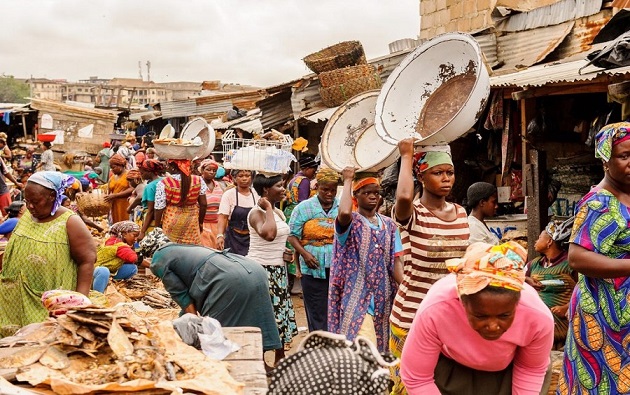
This dynamic is not uniquely Nigerian, but its effects are especially visible in a country with immense economic capacity. Despite periods of growth driven by oil revenues or market reforms, wealth distribution remains uneven, and public infrastructure struggles to keep pace with population expansion. Informal economies absorb millions who operate outside formal protections, taxation systems remain narrow, and social safety nets are inconsistent. The result is a cycle where citizens rely more on personal networks than public institutions. Governance becomes personalized rather than systemic, weakening trust in the state while strengthening dependence on political actors.

The consequences extend beyond economics into democratic culture itself. Persistent poverty reshapes political expectations. Instead of demanding transparent institutions or policy continuity, voters may prioritize immediate material assistance. Campaign promises shift from structural solutions to distributive gestures. Over time, public debate narrows; governance becomes transactional rather than visionary. This does not suggest citizens lack political awareness, but rather that economic insecurity limits the space for long-term civic engagement. When daily survival dominates attention, democratic participation becomes reactive instead of strategic.
Breaking this pattern requires confronting uncomfortable truths. Economic reform alone cannot resolve a system sustained by institutional incentives. Anti-corruption campaigns, monetary adjustments, or fiscal reforms achieve limited success if governance structures continue to reward dependency over empowerment. Genuine transformation would mean investing consistently in education, job creation, rule of law, and decentralized development that reduces the political value of poverty itself. The goal is not charity but autonomy, enabling citizens to relate to government as rights-bearing participants rather than beneficiaries of patronage.
Nigeria stands at a defining moment. Its youthful population, technological innovation, and cultural influence position it for global leadership, yet sustainable progress depends on redefining the relationship between power and prosperity. Poverty should be treated not as an inevitable national condition but as a solvable institutional challenge. The question facing Nigeria is therefore deeper than economic recovery: can a political system historically shaped around scarcity evolve into one organized around opportunity? The answer may determine whether poverty remains a permanent feature of governance or finally becomes a chapter in the nation’s past.
– Inah Boniface Ocholi writes from Ayah – Igalamela/Odolu LGA, Kogi state.
08152094428 (SMS Only)