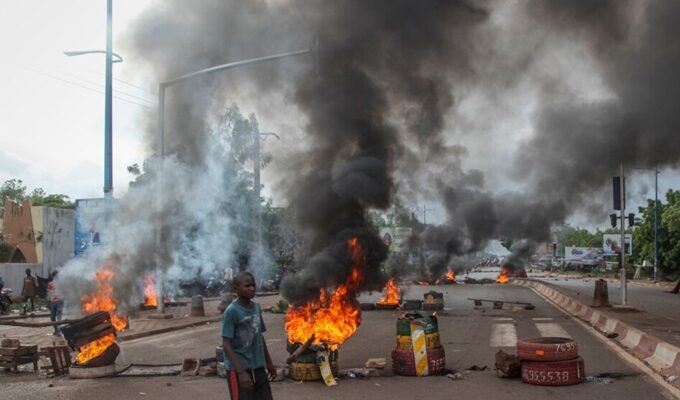

Bamako is burning — not just in flames but in fear. In the heart of Mali’s capital, every fuel tanker that once fed the city’s restless veins now lies in charred silence. Terrorists didn’t just torch the trucks; they torched the nation’s breath. The city that once hummed with the chaos of life now groans under paralysis. No fuel. No movement. No sound — except the echo of a country gasping for strength.
This is not just about petroleum; it’s about power, dignity, and survival. When schools close, when workers stay home, when generators die, a people’s confidence collapses with the same ease as a matchstick flame. Terrorism in Mali has mutated — no longer content with bullets and bombs, it now targets the arteries of national existence. The fire that devoured fuel tankers is the same fire consuming the people’s hope.
Where are the defenders of this republic? Where is ECOWAS? Where is the African Union’s conscience when an entire capital sinks into darkness? It’s a brutal irony that those who chant “African sovereignty” can’t secure the soul of their own streets. Mali’s tragedy is not just the work of terrorists but the silence of leadership. A paralyzed Bamako mirrors a paralyzed vision of security.

Yet out of the smoke rises a question more haunting than the sirens: Where next? If Bamako can be grounded by fire, what stops the flames from reaching Ouagadougou, Niamey, or Abuja? The terror web in the Sahel is no longer regional — it’s continental. Every burnt tanker is a warning written in smoke, whispering that no border is truly safe anymore.
Still, amid the ashes, hope must roar louder than despair. Mali’s leaders must rebuild trust, not just infrastructure. The fight ahead requires more than guns — it needs unity, foresight, and a leadership that values human life above political slogans. Because when faith runs dry, even the richest oil cannot move a nation forward.
– Inah Boniface Ocholi writes from Ayah – Igalamela/Odolu LGA, Kogi state.
08152094428 (SMS Only)