I must first of all commend the very respectful Pastor Ekele Morgan and his team of patriots who have been diligent in the patriotic zest to sustain the advancement goals and aspirations of Igala land and its people. They have once again extended this invitation to me to give an address on this great occasion, and of which am whole heatedly glad to Indulge.
The topic of discourse seen from the ramifications of its purpose and essence is quite genuine to this celebration considering the extent to which our people are divided and separated from each other, and this demands that we confront truth and reshape destiny, not to recite history. I say this because for many years discussions of this nature offer us the opportunity to reflect on the range of issues that impact on our wellbeing and existence from time to time either positively or negatively. Contemporary challenges emanate essentially from the burdensome political interference with our traditional and communal patterns of association, which equally impacts on the growth and development of our fatherland. Standing solidly against Igala unity and cohesion are the ongoing distortion of our cultural and traditional heritage, particularly in the traditional chieftaincy succession process , the loss of political status from the frontline position as the dominant group in Kogi state, the discordance over our ancestral lands: Ajaokuta , Lokoja , and Koton karfe, the struggle for Okura state, and if I may add, the reluctance to reclaim the priceless Igala royal cultural artifacts taken from the invasion of Idah in 1899 . There is also the ongoing process of demanding for the restoration of Igala sovereignty to its original status as a nation state, complete with all the apparels of statehood and recognition.
The truth we must confront is that for many years the Igala nation has been weakened, not by external enemies, but our internal frictions. It can be said through that these frictions are the aftermath of the years of devastation and hacking by the British that weakend the ancient structure and institutions in our land – there are political rivalries that have taken precedence over communal loyalty – ambitions that pitch brothers against brothers, personal agendas are elevated above the Igala collective interest – clan divisions exploited as tools of control – suspicion where trust should reign – there is a growing disconnection between leaders and their people, a yawning gap between Igala people and their ancestors.

Coming, brand new from Ette land, a core Igala originated community truncated in Ibo land for over a century, it was shocking to meet the Igala land deeply enmeshed in a cataclysm of political distortions, social incongruity and disconnections, which portray a total loss of unity. It is astounding that politics which should serve the people has instead become the tool for dividing the people. We must speak this truth boldly. This infiltration has gained itself into our traditional institutions. The dignity, reverence and centrality that once defined our cultural leadership have been compromised by political interference. Today, the ascension to traditional offices is not no longer guided by lineage, custom or spiritual worthiness, but by political sponsorship, political calculations or the individual’s alignment with dominant political interests. This has greatly weakened the respect for our thrones, fragmented some communities, discouraged the youths, eroded the cultural cohesion that once bound all Igala people together in group strength and pride.
Truth is that a nation loses its soul when politics becomes more powerful than tradition. That is at the core of the current miasma of the current Igala socio – cultural and political quagmire. It also explains why the Kogi State government embarked on exacerbating the situation through an arbitrary creation, elevation and upgrading of chieftaincy stools without recourse to history and the core considerations at their instance, and ended up relegating Igala ancestral stools and placing hitherto unknown chieftaincy positions above pre-existing Igala ancient stools. That to me was a devastating blow to our traditional institutions and everybody stood watching. There was no feeble resistance even by the Igala members of the House of Assembly who were clearly in the majority. Our teeming lawyers were taciturn on the issue as thoughts caught by a trance and there was not a single judicial challenge to the action. We must be definitive about reclaiming our institutions, and restoring the sanctity of our heritage.
We must also confront the painful truth, that although the Igala nation remains the demographically dominant group in Kogi State, it does not hold the governorship — a position we once occupied with dignity and stability. This is not a lamentation, but a call for introspection; a reflection of how this grave anomaly happened. The question remains — how can the majority voice be muted? How can a people with the largest historical, cultural and geographic footprint in the State lose political influence?
The answer lies essentially in our disunity.
When we speak with discordant voices, we lose our strength — when we fight internal battles, we weaken our external standing — when external interests divide us, we pay the price politically. This must never happen again. A united Igala Kingdom will always reclaim its rightful place.
This reminds me of the period when our Atta, Ochẹje Ọnọkpá was sent to exile in Asaba. The British falsely accused him and banished him from the land, hoping that it would create vacancy of the throne. What they saw astounded them. The whole Igala tribe refused to accede to the British proposals to enthrone another Atta in place of Ochẹje Ọnọkpá, insisting that so long as he was alive, there can never be another Atta. And even when Akwụ Inede attempted to usurp the throne, Igala people resisted him and his antics totally andheld the forthe, until Oboni Akwụ took over the throne in 1905
That is unity, that is cooperation, that is resilience, that is communality. The gallantry displayed by our ancestors during the Mahionu War is unprecedented by all known standards of courage and bravery. Igala land would have lost the war completely. His Royal Majesty, Attah Atabo Ijomi (before he ascended the throne) alongside other compatriots fought with their whole heart and that’s what gave Igala land the victory. Atabo Ijomi was handsomely rewarded with the stool upon
the departure of Oguche Akpa in 1919. So it was with all the wars Igala land was engaged in, and so it was till this day, Igalas remain unconquered by nobody as a result of the tight unity of the people.
There is also a troubling confusion, disagreement and outright silence concerning our ancestral territories; Lokoja, Ajokuta and Koton Karfe. These lands are not matters of debate. They are matters of history, blood and inheritance. Yet today our voices are divided — some speak timidly,
some speak cautiously, some do not speak at all while others speak in conflicting directions.
A nation unsure of its heritage cannot command dignity and respect. We must develop a unified intellectual, historical, legal and political framework to assert our ancestral claims with dignity and clarity. For decades, the struggle for Okura state has remained a central aspiration of our people. But progress has been slow because efforts have been disunited. If we truly seek Okura, our voices
must harmonize. Our agenda must crystallize, our strategy must be deliberate, coordinated and persistent. No great people attain any heights through division.
The voices for the placement of the capital are even louder than the agitation for creation in itself. It is childish and picayunish for anybody to create distinctions between two places within the Igala territory. All lands belong to the Atta who exercises every right on it, albeit, exclusively. Idah or Egume are all owned by Gaabaidu and part of his traditional authority. I find it rather discomfiting to see well educated Igala people make endless assertions on this issue that demeans theveryessenceofourtogetherness. With the key role Igala land played in the emergence of Nigeria, the territoral reach and authority of the reverred monarch, its population and viability, it is entitled to more than four states – and we are here bickering over a single state!
There is also the unfinished story of our stolen artefacts, and this is a painful symbol of our disunity. The silence surrounding the artefacts stolen from Idah in the 1899 British invasion is irritating. These artefacts are not mere cultural objects — they are the spiritual identity, historical
memory and sovereign symbols of the Igala nation.
While other ethnic nations have vigorously demanded the return of their stolen heritage, the great Igala people have not moved an inch in that direction. Sadly, it is treated as an afterthought. This must change. I raised the matter about two years ago, and I was confronted with some rhetorics “nothing was taken from Idah in the bombardment of 1899.” They gave a formidable challenge and asked me to prove my assertions. I ask: does this empire any proof? The points are clear – Benin was invaded in 1897. Loads upon loads of their artefacts were taken, some of which were recently returned. Igala invasion was two years later with 3 whole days of bombardment from a Canon stationed on the River Niger, and you tell me nothing was stolen? Thousands of ancient Igala artefacts are currently kept in different museums in Britain and Europe. It was in London that our great mathematician, Professor Gabriel Oyibo, saw the royal bust of Attah Ameh Oboni. Nobody has asked: where are the royal drums? Where are the royal gongs that are always kept at the Attah’s palace?
Has anybody seen the Attah’s royal mask and the one he wears when he is attending to the women and children? They all disappeared from the palace since the invasion. We need a coordinated cultural delegation to London, legal action where necessary, diplomatic engagement, and academic documentation to demand for the repatriation of the royal artefacts of the Attah Igala, and the ancient Igala Kingdom.
A nation that cares about its past commands respect in the present. The work of rebuilding here entails the purification of our traditional institutions rebuilding political unity defending our ancestral lands pursuing Okura sate strategically, reclaiming our stolen artifacts, empowering our youths, strengthening the ICDA…
I seize this opportunity to salute the Igala East security network for what they are doing. It is clearly truly grassroots security outfit, and the success recorded so far gives great joy. The results are impressive. Hands must be placed on decks to reduce the existence of crime, kidnapping, armed robbery, and other forms of vice that engulfed our land in more recent times, and which also involves Igala youths. Before now, Igalas were never identified with criminality. Efforts must be made to ensure that this ugly development is eradicated once and for all.
We must empower ourselves with the sacred responsibility of protecting our traditional institutions, supporting the quest for our culture and traditions, speaking clearly on matters of political relevance, speaking clearly on matters of heritage and ancestral rights, driving the campaign to recover our stolen artefacts.
We can no longer be silent, we can no longer be divided, and we can no longer be passive. This is the time for rebuilding, the time for a new beginning and the time for Igala unity. If we rise together, no force can stop us. If we speak together, no power can silence us. If we move together, no destiny can elude us.
Thanks
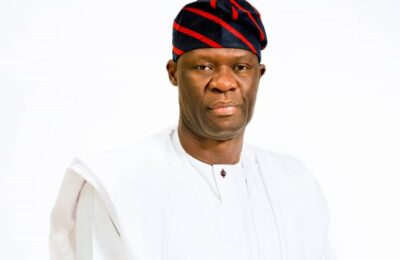
Speech by Chief Festus Ogwuche PhD at the Igala Day Celebration,
Igala Cultural Development Association, Rivers State Branch.
November 15, 2025.