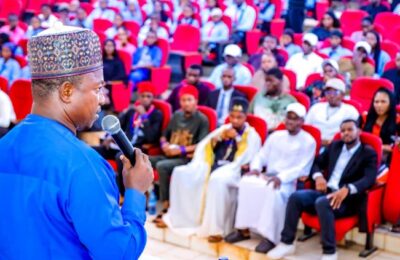

When two brothers quarrel, the stranger collects their inheritance. That ancient African proverb came alive today, November 5, 2025, as I watched a once-tense story take a new turn toward peace in the palace of His Royal Highness Okai Jonah Idris Aiduu, the Onu of Abocho. The reconciliation meeting held there was not merely a community gathering — it was a spiritual cleansing, a reminder that the Igala Nations Cup is more than football. It is the voice of a people learning again that unity is deeper than rivalry, and peace is stronger than pride.
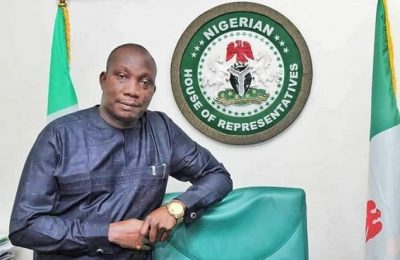
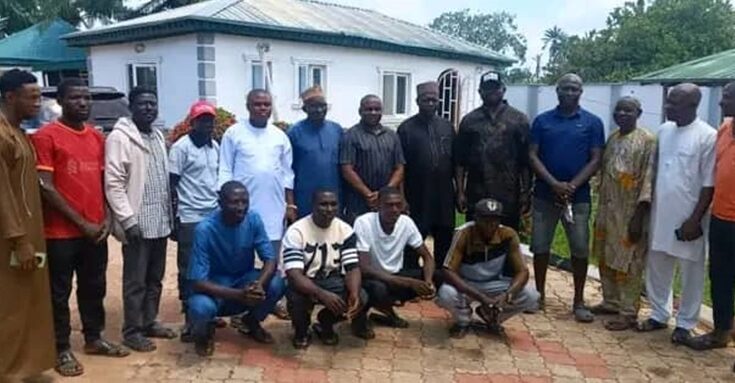
The hall of the Onu’s palace was filled with familiar faces — community elders, youth leaders, football officials, and players of Abocho United FC, all seated shoulder to shoulder under the soft hum of the palace natural cool breeze. But what filled the air was not tension; it was a renewed sense of kinship. Where there had once been accusation, there was now laughter. Where bitterness once stood, forgiveness took root. The organizers of the Igala Nations Cup, led by Hon. Abubakar Kamar (Olachene), had done what governments often fail to do — they built a bridge across hurt and misunderstanding.
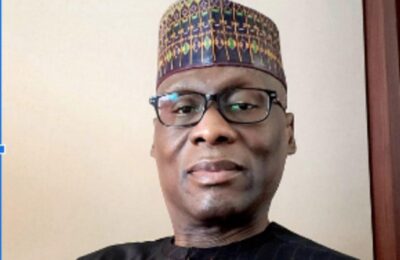
At the center of it all stood HRH Okai Jonah Idris Aiduu, a calm figure of authority, his words weaving like palm wine into tired hearts. His voice carried the depth of ancestral wisdom: “We may come from different towns, but we drink from one river.” Around him sat other pillars of unity — HRH Alhaji Akwu Obaje, Patron of the Igala Nations Cup, and Comrade Idris H.K., both of whom spoke truth with tenderness, urging forgiveness and collective progress. Their message was simple yet eternal: a cracked calabash can still hold water if mended with patience.
As we listened, my mind drifted back to Igalaogba, my childhood home — to the dusty field where Kamar Olachene’s journey began. He was just a young boy then, full of restless energy and impossible dreams. We would gather after school to play barefoot football, and he would shout, “Play for me, let me keep!” He was teaching himself goalkeeping then — throwing himself into the sand, diving after improvised balls wrapped in nylon and rags. Many laughed at him, some even mocked his obsession. But he never stopped. He had a fire that no ridicule could quench. Today, that same passion has matured into a vision that unites towns and softens hardened hearts.
The Igala Nations Cup has become a parable of its own — a testament that even a boy’s dusty dream can grow to wash a kingdom clean of division. For nine years, the tournament has been played in peace, drawing thousands together under the same banner. Yet, when a single misunderstanding erupted between Abocho and Ajaka, rumor-mongers rushed to pour oil on sparks. But today’s meeting at the palace poured water instead — the cool water of dialogue, the sacred balm of brotherhood.
The reconciliation visit was not only symbolic; it was historic. The Abocho palace became more than a royal home — it became a temple of peace. Stakeholders of both communities, guided by the organizers, sat like members of the same family sorting out old grievances with open hearts. The humility of the discussions reflected one truth: peace does not come from power, but from understanding.
When the Onu Abocho spoke, his words carried the rhythm of drums played in the olden days — slow, wise, and steady. He reminded everyone that no matter how far the river flows, it never forgets its source. His message was clear: the Igala people are one body, and when one limb aches, the whole body limps. The Attah’s sons must not fight when the ancestors are watching.
Hon. Kamar Olachene’s leadership shone quietly throughout the event. He stood not as a celebrity organizer, but as a servant of peace — the same boy from Igalaogba, now grown into a man whose dream is binding broken fences. He reminded the gathering that the Igala Nations Cup is not about medals or trophies, but about hearts and humanity. “Our unity is our priority,” he said, his voice steady. “Humanity first.”
As they walked out of the palace courtyard, the evening sun settled over Abocho like gold dust on ancestral soil. They could feel the weight of what had just happened. A crisis had been turned into communion. Two towns had chosen dialogue over division. The football that once sparked tension had become a messenger of mercy.
This is what Africa needs more of — not endless arguments over who scored, but a collective effort to score peace itself. The Igala Nations Cup has quietly become one of those sacred African stories where sport transcends sport — where the whistle signals not just the start of play, but the renewal of hope.
The world should take note: a small tournament in the heart of Kogi State has become a model for peaceful coexistence, built not on politics or propaganda, but on pure human will. It shows that when communities sit under the same roof, even broken drums can still produce healing sounds.
And as I looked once more at Abubakar Kamar (Olachene) — the once-mocked boy who turned his dream into a symbol of peace — I understood something deeper. Football may have given him a stage, but peace gave him purpose. And through his purpose, a people are remembering who they are — one family, one kingdom, one heartbeat.
The Igala Nations Cup is no longer just a tournament; it is a testimony that the African spirit, though tested by misunderstanding, always finds its way back home — to the drumbeat that heals, to the unity that endures, to the truth that never dies.
– Inah Boniface Ocholi writes from Ayah – Igalamela/Odolu LGA, Kogi state.
08152094428 (SMS Only)