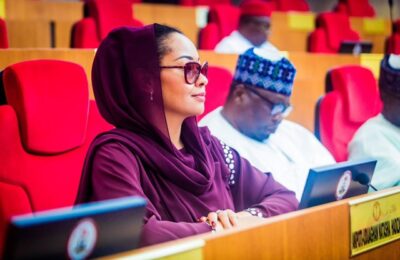

Nigeria’s political landscape continues to bear the scars of an unfinished democratic journey. I mean, one where half the population remains structurally muted, not for lack of competence, but for lack of collective force. Minister Hannatu Musawa’s recent charge to women to unite and dismantle political barriers is more than a ceremonial appeal; it is a national alarm. She exposes a truth long whispered in feminist circles: the greatest impediment to women’s political advancement is not always systemic bias alone, but the fragmentation within their own ranks.
The Nigerian political machinery thrives on division like ethnic division, religious division, class division, and, perhaps most corrosively, gender division. Women, despite being some of the nation’s most formidable mobilizers, remain politically isolated from one another, often competing for crumbs in a structure designed to keep them peripheral. Minister Musawa’s statement indicts this pattern, reminding the country that no female politician, no matter how brilliant, can withstand the entrenched patriarchal frameworks alone. It is coalition, not individual excellence, that shifts power.
Across Africa, countries where women have risen to significant political leadership. For instance from Rwanda to Ethiopia etc. They did not achieve such milestones through isolated efforts. They succeeded through deliberate, strategic unity. Nigeria remains an outlier, not because its women lack vision, but because the political terrain rewards rivalry more than solidarity. When women move as separate entities, the system absorbs them individually; when they move as a bloc, the system must negotiate with them. Musawa’s warning is, therefore, a blueprint: unity is not symbolic; it is survival.

Nigeria’s democratic future depends on tapping into the competencies its political culture often sidelines. The nation cannot afford to exclude the demographic that sustains its economy, stabilizes its communities, and anchors its civic life. Women are not supplementary ornaments in governance; they are essential architects of stability. Fragmentation among them not only diminishes their voice but weakens Nigeria’s overall capacity to build resilient democratic institutions. A divided half of the sky leaves the entire sky unstable.
If Nigeria truly seeks progress, its women must recognize their shared destiny and build alliances strong enough to fracture the ceilings that have long defined political participation. Minister Musawa’s call should not dissolve into another headline; it should become a movement. For when women stand united, they do not merely demand space in politics; they redraw the architecture of power itself.
– Inah Boniface Ocholi writes from Ayah – Igalamela/Odolu LGA, Kogi state.
08152094428 (SMS Only)