
If every ethnic group in Nigeria were granted a state that reflected its identity, governed its affairs, and nurtured its people, the nation would breathe differently. A federation becomes fragile when too many of its components feel unseen, unheard, or unanchored. Anti-social evils are rarely born in a vacuum; they bloom in the neglected corners of society where opportunity has become a rumour. If every graduate walked into a job that matched the weight of their credentials, or at least into a system that recognised their potential, the streets would not be crowded with frustrated brilliance. A country that refuses to genuinely empower its youth and senior citizens eventually pays with the instability they never intended to create.
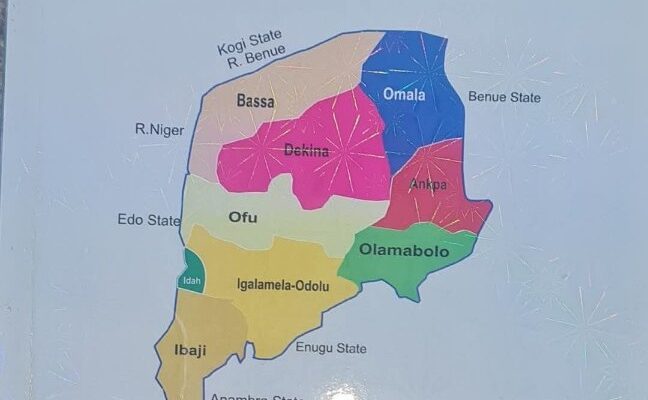
The Igala people; historic, organised, and once celebrated for their unity like a river that never lost direction have in recent years found themselves battling winds that threaten their collective calm. A people known for peace now carry the signs of a wounded federation: discontent where harmony once lived, agitation where silence once reigned. The shift did not begin from within; it is the result of a structure that has repeatedly diluted their relevance, treated their strength as a political afterthought, and buried their aspirations under administrative neglect. When a people who were once steady begin to tremble, it is a sign that the center has ignored them for too long.
Clamouring for Okura State is not a new invention but an old flame that has outlived decades of political coldness. It is a demand carved into memory, passed down like a sacred inheritance, carried by elders, youths, and the diaspora as a collective covenant. The dream has endured military regimes, democratic transitions, and shifting alliances because it is not sustained by politics. It is sustained by identity. A suppressed truth does not die; it simply waits for the courage of its owners to call it again. And now, more than ever, that courage is returning.

Let the Igala people keep speaking, keep writing, keep marching their voices across borders both at home and abroad. Let the demand echo through conferences, markets, classrooms, and global platforms. Democracies mature when citizens refuse to swallow silence; nations grow when their people insist on being counted. In the architecture of an ideal democracy, the voice of the people is not an ornament; it is the foundation stone. A government that ignores its people is like a dam resisting a rising river; delay may last for a season, but it cannot withstand the pressure forever.
Okura State is not merely a political request; it is the quest for equilibrium in a federation that leans unevenly. It is the attempt to restore dignity to a people whose contributions to Nigeria are enormous yet consistently under-acknowledged. If Nigeria truly desires a future built on justice, stability, and shared prosperity, it must confront this truth with honesty: state creation is not about adding lines on a map but about healing fractures in the soul of the nation. And in this healing, the Igala voice must not be ignored, for it carries the rhythm of a people who know both their past and their rightful place in Nigeria’s tomorrow.
– Inah Boniface Ocholi writes from Ayah – Igalamela/Odolu LGA, Kogi state.
08152094428 (SMS Only)