
Dear Sons and Daughters of Kogi West,
History is rarely kind to people who confuse patience with preparation. It is even less forgiving of those who mistake promises for power. For decades, Kogi West has been repeatedly acknowledged, repeatedly assured, and repeatedly postponed. Each cycle has come with familiar counsel: be calm, remain loyal, trust the process—often without timelines, structures, or guarantees.
It is time to state a simple truth plainly: no people ever secured political justice by waiting indefinitely for it to be handed down.

Power is not given.
Power is prepared for.
In modern politics, power is shaped by organisation, coherence, alliances, and leverage—not sentiment or goodwill. Waiting without preparation is no longer patience; it is surrender.
Across Nigeria and beyond, communities that eventually attained political inclusion did so because they organised deliberately, built internal consensus, forged alliances, and spoke with clarity. They did not outsource their destiny to paid loyalists, temporary benefactors, or self-appointed negotiators. They understood a hard lesson: loyalty without leverage produces permanent delay.
Kogi West must learn this lesson now.
For too long, our political conversation has been distracted by rallies, empowerment items, symbolic gestures, and declarations by individuals who carry no collective mandate. Let us be honest with ourselves: empowerment is not equity. Attendance is not consent. Applause is not a mandate. And loyalty purchased today does not translate into justice tomorrow.
We must also confront a deeper inconsistency that has shaped our experience. When power was concentrated elsewhere—when authority narrowed within particular zones or local governments—Kogi West was not consulted. No conferences were convened. No elders’ councils summoned. No youth bodies engaged. Power moved as prerogative, not consensus.
Yet when Kogi West raises the question of equity, we are suddenly told to consult endlessly, to wait patiently, to defer continuously. Consultation cannot become a moral requirement only when Kogi West demands fairness. That is not statesmanship; it is convenience dressed as principle.
At the same time, this conversation must be approached with maturity and inclusion. Kogi State is one political family. The call for equity by Kogi West is not a rejection of Lokoja, Kogi Central, or Kogi East, nor is it an attempt to exclude any part of the state. It is a call for balance, fairness, and a future in which every zone can genuinely aspire.
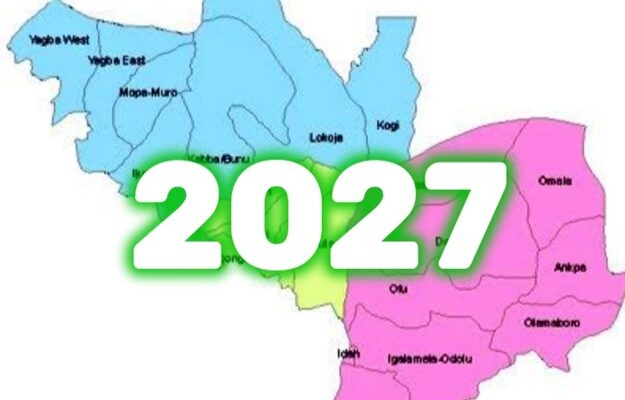
In practical political terms, Kogi State has 21 Local Government Areas: Kogi West has 7, Kogi Central 5, and Kogi East 9. Durable stability has always depended on cooperation, not unilateral assurances. Broad, trust-based partnerships—particularly constructive engagement between Kogi West and Kogi East—offer the most realistic pathway to inclusion, equity, and long-term stability for the entire state.
Let us also be clear about timelines. The conversation is about 2027, not 2031. Any attempt to elevate 2031 as sacrosanct is, in effect, an argument for postponement. Time is not neutral in politics. Every delay strengthens those invested in exclusion and narrows the options of those seeking fairness.
Articles and commentaries that sanctify postponement are not neutral analysis; they are advocacy. History is unforgiving to such interventions. Equity movements endure. Merchants of delay are forgotten.
This is why Kogi West must now shift posture—from expectation to preparation.
Preparation begins with organisation. Kogi West must convene structured town-hall consultations across all its local government areas, build a unified leadership platform, and engage other zones deliberately ahead of 2027.
Preparation requires unity. A people divided internally cannot bargain effectively externally. Multiple voices speaking at cross-purposes weaken collective leverage. Unity does not require uniformity, but it does require coherence—on leadership, messaging, and objectives.
Preparation also requires accountability within Kogi West itself. Any individual claiming to speak for Kogi West must now answer three simple questions: Who mandated you? What structure do you represent? And what timeline are you negotiating for? Voices that cannot answer these questions are not representatives; they are spectators or contractors.
Preparation further requires credibility. Kogi West must project leaders who command respect beyond our borders—leaders who can reassure rather than threaten, persuade rather than posture. Equity will not be achieved through hostility; it will be achieved by convincing others that fairness strengthens Kogi State and secures everyone’s future.
Preparation also means rejecting the politics of paid loyalty. Those who trade promises for proximity negotiate for themselves, not for a people. Their assurances are temporary, their influence conditional, and their commitments reversible. Kogi West’s future cannot be secured by individuals whose authority comes from access rather than mandate.
This call is rooted in peace, inclusion, and democratic balance. It is not a rejection of dialogue, but a demand that dialogue be meaningful. It is not impatience, but a refusal to accept delay as destiny.
History shows that political systems adjust either through foresight or through pressure. Wise societies choose adjustment early, before frustration hardens into resentment. Kogi West’s insistence on equity is not destabilising; it is preventative. A Kogi State where every zone feels a sense of belonging is more stable, not less.
We must therefore stop asking when permission will be granted to aspire. Aspiration is not a favour. It is a right. And rights not asserted with preparation remain theoretical.
Kogi West must prepare for power—by organising, clarifying its message, strengthening internal cohesion, and engaging others with confidence rather than anxiety. We must speak calmly but firmly, patiently but purposefully. We must stop listening to promises without structure and loyalty without results.
The future will not be decided by who waited the longest, but by who prepared the best.
Let us choose preparation over promises.
Unity over noise.
Clarity over convenience.
Kogi West’s destiny will not be delayed forever, but it will not arrive by accident.
Signed:
Yusuf M.A.
For: Concerned Advocates for Kogi Equity Alliance
On behalf of community leaders, professionals, youths, and elders across Kogi West