
The rising wave of insecurity in Nigeria has reached an alarming stage, demanding urgent and decisive action from our leaders. Across the nation, countless families continue to live in fear due to recurring incidents of banditry, kidnapping, communal clashes, and terrorism. The protection of lives and property remains the foremost duty of any responsible government, and it is imperative that those entrusted with leadership rise promptly to this responsibility.
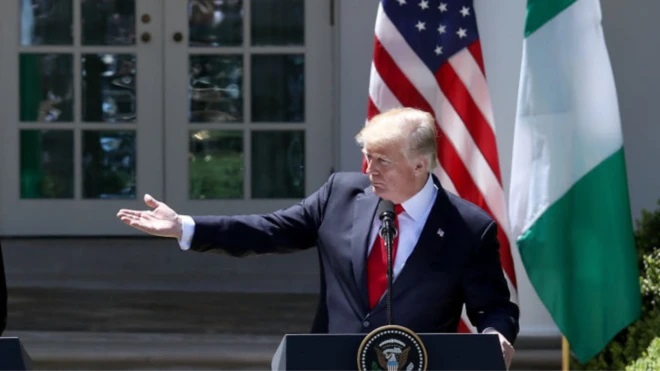
In the midst of this troubling reality, the recent statement credited to U.S. President Donald Trump concerning the security situation in Nigeria has sparked widespread debate. While some interpret his comments as a call for global attention, others see them as an unwarranted interference in Nigeria’s internal affairs. As with most political and diplomatic issues, opinions are divided, and every individual tends to justify their stance based on their understanding and sentiment.
However, one must consider this matter beyond emotions. No matter how troubled a family may be, it is unwise for that family to publicly accept being labeled a “failed” or “irresponsible” household by another head of family. It is even more contradictory when such an external figure claims he intends to help resolve the family’s problems, yet does so by ridiculing them before the world. True assistance, especially on sensitive matters like security, should be rendered with respect, tact, and diplomatic understanding — not through condemnation.
Nigeria indeed faces serious security challenges, but these challenges affect people across all religious and ethnic lines. To tag the situation as “Christian genocide,” as implied in Trump’s comment, is not only inaccurate but also capable of fueling further division among Nigerians. Both Christians and Muslims have suffered greatly from the scourge of violence, and our national focus should remain on uniting against these threats rather than deepening fault lines.
The Nigerian government, civil society, and the international community must continue to engage constructively to find lasting solutions. However, such engagements must be built on mutual respect and a genuine desire to support peace, not on narratives that paint the entire nation in a negative light.
Nigeria belongs to us all. We must rise together, as one people, to confront the monster of insecurity and reclaim our nation’s dignity and stability. Only through unity, responsible leadership, and collective will can we restore hope and peace to our beloved country.
– Theophilus S. Tunde
08105331758