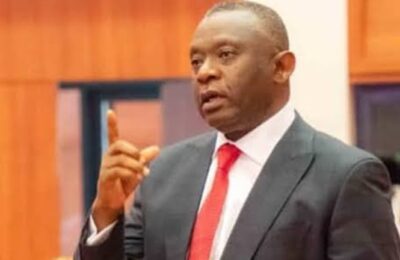

Fresh controversy has erupted over criticisms directed at Natasha Akpoti-Uduaghan, the Senator representing Kogi Central, following her renewed calls for scrutiny and accountability surrounding the long-troubled Ajaokuta Steel Company.
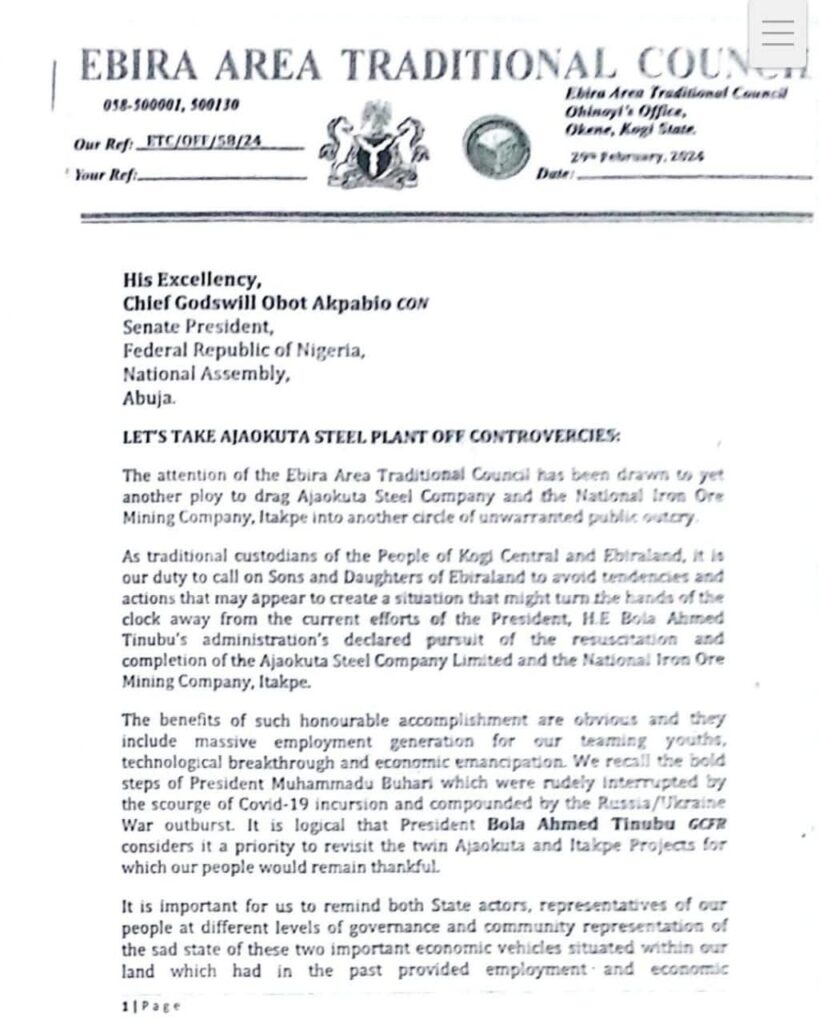
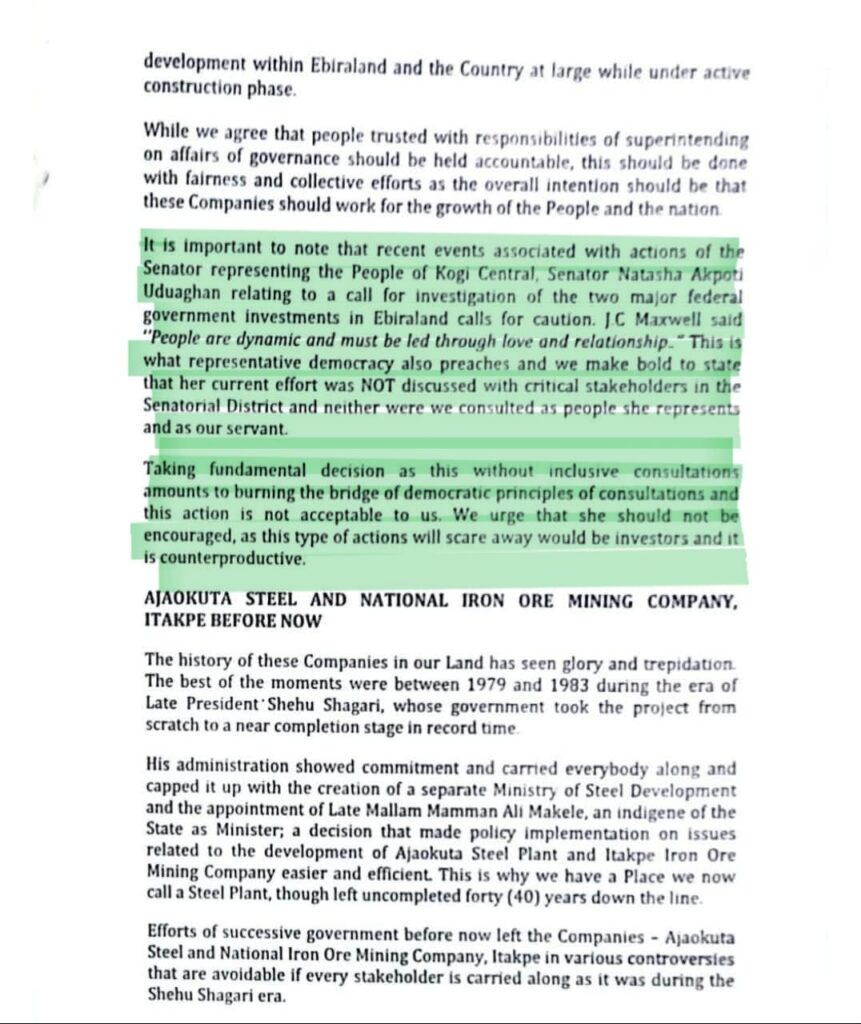
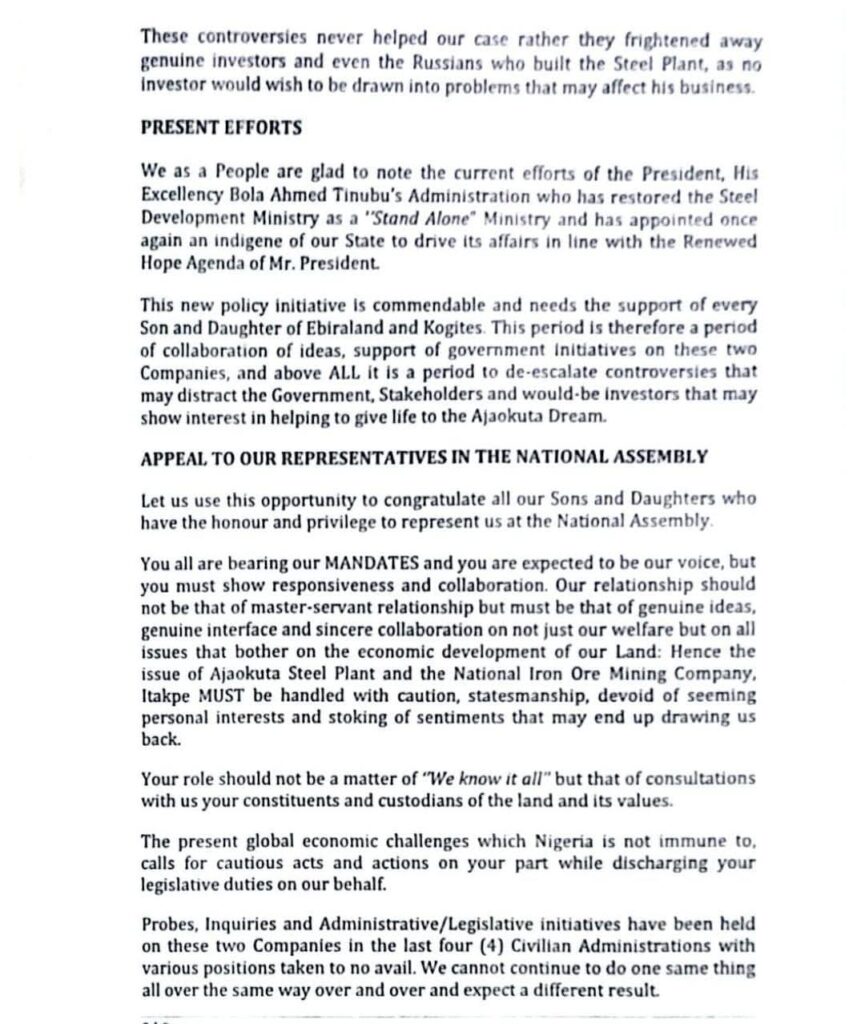
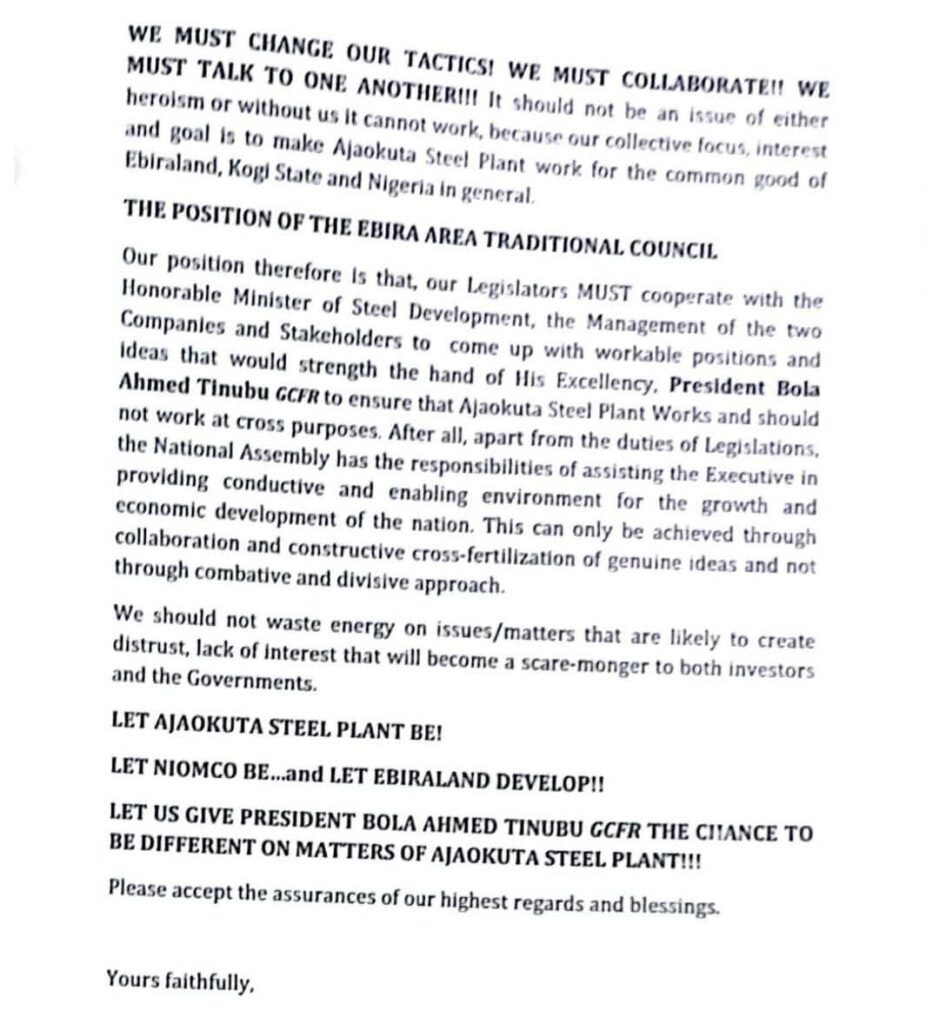
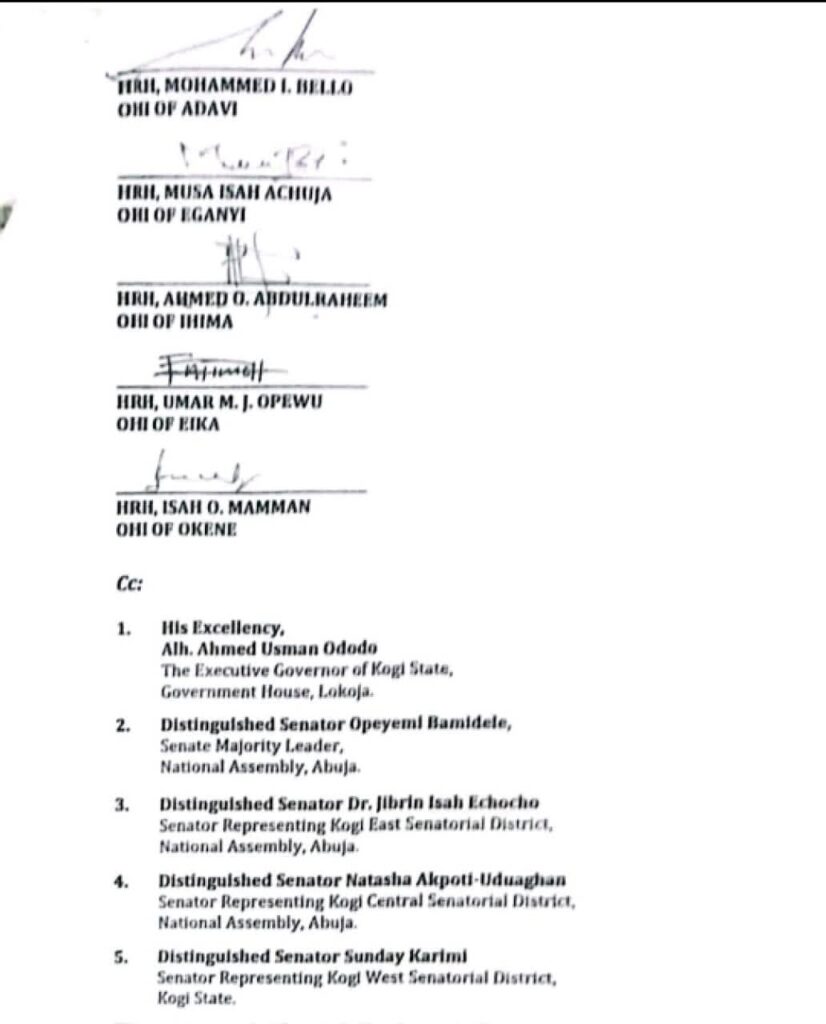
At the centre of the debate is a letter reportedly written by the Ebira Traditional Council to the Senate President, Godswill Akpabio, urging him to caution the senator over her advocacy for investigations into major federal government investments in Ebiraland, including Ajaokuta Steel.
In the letter, excerpts of which have circulated widely, the council argued that Senator Akpoti-Uduaghan’s actions were taken without consultation with what it described as “critical stakeholders” in the senatorial district. The council warned that such steps could “scare away would-be investors” and characterised the senator’s approach as “counter-productive,” asserting that representative democracy requires broad consultation.

However, the council’s position has triggered sharp reactions from political observers and constituents, many of whom argue that the criticism raises more questions than answers particularly against the backdrop of renewed federal efforts to probe long-standing controversies surrounding Ajaokuta Steel.
Critics of the council’s intervention have questioned both the timing and the motivation behind the letter. They ask why such an outcry is emerging now, decades after the steel complex became synonymous with failed industrial policy, alleged mismanagement, and corruption. Some contend that if explanations are required, they should come from those who historically oversaw or influenced decisions around the steel company, rather than from institutions perceived to be seeking to restrain legislative oversight.
Attention has also been drawn to the broader national context. President Bola Ahmed Tinubu has, since assuming office, signalled a renewed commitment to investigating stalled or compromised strategic national assets. Observers note that the current probe into Ajaokuta Steel did not originate solely from the Kogi Central senator, but forms part of wider federal actions aimed at addressing alleged financial and contractual irregularities.
Within this context, questions have been raised about whether the Ebira Traditional Council itself was consulted before the Federal Government commenced investigations linked to the controversial $496 million payment associated with Ajaokuta Steel and the tenure of former Attorney-General of the Federation, Abubakar Malami, who is reportedly facing investigation and detention at Kuje Prison.
Political analysts further point to what they describe as an apparent contradiction in the council’s argument. While it warned that Senator Akpoti-Uduaghan’s actions could deter investors, similar concerns have not been publicly directed at the Presidency, whose anti-corruption and accountability measures are widely viewed as critical to restoring long-term investor confidence.
Supporters of Senator Akpoti-Uduaghan maintain that her stance is consistent with her longstanding advocacy for transparency around Ajaokuta Steel, a project often described as the bedrock of Nigeria’s industrialisation, yet one that has consumed billions of dollars without becoming operational. They argue that legislative oversight and calls for investigation are constitutional responsibilities of lawmakers, not acts of sabotage.
As debate continues, the controversy has reopened fundamental questions about accountability, stakeholder engagement, and the future of Ajaokuta Steel Company. For many residents of Kogi Central and beyond, the central issue remains whether renewed scrutiny will finally yield justice, reform, and the long-awaited revival of Nigeria’s steel industry or whether political pushback will once again stall progress.
– Michael Samuel Idoko, a media entrepreneur and publisher.