
By Abdulkarim Abdulmalik
For more than three years, one phrase has dominated Nigeria’s political conversation: “subsidy is gone.”
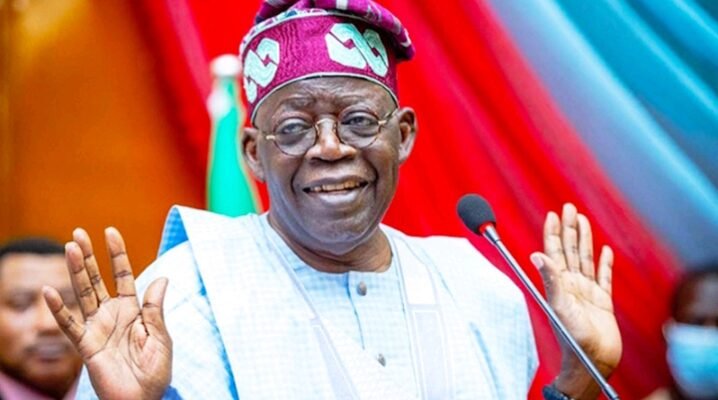
President Bola Ahmed Tinubu announced it in his inaugural address on May 29, 2023, and almost immediately, the country entered a new economic reality.

Petrol prices rose sharply. Transport fares followed. Food prices climbed. Families adjusted household budgets. Businesses struggled with higher operating costs. And across the country, anger found a target: the President.
Tinubu was called insensitive. He was accused of deliberately making Nigerians poorer. To many citizens confronting the immediate consequences of subsidy removal, the economic argument sounded like a luxury. Hunger does not understand fiscal policy. A commuter paying twice the former transport fare does not experience “macroeconomic adjustment”; he experiences hardship.
That is why Babatunde Fashola’s recent intervention deserves serious attention—not necessarily because everything he said should be accepted without question, but because it forces Nigerians to confront a question that politics often avoids:
If subsidy was unsustainable, what was the alternative?
Fashola, former Lagos governor and former Minister of Works, Power and Housing, recently argued that Nigeria’s fiscal circumstances left the Federal Government with little room to continue financing petrol subsidy. He also recalled the role of international financial institutions, including the World Bank, in pushing Nigeria toward reform.
That claim changes the conversation. It does not erase the suffering Nigerians have experienced. But it demands that the subsidy debate move beyond slogans.
The Uncomfortable Economics of “Cheap” Petrol
For years, Nigerians were encouraged to think of petrol subsidy as a social benefit.
The logic was simple: government absorbs part of the cost, Nigerians buy petrol more cheaply, and everybody benefits. But there was always another side to the story.
When government spends billions subsidising consumption, that money must come from somewhere. It comes from public revenue that could otherwise finance infrastructure, healthcare, education, security and social protection—or from borrowing.
The fundamental question, therefore, was never simply whether subsidy was good or bad.
It was:
Could Nigeria afford it?
And even more importantly:
Who actually benefited most from it?
This is where the argument becomes uncomfortable.
A wealthy household with several vehicles naturally consumes more petrol than a poor family without a car. A commercial enterprise operating dozens of vehicles consumes more than a petty trader walking to her stall.
A universal subsidy therefore does not necessarily constitute a progressive social programme.
It can become an expensive mechanism through which government subsidises consumption by people who may not need assistance.
That does not mean every naira spent on subsidy was wasted. Nor does it mean corruption and inefficiency surrounding the petroleum sector should be ignored. It simply means Nigerians must distinguish between helping the poor and subsidising everybody indiscriminately.
But there is Another Side to the Story
This is where the Tinubu administration must also listen carefully.
The fact that subsidy may have been financially unsustainable does not automatically mean its removal was painless, fair or perfectly executed.
For the common citizen, the sequence was brutal.
Fuel prices rose.
Transport became more expensive.
The cost of moving agricultural produce increased.
Businesses transferred higher energy costs to consumers.
Inflation accelerated.
And wages struggled to keep pace.
The market does not care about government spreadsheets. A mother standing in a market deciding whether to buy rice, beans or vegetables is not comforted by the phrase “fiscal consolidation.” She wants to feed her children.
That human dimension must remain central to any assessment of the reform.
Therefore, defending subsidy removal should never become an excuse for dismissing Nigerians who suffered because of it.
Tinubu’s Biggest Political Gamble
What makes Tinubu’s decision politically significant is that he chose a reform that was almost guaranteed to be unpopular.
Politicians generally prefer policies whose benefits are immediate and whose costs can be postponed.
Subsidy was politically convenient. Removing it was politically dangerous.
That is precisely why the President deserves credit for accepting the political consequences of the decision; but credit must not become immunity from scrutiny.
Leadership means making difficult choices. It also means being accountable for how those choices are implemented.
If subsidy savings are genuinely being redirected toward productive investment, Nigerians should be able to see the evidence.
If student financing has expanded, show the numbers.
If compressed natural gas is reducing transportation costs, demonstrate the impact.
If states are receiving increased allocations, explain how that money is being used.
If tax reforms are producing a fairer system, demonstrate who is paying more and who is paying less.
The Nigerian public deserves more than political speeches. It deserves receipts.
The World Bank Question
Fashola’s claim about the World Bank is perhaps the most politically explosive aspect of the discussion.
If international financing was indeed tied to subsidy reform, Nigerians deserve to understand precisely what was demanded, under what circumstances and what alternatives were considered.
There is nothing inherently wrong with international institutions recommending economic reforms. But Nigeria is a sovereign country.
Ultimately, Nigerian leaders, not the World Bank, must answer to Nigerians. This distinction matters.
If subsidy removal was necessary because Nigeria’s finances had become unsustainable, government should say so plainly.
If international lenders reinforced that position, government should provide the relevant documentation.
Transparency would settle much of the controversy.
And then Comes Atiku
The emerging political debate over 2027 makes this issue even more important.
Any presidential candidate promising to restore subsidy must answer a straightforward question:
How much will it cost, and where will the money come from? This is not an unreasonable demand. It is rational!
If Nigeria’s finances have fundamentally changed, candidates should please provide evidence.
If oil production has increased sufficiently to finance subsidy, please show the production figures.
If domestic refining has transformed the economics of petrol, please explain the numbers.
If subsidy can be reintroduced without weakening federal and state finances, please demonstrate how.
Election campaigns should not become competitions in promising Nigerians things that government cannot afford.
The opposition has every right to criticise Tinubu’s reforms. Indeed, democracy requires it. And there is no two-way a out that!
But criticism must come with an alternative.
“We will restore subsidy” is not an economic policy until someone explains who will pay the bill.
The Real Lesson for Nigeria
Perhaps the greatest mistake in Nigeria’s subsidy debate is treating it as a contest between compassion and cruelty. It is not!
A government can remove subsidy and still be compassionate. Also, a government can retain subsidy and still be irresponsible. But the real test is whether public policy improves the lives of ordinary citizens over time.
Tinubu’s government therefore has an enormous responsibility.
If subsidy removal was necessary to prevent fiscal collapse, then Nigerians must eventually see the benefits:
Better infrastructure.
Reliable electricity.
Cheaper transportation.
More jobs.
Stronger social protection.
A productive economy.
A currency that inspires confidence.
And institutions capable of ensuring that public resources are not diverted by corruption.
If otherwise, Nigerians will understandably ask: We endured the pain; but what did we get in return?
That is the question that should haunt every policymaker.
Fashola’s intervention has reopened an important conversation. But the debate should not end with “Tinubu was right” or “Tinubu was wrong.” Nigeria deserves something more mature.
The country must ask what caused the subsidy crisis, why successive governments tolerated it, who benefited from it, who suffered from its removal, where the savings are going, and whether the reforms are actually creating a stronger economy.
Tinubu may well have taken a politically costly decision that Nigeria could no longer avoid. But history will not judge him merely by whether he removed subsidy.
History will judge him by what he built after removing it. That is where the real test begins.
– Abdulkarim Abdulmalik is an Abuja-based Journalist and can be reached via email: nowmalik@gmail.com