
- Says “an extra fare is never worth a human life”
A Nigerian civil society group has urged Kogi State authorities to tighten regulation of commercial motorcycles and tricycles, warning that persistent overloading is endangering lives on the state’s roads.
The Initiative for Grassroot Advancement in Nigeria (INGRA) called on the Kogi State Ministry of Transportation, through its Vehicle Inspection Unit (VIO) and in collaboration with other road-safety agencies, to strengthen monitoring of Okada (commercial motorcycles) and Keke NAPEP (tricycles) across the state.
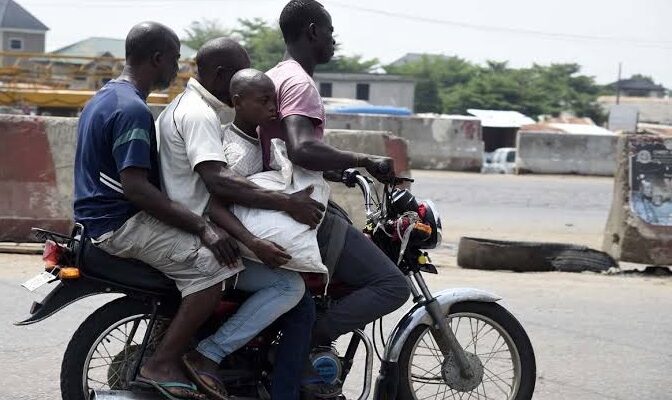
In a statement issued by its Executive Director, Hamza Ibrahim Aliyu, the group said it was particularly concerned about motorcycle riders carrying two or more passengers at once, sometimes including children, and tricycle operators carrying more people than their approved seating capacity.

“These practices expose passengers, pedestrians and other road users to preventable injuries and loss of life,” the group said.
INGRA acknowledged that commercial transport provides livelihoods and helps residents reach markets, schools, health facilities and workplaces, especially where affordable public transport is limited. It said, however, that this does not excuse practices that endanger passengers.
“No resident should have to choose between an affordable journey and a reasonable expectation of safety,” the statement said.
The group cited Section 33 of Nigeria’s 1999 Constitution (as amended), which protects the right to life, and Article 4 of the African Charter on Human and Peoples’ Rights, which it said forms part of Nigerian law. It also referred to the UN Guiding Principles on Business and Human Rights, which say businesses of all sizes have a responsibility to respect human rights.
INGRA said the National Road Traffic Regulations, 2012 prohibit motorcycle riders from carrying more than one passenger on the designated seat and require protective helmets for riders and passengers. It said commercial tricycles must likewise stay within their approved seating capacity.
The group stopped short of describing unsafe riding as a proven human-rights violation. “Not every instance of unsafe riding amounts, by itself, to a legally established human-rights violation,” it said, but it argued that persistent overloading raises serious public-safety concerns.
INGRA’s first demand is that passenger limits be enforced, with one passenger per commercial motorcycle and no passengers seated beside tricycle drivers or in other unsafe positions. It also wants routine, visible and lawful inspections carried out by the VIO, the Kogi State Road Traffic Management Agency (KOTRAMA), the Federal Road Safety Corps, the Nigeria Police Force and local authorities around markets, schools, motor parks and major routes across the state’s 21 local government areas.
The group further called for enforcement against riding without suitable helmets, speeding, dangerous overtaking and the operation of unroadworthy vehicles. It urged motorcycle and tricycle unions to adopt clear safety rules, hold regular awareness sessions and support the reporting of repeat violations.
On passenger protection, INGRA said complaints channels should be established, with special attention to children, pregnant women, older persons and people with disabilities. It also insisted that enforcement must not become a pretext for harassment, extortion or arbitrary arrests, and that any sanctions should be transparent, proportionate and lawful.
The group urged riders and tricycle operators to refuse unsafe loads even when offered extra fares. “An extra fare is never worth a human life,” it said. It also appealed to passengers and parents to avoid overcrowded vehicles, insist on protective measures and report dangerous practices.
INGRA said the state government should pair enforcement with engagement with operators, safer road infrastructure and measures to improve access to affordable public transport.
It called on the Kogi State Government to direct the Ministry of Transportation and relevant agencies to set up a coordinated, sustained programme for regulating commercial motorcycle and tricycle operations.
“Protecting lives on our roads must be treated as as a daily responsibility, not only as a response after an accident,” the statement said.