
Nigeria signed a non-binding agreement with the United Kingdom on energy security and the transition away from fossil fuels and secured a commitment from Türkiye to convene a joint economic commission by early 2027, as Nigerian officials pressed a “just transition” message at the U.N. climate summit.
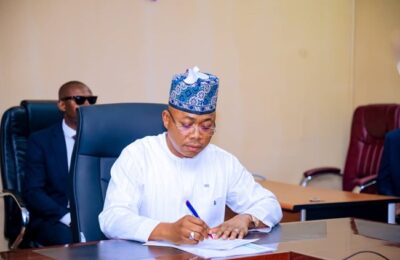
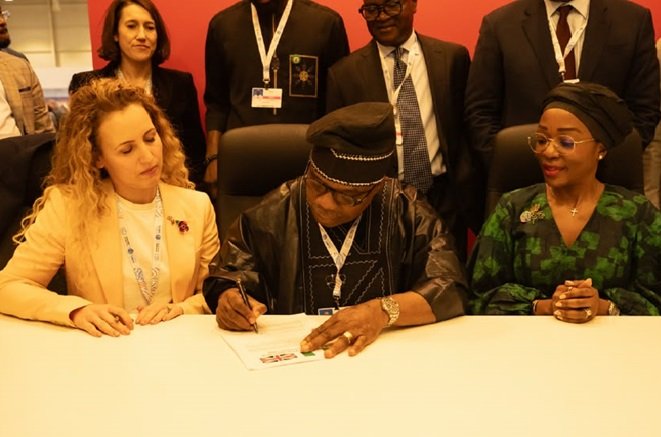
Minister of State for Foreign Affairs Sola Enikanolaiye signed the memorandum of understanding with the British government on the sidelines of COP31, the 31st Conference of the Parties to the U.N. Framework Convention on Climate Change. He stood in for Environment Minister Balarabe Abass Lawal, who leads Nigeria’s delegation.
Enikanolaiye told the launch event that Nigeria’s energy transition must be orderly and equitable and must account for national circumstances, energy security and development priorities. He said Nigeria has a pathway to net-zero emissions by 2060, regards natural gas as a transition fuel and remains committed to ending routine gas flaring by 2030. A Joint Decarbonisation Working Group has been established under the arrangement.

He said the accompanying UK-Nigeria Methane Partnership should speed action across the oil and gas, waste and agriculture sectors, with attention to better measurement and reporting, leak detection and repair, and capture of associated gas. “Our collective success will depend not merely on the commitments we announce, but on the practical results we achieve,” he said.
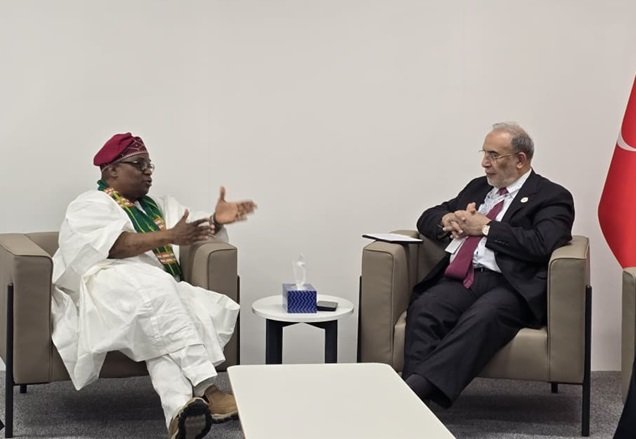
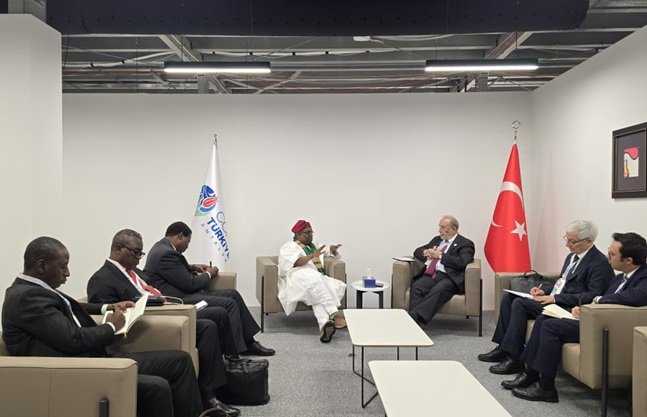
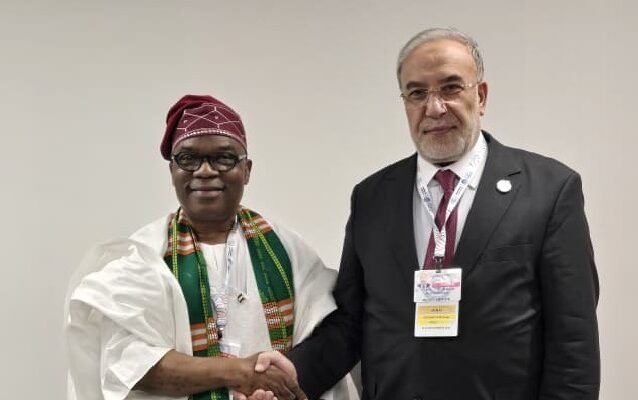
In a separate bilateral meeting, Enikanolaiye and Türkiye’s Deputy Foreign Minister for Africa, Musa Kulaklikaya, agreed that the Joint Economic Commission would meet by the first quarter of 2027 to promote trade and investment. Both sides cited defence, energy, infrastructure and trade as priority areas.
Enikanolaiye pointed to Nigeria’s large natural gas reserves and invited Turkish participation in the Trans-Saharan Gas Pipeline and the Nigeria-Morocco Gas Pipeline. Nigeria thanked Türkiye for training provided to its special forces, and the two countries are finalizing a memorandum to formalize defence industry cooperation.
The officials also discussed regional stability in West Africa. Nigeria acknowledged Türkiye’s role in the Sahel and stressed collaborative diplomacy to preserve peace and integration within the Economic Community of West African States, particularly in relations with the Alliance of Sahel States. They agreed to streamline consular and visa procedures for diplomatic and official passport holders.
Enikanolaiye also attended an event organized by Innovative Renewable Energy Storage Solution, where he praised a Nigerian entrepreneur’s solar backpack. He credited President Bola Tinubu’s administration with economic reforms and macroeconomic stability that he said allow such businesses to grow. He later joined Agriculture and Food Security Minister Abubakar Kyari in opening Nigeria Day at the country’s pavilion.
The summit opened with an address by Turkish President Recep Tayyip Erdoğan, who called environmental stewardship a moral obligation and said developing nations need predictable financing rather than a disproportionate share of the crisis burden. He cited Türkiye’s new Climate Law and its Water Efficiency Mobilization against drought.