
By Idris Rufai
The growing controversy surrounding interfaith relationships raises an important question about our understanding of love, humanity, religious tolerance and the true essence of faith. Apparently, celebrating a marriage that crosses religious boundaries has become enough to make some people question another person’s relationship with God.
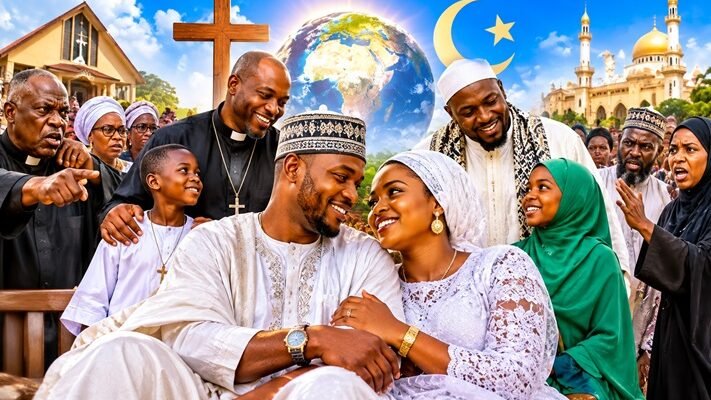
A recent example is the marriage between Pastor Emmanuel Simon, founder of The Blessed Embassy in Kaduna, and his Muslim wife, fondly known as “Mummy Jamal.”

Pastor Emmanuel attracted public attention after he reportedly accompanied his wife and their baby to Nnamdi Azikiwe International Airport, Abuja, as they travelled to Saudi Arabia to perform Umrah, the lesser pilgrimage in Islam.
For some people, this simple demonstration of love and support became an opportunity for religious criticism. However, beyond the arguments and condemnations, there is a bigger lesson worth reflecting on: Must love and mutual respect end where religious differences begin?
To me, there is nothing inherently wrong with people from different religious backgrounds choosing to build a life together, provided their relationship is founded on mutual respect, understanding, responsibility and genuine affection.
I see such relationships as opportunities for individuals from different faiths to understand one another better, challenge prejudice and promote peaceful coexistence. Religion should not become an excuse for hatred, discrimination or the denial of another person’s humanity.
As a Muslim by belief and practice, my position is not an attempt to undermine my faith or dismiss the importance of religious teachings. Rather, I believe that how we treat people matters tremendously. In many human relationships, beyond the religious identity someone carries, I pay attention to their character, honesty, kindness and the respect they show to others.
Humanity should never become a casualty of religious differences.
Can we also stop pretending that we do not understand what selective religious outrage looks like?
Some people engage in fornication, adultery, dishonesty and other behaviours that contradict the very religious principles they publicly defend. Yet, when another person makes a personal relationship choice that does not align with their expectations, they suddenly become guardians of morality.
It is interesting how easily some people extend grace to themselves while denying others the same understanding. They conveniently emphasise the aspects of scripture that support their arguments while overlooking those that challenge their own behaviour.
We are often selective in our religious judgments, and that is an uncomfortable truth.
This is not an argument that religious teachings should be abandoned or that every personal decision must receive religious approval. Rather, it is a call for sincerity, humility and consistency in how we practise and interpret our faith.
Pastor Emmanuel’s support for his Muslim wife, including her religious journey, offers an opportunity to reflect on the importance of companionship, understanding and respect within relationships.
Interfaith marriages are not new, and they are not going to disappear because of public criticism. People will continue to form relationships across religious boundaries, and society must learn to discuss such realities with maturity rather than hostility.
Christianity teaches love, and Islam equally places great emphasis on love, mercy, compassion and good character. These shared values should inspire us to build bridges rather than walls.
Of course, religious differences and the theological questions surrounding interfaith marriage deserve honest and respectful discussions. But such discussions should never become a licence to insult, shame or dehumanise people.
At the end of the day, I believe that love should lead, peace should prevail, and unity should remain our collective aspiration.
Before religion became a defining label of identity, humanity was already a reason for people to recognise one another, care for one another and live together. Perhaps we need to rediscover that humanity.
– Idris Rufai
idrisrufai744@gmail.com