
By Abu Micheal
In the dusty, mineral-rich community of Enjema in Ankpa Local Government Area, history was made, not by the discovery of a new mineral, but by a declaration that has redefined mining governance in Kogi State.
The recent backing of artisanal miners by Governor Ahmed Usman Ododo, where he ordered the regulation, not criminalisation, of mining activities in Enjema, remains a watershed. It was a moment when leadership walked into the field, saw the people behind the minerals, and chose inclusion over intimidation.

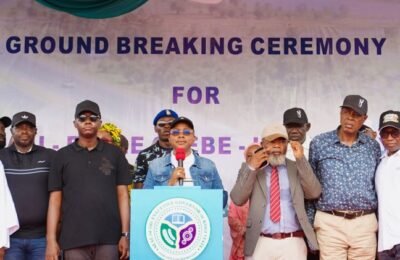
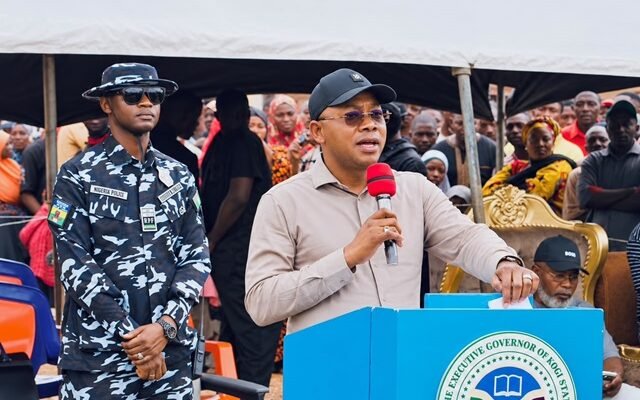
Governor Ododo had gone to Enjema on an on-the-spot assessment visit to inspect the environmental degradation and infrastructural damage allegedly caused by mining activities. What he met on ground changed the narrative. He declared that legitimate artisanal miners in Enjema should not be criminalised for engaging in lawful mining activities to earn a living, and urged relevant authorities to distinguish them from criminal elements.
In words that have continued to echo across Kogi State and beyond, he said, “They are not kidnappers. They are not armed robbers. They have chosen not to go the way of kidnapping. They have chosen to earn a living through their hands. Why should somebody come here, arrest them and tag them as illegal miners?”
The Governor disclosed that the State Government had profiled a significant number of artisanal miners in the area, including more than 1,000 degree holders, over 500 master’s degree holders and more than 300 individuals without formal educational qualifications.
This revelation shattered a long-held stereotype. The artisanal miner is not a criminal. He is a graduate who refused to join kidnapping gangs. She is a master’s degree holder who chose hard labour over fraud. He is a youth who chose the pick and shovel over the gun. By profiling them, Governor Ododo did what many governments have failed to do. He gave the miners an identity, data, and dignity.
Inclusion, as demonstrated in Enjema, carries profound benefits for the artisanal miners themselves. It means thousands of families in Enjema and other mining communities will no longer live in fear of arbitrary arrest and harassment.
With proper profiling and licensing, artisanal miners can now organise into cooperatives, access training, safety equipment, modern tools, and credit facilities. Regulation brings safety standards, reduces deaths in pits, curbs child labour, and reduces environmental hazards.
Formal miners can sell to licensed buyers at fair prices, instead of being exploited by middlemen and illegal operators, while the involvement of graduates creates an opportunity for technical training, value addition, and entrepreneurship in processing and marketing of minerals.
For host communities, the Governor’s visit brought a new deal. He expressed displeasure over the condition of roads and the absence of basic social amenities in Enjema despite the mineral resources being extracted from the area. He directed that government would dialogue with operators and ensure they fulfil their Corporate Social Responsibility obligations by rehabilitating damaged roads and providing essential facilities, including schools, potable water and electricity.
Through strengthened Community Development Agreements, host communities will now get good, motorable roads, potable water, electricity, quality schools and scholarships, healthcare facilities, and sustainable empowerment, not token handouts. Minerals must no longer leave while poverty remains.
Inclusion also benefits licensed mining companies. A regulated environment means clear rules and reduced conflict with host communities, protection from illegal competition and sabotage, a stable workforce drawn from local, profiled miners, a better relationship with government and security agencies, and a conducive environment for long-term investment. When miners, communities and companies operate under one clear framework, mining becomes business, not battlefield.
The declaration by Governor Ododo, a man known to be a perpetual promise keeper, goes beyond Enjema. It is a strategic economic and governance masterstroke for Kogi State. Formalised miners pay royalties, levies and taxes, and the state can now track production and plug leakages. Profiling gives the state a database for policy, intervention and investor confidence. Every youth engaged in lawful mining is a youth taken away from kidnapping, armed robbery and other crimes, and this is security through employment. Investors prefer states where mining is regulated, peaceful and community-friendly, and Kogi is now positioning itself as that state. Regulation also allows for reclamation of degraded lands, control of pollution, and protection of farmlands and water sources.
Perhaps the most important gain is peace-building. The declaration will no doubt go a long way in peace-building and creating a conducive environment for artisanal miners, host communities and mining companies and their activities. Where there was suspicion, there is now trust. Where there was confrontation, there is now dialogue.
Praise must go to the Commissioner for Solid Minerals Development, Engr. Bashir Gegu, who commended the Governor for personally visiting the community, describing the visit as an indication of the administration’s commitment to ensuring that the state’s mineral wealth benefits its citizens.
The Commissioner explained that the state government had strengthened regulations governing mining activities, particularly the issuance of community consent letters and the implementation of Community Development Agreements. He noted that such agreements should go beyond token financial empowerment to include sustainable development projects such as good roads, potable water, electricity, quality schools and scholarships for members of host communities.
He also cautioned traditional rulers against granting consent to unlicensed mining operators, urging those who had issued such approvals without following due process to withdraw them. This warning is crucial, as it restores order, transparency and accountability to the consent process.
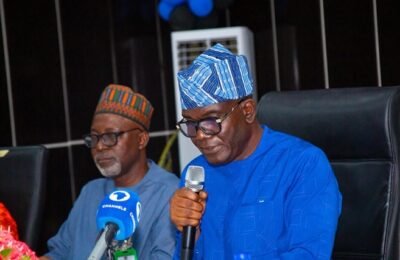
In his remarks, the Chairman of the Miners Association of Nigeria, Kogi State Chapter, Yunusa Oruma, appreciated the Governor for the visit and his administration’s support for mining activities. Oruma described Governor Ododo as a supporter of the mining sector and pledged the association’s readiness to mobilise artisanal and other categories of miners in support of the administration. That pledge is the clearest proof that inclusion breeds loyalty, and that protection breeds partnership.
Governor Ododo maintained that his administration would not allow legitimate mining activities to be disrupted under the guise of tackling insecurity, adding that the government remained committed to protecting the lives and livelihoods of residents. In Enjema, he did not just inspect a mining site. He inspected a people, listened to their pains, and gave them a promise: you will not be criminalised for working hard. That is why the Enjema declaration remains a watershed. It has turned artisanal miners from suspects to stakeholders, host communities from victims to beneficiaries, and Kogi State from a state of unregulated extraction to a state of regulated prosperity.
– Abu Micheal, is Special Adviser on South South Mobilization to Kogi State Governor.