
Nigeria’s disturbing stories of violence and deception expose a deeper crisis of moral authority, social trust and the responsibilities of a generation.
Nigeria’s most alarming crisis may not be the violence that makes headlines or the fraud that damages its international reputation, but the gradual erosion of the moral boundaries that once held communities together. Reports of brutal crimes, online romance scams and the exploitation of human trust raise a question the country can no longer afford to ignore: Where are the elders who once served as custodians of wisdom, conscience and communal responsibility? A nation does not lose its moral compass overnight. It loses direction when integrity becomes negotiable, dishonesty becomes fashionable and the pursuit of wealth eclipses the value of human life.
The reported killing and dismemberment of a young woman in Anambra, allegedly after she visited her boyfriend, captures the terrifying consequences of violence within relationships that should offer trust and security. The circumstances must be established through credible investigation, and justice must follow the evidence. Yet the broader concern transcends any single case: women must be able to form relationships without fearing that intimacy could become a death sentence. When the promise of affection becomes a source of mortal danger, the damage extends beyond one family. It weakens the social trust upon which relationships, communities and nations depend.

The crisis has another face: the growing international concern surrounding internet fraud associated with some Nigerian perpetrators. Consider the distressing account of a foreign woman reportedly deceived through an online relationship and defrauded of a substantial sum. Her nationality is secondary to the betrayal. Romance scams turn loneliness into leverage and affection into an instrument of theft. They also impose a reputational cost on millions of Nigerians whose integrity deserves recognition, not suspicion. No amount of ill-gotten wealth can transform exploitation into enterprise. When criminal proceeds become symbols of success, the distinction between prosperity and predation begins to disappear.
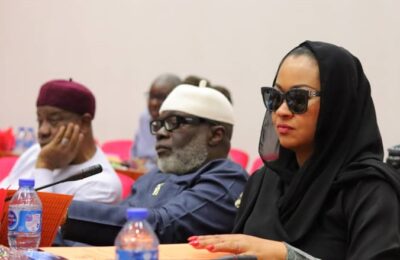
This is where the silence of the elders becomes consequential. Across many Nigerian communities, older generations traditionally transmitted moral knowledge through proverbs, storytelling, correction and personal example. They were not merely repositories of age; they were expected to connect individual conduct to collective consequences. That tradition was never perfect, and nostalgia must not obscure the failures of the past. Nevertheless, its strongest principle remains indispensable: character is a public good. Today, many elders continue to provide invaluable guidance, but changing family structures, economic pressures and the influence of digital culture have complicated the transmission of values. The question is whether society has built institutions capable of sustaining that moral inheritance.
Social media has intensified the challenge by making wealth visible while concealing its origins. Expensive cars, extravagant lifestyles and carefully curated displays of success can create the impression that financial achievement is the ultimate measure of human worth. For impressionable young people confronting unemployment, inequality and uncertain prospects, this spectacle can make honest labour appear unrewarding.
But hardship does not excuse criminality, just as prosperity does not establish virtue. Nigeria must resist both the romanticisation of illicit wealth and the simplistic condemnation of its youth. Millions of young Nigerians are building businesses, pursuing education, supporting families and serving their communities. Their achievements demonstrate that the country’s future remains contested, not lost.
The responsibility for reversing this decline cannot rest on young people alone. Families must establish clear moral boundaries; schools must cultivate judgment alongside academic competence; religious institutions must practise the integrity they preach; and traditional leaders must make accountability central to community life. Government must strengthen public safety, investigate violent crimes impartially, prosecute offenders fairly and expand credible pathways to education and employment.
Digital literacy must also teach citizens to recognise manipulation, protect personal information and question online displays of unexplained wealth. These interventions are not substitutes for one another. They form a common defence against the conditions in which violence, deception and impunity can thrive.
Nigeria must also understand that international reputation is earned through institutions and conduct, not repaired through slogans. Every unresolved violent crime can deepen public anxiety; every widely publicised fraud case can reinforce damaging stereotypes. Yet collective blame is neither just nor productive. The crimes of individuals must never become a verdict on an entire nationality or generation.
The appropriate response is evidence-based policing, transparent justice, responsible public communication and sustained investment in the social conditions that allow people to pursue legitimate livelihoods. A credible nation is not one without crime, but one whose institutions confront wrongdoing consistently and whose citizens refuse to celebrate it.
The question, then, is not merely where Nigeria’s elders have gone, but whether the country is prepared to restore the authority of wisdom and the practical value of conscience. Elders must teach without romanticising the past; young people must embrace opportunity without surrendering their principles; and leaders must demonstrate that accountability applies to the powerful as well as the powerless.
Nigeria does not need to retreat into yesterday. It needs to carry forward the best of its moral traditions while building a safer, fairer and more trustworthy future. A nation’s true wealth is not measured by the fortunes displayed on its streets, but by the lives protected in its homes, the dignity preserved in its relationships and the integrity upheld in its institutions. When a society begins to mistake wealth for worth and silence for peace, its deepest crisis is no longer economic. It is moral.
– Inah Boniface Ocholi writes from Ayah – Igalamela/Odolu LGA, Kogi state.
08152094428 (SMS Only)