
- Says faith should not bar anyone from governing Kogi, but rejects replacing one form of exclusion with another
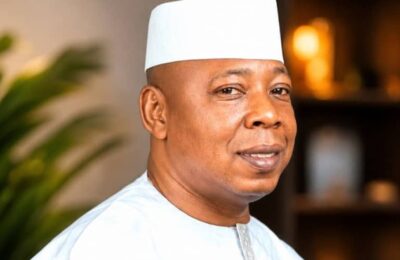
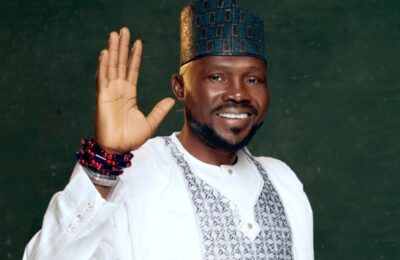
A Christian cleric, Pastor Stanley Omoniyi Ajileye, has urged the Church in Kogi State to become politically conscious and engage actively in public affairs, insisting that Christian faith “does not require political silence.”
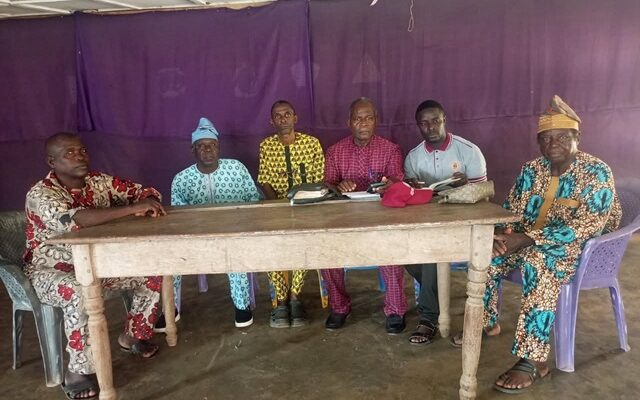
Ajileye spoke on Monday at a consultative meeting of the Kogi State Kingdom Forum, held at Our Saviour’s Anglican Church, Kabba, where he presented a political update on the 2027 governorship question and the debate over a Christian governor in the state.
He commended the forum for creating a platform for Christian leaders to discuss political developments, noting that many Christians had for too long treated politics as territory from which the Church should keep its distance.

“Politics affects our roads, our schools, our hospitals, our communities, our security, our economy,” he said, warning that if the Church fails to help shape political leadership, political decisions will eventually shape the Church and the society around it.
Faith and governorship ambition
The cleric said there had long been a perception among Christians that aspiring to govern Kogi State was “almost a forbidden ambition.” Whether the cause was political marginalisation, religious exclusion, ethnic calculation or political arrangements, he asked whether a Christian could legitimately seek to govern the state without being disqualified because of his or her faith.
He noted that the Constitution does not make the governorship the exclusive preserve of any religion, and said the Church must ask such questions “not with bitterness, not with hatred, and certainly not with a desire to dominate anybody,” but out of commitment to justice and equal citizenship.
Ajileye cited the experience of Hon. James Abiodun Faleke in 2015 as one of the events that continue to shape the conversation. He recalled that Faleke was running mate to the late Prince Abubakar Audu on the All Progressives Congress (APC) ticket, that the election was declared inconclusive after Audu’s death, and that the party subsequently substituted Yahaya Bello as its candidate for the supplementary poll. According to him, Faleke challenged the process and the matter reached the Supreme Court, which dismissed his appeal.
He acknowledged that some people interpret the episode as having been influenced by Faleke’s Christian identity, even the name “James,” but stressed that he was not presenting this as a judicially established fact. He asked, however, where such reasoning would leave Christians bearing names like Samuel, John, Emmanuel, Stephen and David.
2027 and the off-cycle status
The pastor reminded the gathering that Kogi is one of Nigeria’s off-cycle governorship states and that the Independent National Electoral Commission (INEC) has confirmed the state will not take part in the 2027 nationwide governorship election. The presidential and National Assembly elections, he said, remain the immediate electoral focus, adding that some billboards campaigning for the Kogi governorship were “born out of unnecessary jitters.”
On his personal political assessment, Ajileye said he regarded the re-election of President Bola Ahmed Tinubu and the continued representation of Kogi West by Senator Sunday Steve Karimi as important for the zone. Karimi won the Kogi West seat in 2023 and is serving in the 10th National Assembly.
He nonetheless said that because the forum specifically requested an update on the issue of a Christian governor, he would “not hold anything back.”
Warning against new forms of exclusion
Ajileye expressed concern that the governorship debate, long framed around ethnicity and senatorial rotation, was increasingly shifting to faith. “We cannot replace one form of exclusion with another,” he said, calling instead for “unhindered inclusion.” The central questions, he argued, should be who is qualified, competent and honest, who can unite Kogi State, and what principle of fairness should guide the selection of leaders.
Roads and the case for Kogi West
Making the case for representation from Kogi West, the cleric said he had personally felt the effect of poor infrastructure. He disclosed that five traditional rulers from his hometown, Ekinrin Adde, had wanted to attend the presentation of his book, A–Z of Christian Marriage: A Biblical, Practical & Africa Contextual Guide, at the celebration of his 30th wedding anniversary over the weekend, but could not because of the deplorable and at times practically impassable road between Ife and Ikoyi communities.
He added that while roads in other parts of the state appeared to receive attention, some Kogi West communities had struggled with bad roads for years. He said the Kabba-Ilorin journey through Isanlu and Egbe, which once took about three hours, now forces travellers to use longer alternative routes through neighbouring states.
A governor from areas such as Iyamoye, Kabba or Mopa Muro, he said, would be expected to understand such challenges and pursue lawful, sustainable solutions, including engagement with the Federal Government on federal roads. “Representation is not about hatred for another district,” he added.
Tinubu, rotation and the role of the Church
Ajileye observed that President Tinubu, though a Muslim, has built his political career around a multi-religious and multi-ethnic coalition, and said it was understandable that those seeking fairness and inclusion would watch the disposition of the Federal Government and national party leaders. He cautioned, however, that the Church must not approach politics “merely as a religious struggle.”
On the debate over zoning and rotation, he distinguished between what is officially established and what remains political interpretation, noting the differing proposals and consensus arrangements within parties. He warned the Church against being used as an instrument for ratifying “a predetermined political arrangement,” insisting that any arrangement on Kogi’s future leadership should be openly discussed so that the people can weigh competence, fairness, performance and integrity.
Call to action
The pastor urged church leaders to encourage members to register, obtain their Permanent Voter Cards, understand the issues and participate peacefully, and to teach that political disagreement should never degenerate into religious hatred.
Responding to the claim that politics is a dirty game, he said, “If politics is dirty, then it needs clean water,” and asked who should carry it if not people of integrity. Citing Matthew 5:14, “You are the light of the world,” he said the answer to dirty politics is for men and women of character to enter public life with integrity, justice, compassion, accountability and the fear of God.
Ajileye said the issue was bigger than any individual, party or the 2027 contest, and was about the political culture left to the next generation. He urged Christians to “arise, not in anger, but in wisdom,” and to ask not only who will become governor, but what kind of governor Kogi State needs and what principles should decide who gets the opportunity to serve.
He prayed for wisdom for leaders, courage for the Church, and peace, justice and responsible leadership for Kogi State.