
By Muhammed Sherifdeen Omeiza
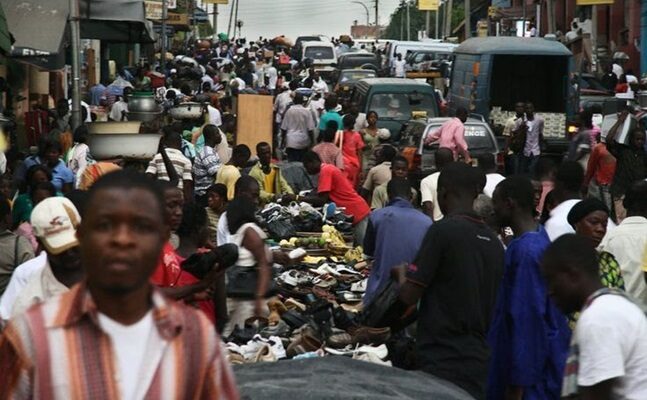
Walk through almost any major African city and you will see an economy that official statistics sometimes fail to capture properly. Traders are selling food by the roadside. Mechanics are repairing cars in small workshops. Young people are running businesses from their phones. Women are processing and selling food from their homes.
This is Africa’s informal economy.

It is often discussed as a problem because informal businesses may not pay taxes, register formally or provide workers with social protection. But there is another side that governments cannot ignore.
The informal economy is keeping millions of Africans employed.
The International Labour Organization estimates that about 83% of employment in Africa is informal, rising to about 85% in Sub-Saharan Africa.
This means that informal work is not a small part of the economy.
It is the economy for a very large number of people.
In Nigeria, informal employment accounts for more than nine out of every ten jobs.
The question is therefore not whether Africa should eliminate the informal economy.
That would be unrealistic.
The better question is how governments can make informal businesses more productive and gradually bring them into systems that provide protection and opportunity.
Many informal workers operate without access to affordable credit. Some cannot obtain formal business premises. Others struggle to register their businesses because the process is expensive or complicated.
When governments approach these businesses mainly through taxation and enforcement, the relationship becomes confrontational.
A small trader who is already struggling to make a living may see formalisation as another cost rather than an opportunity.
This is why policy needs to change.
Formalisation should come with benefits.
If a business registers, it should be easier for the owner to access credit, insurance, training, government procurement and other support.
Governments should also simplify registration and taxation.
Not every small business needs to face the same requirements as a large corporation.
A simple and affordable system can encourage more businesses to enter the formal economy voluntarily.
There is also a gender dimension.
Women make up a large part of informal employment across Africa, particularly in trading, agriculture and small-scale services. Policies that make it easier for women to access finance, business registration and social protection can therefore have a wider effect on household incomes.
The informal economy should also be connected to industrial policy.
A small food processor should have a pathway to become a medium-sized manufacturer. A roadside mechanic should have access to technical training and finance that allows the business to expand.
This is how informal activity can become productive economic growth.
Governments should therefore stop seeing informal workers simply as people who are avoiding taxes.
Many entered the informal economy because the formal economy did not create enough opportunities for them.
If governments want people to formalise, they must make formality worthwhile.
The goal should not be to destroy the informal economy.
It should be to build a bridge from informality to productivity, protection and growth.
Africa cannot design its economic future while ignoring the sector where most of its workers actually earn a living.
– Muhammed Sherifdeen Omeiza is a Nigerian researcher and writer whose work explores the intersection of humanitarian action, human rights, gender equality and global governance. With a keen interest in public policy, democracy, and political economy, he examines how local experiences and global decisions shape humanitarian outcomes in times of crisis. His writings draw from African and international contexts, reflecting a commitment to justice, accountability, and people-centered governance in global affairs.
Email: sherifdeenmuhammed001@gmail.com