
By Muhammed Sherifdeen Omeiza
Africa has 54 countries, one continental organisation and a population of more than 1.4 billion people. It also has one of the world’s largest emerging consumer markets and enormous natural resources.
Yet when Africa negotiates with major global powers, it often does so as individual countries.

This creates a difficult question.
If Africa has common interests, why does it so often negotiate separately?
The African Union has long promoted a vision of a more integrated continent. Agenda 2063 describes the goal of an integrated, prosperous and peaceful Africa that can become a stronger force in international affairs.
But political reality is more complicated.
Nigeria has its own interests. Kenya has its own priorities. South Africa has its own economic concerns. Ghana, Egypt, Ethiopia, Senegal and other countries also have different strategic interests.
These differences are normal.
The problem begins when external powers can use those differences to negotiate from a stronger position.
China provides one example of why this matters. European countries, the United States, India, Gulf states and other powers are also deepening their relationships with African countries.
Each country wants trade, investment, natural resources, political influence or strategic partnerships.
There is nothing wrong with African countries having these relationships.
The question is whether African governments are coordinating enough to negotiate from a position of collective strength.
The African Continental Free Trade Area is an important attempt to address this problem. A single continental market gives African countries the possibility of negotiating and producing at a larger scale. But its success depends on national governments actually implementing the commitments they make.
There is also evidence that Africa can exercise greater collective influence when countries work together.
African countries have increasingly used multilateral forums to push for changes in global governance and greater access to climate and development finance.
But strategic autonomy does not mean Africa should reject partnerships.
Africa needs investment. It needs technology. It needs access to markets and capital.
The objective should be to negotiate these relationships on terms that support African development priorities.
This requires stronger coordination.
Before entering major partnerships, African governments should ask what the agreement means for local industries, jobs, technology transfer, trade and long-term economic independence.
There should also be greater transparency around major agreements.
Citizens should know what their governments are signing and what the country expects to gain.
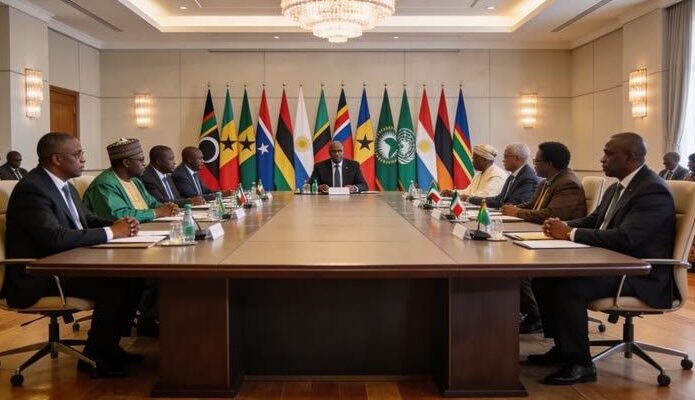
The African Union can help provide the continental framework, but it cannot negotiate everything on behalf of every country.
Member states must be willing to coordinate when their interests overlap.
This is especially important in a world where global power is becoming more competitive.
Africa has resources that the rest of the world needs. It has a growing population and a large consumer market. It also has a strategic position in global trade.
These give African countries bargaining power.
But bargaining power is only useful when it is organised.
The question is therefore not whether Africa should speak with one voice on every issue.
It should not.
The question is whether African countries can identify the issues where they have common interests and negotiate together.
Africa does not need to isolate itself from the world.
It needs to enter global partnerships with a clearer idea of what it wants.
The continent already has the numbers, resources and institutions to become a stronger global actor.
What it needs now is the political coordination to turn those assets into bargaining power.
– Muhammed Sherifdeen Omeiza is a Nigerian researcher and writer whose work explores the intersection of humanitarian action, human rights, gender equality and global governance. With a keen interest in public policy, democracy, and political economy, he examines how local experiences and global decisions shape humanitarian outcomes in times of crisis. His writings draw from African and international contexts, reflecting a commitment to justice, accountability, and people-centered governance in global affairs.
Email: sherifdeenmuhammed001@gmail.com