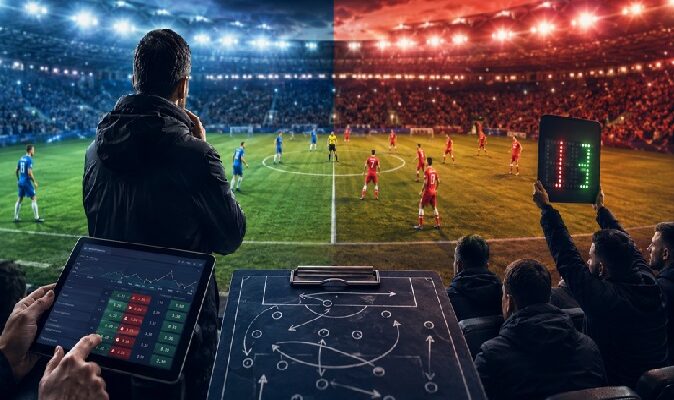

Half-time can turn one match into two very different contests. Coaches have 45 minutes of evidence and a score that creates fresh tactical demands. The same changing match state appears in live betting today markets as new information arrives. What happened before the break does not always explain what comes next.
A match that looked settled can change within minutes. One substitution creates a new matchup. One goal can wreck the original tactical plan. Add fatigue, and the final half-hour may bear little resemblance to the opening stages.
Five Substitutes Create More Tactical Options

The five-substitute format gives coaches greater freedom to change personnel after kick-off. Teams no longer depend as heavily on the starting eleven for the full match.
The difference often becomes clearer around the hour mark. Tired wide players can come off without exhausting every available option. Another forward may arrive when a team needs a goal. The opposing bench can then respond.
Picture a fresh winger facing a full-back with 65 minutes already in his legs. Acceleration and recovery runs suddenly become different problems. Pressing changes too. That individual contest did not exist at kick-off.
First-half patterns can lose their value quickly after those changes. A team that controlled one flank may suddenly face fresh pace there. Another substitution can change the central areas soon afterwards.
Bench changes are not always about energy. A midfielder may replace a defender when greater control in possession becomes necessary. A defensive player may enter when protecting a narrow lead becomes the priority.
The substitution itself provides only the first clue. Positioning reveals the deeper plan. A nominal defender may move into midfield, while a winger can operate closer to the striker.
The Laws of the Game allow competitions to use up to five substitutes. Teams normally receive three opportunities to make changes during play. Half-time substitutions do not count as one of those opportunities. The International Football Association Board sets out this framework in the current laws.
The Score Changes What Each Team Needs
The score records what happened earlier, but it also determines what both teams need from the remaining time. That can reshape the match more than any formation diagram.
A side leading by one goal may become more selective with possession. Players who previously pushed forward can start holding their positions. The trailing team faces the opposite problem.
More players move into attacking areas when an equaliser becomes necessary. That creates pressure around one penalty area, but it can also leave space at the other end.
Three details help explain a changing match:
- The score shows which team has the strongest reason to alter its approach.
- Substitutions reveal where a coach wants fresh personnel or a different tactical option.
- Cards and fatigue affect pressing, defensive positioning and individual duels.
Context matters. A defensive substitution at 0-0 carries a different meaning from the same change at 2-1. Possession figures can also become deceptive once the leading side starts protecting space.
This produces some strange-looking second-half statistics. A losing team may dominate possession because its opponent has little reason to chase the ball. It may also record more shots.
Neither figure automatically proves that the trailing team controls the match. Shot location, game state and defensive shape provide essential context. Raw totals can miss that story.
Half-Time Allows Coaches to Repair Problems
The interval gives coaches something they rarely receive during open play: uninterrupted time with the entire team. Problems can be explained before the players return.
Perhaps a winger repeatedly found space behind one full-back. Maybe a midfielder received the ball without enough pressure. A team might also struggle to move possession through an aggressive press.
Forty-five minutes usually provides enough evidence to identify those patterns. The response does not always require a substitution.
A full-back can stay deeper. A central midfielder can move closer to the defence. The pressing line may retreat several metres.
Same players, different match.
Those adjustments can remove an attacking pattern that looked reliable throughout the first half. The score may remain unchanged, yet the balance between the teams can shift.
Then comes the catch. One early goal can ruin the half-time adjustment almost immediately. A team prepared to protect its lead may suddenly need to attack again.
The tactical problem changes before the previous solution has settled. Coaches must then decide whether to react at once or wait for the match to stabilise.
Live Markets Respond to Match Events
In-play football markets operate within the same changing match environment. Score, time and major incidents continually alter the probabilities behind the available prices.
Time matters even when nothing dramatic happens. A favourite drawing 0-0 early still has plenty of time to convert its expected advantage. At 80 minutes, that opportunity has narrowed sharply.
The scoreboard may look identical, but the situation is different. Remaining time, red cards, penalties, injuries and substitutions all affect the available probabilities.
Goals usually produce the clearest movements. A 0-0 match becoming 1-0 changes both the score and the tactical incentives. The trailing team now needs to attack.
That urgency can create space which did not exist before the goal. Match-result markets react, but goal-related markets can also change as the game opens up.
A red card creates another calculation. The numerical disadvantage can affect possession, pressing and territory. Yet the score and remaining time still matter.
Ten players protecting a late lead face a different task from ten players chasing an equaliser. Treating both situations alike ignores the tactical demands of the score.
Substitutions need similar context. Replacing one striker with another may change little structurally. Adding a second forward can tell a different story.
Formation and positioning matter more than the name shown on the substitution graphic. The role of the incoming player provides better evidence than reputation alone.
Fatigue Creates New Individual Battles
The final half-hour introduces another variable. Players no longer enter individual contests with similar energy levels. Fresh substitutes may attack opponents carrying more than an hour of work.
Wide areas make this effect easy to see. Wingers and full-backs repeatedly accelerate, recover and change direction. A defender who looked comfortable earlier may struggle against fresh pace.
Pressing can also deteriorate. An organised press depends on several players moving at almost the same moment. One tired runner arriving late can leave a passing lane open.
The tactical idea remains sound, but its execution begins to fail. Repeated entries into dangerous areas may reveal that an earlier defensive balance has weakened.
Cards complicate those matchups further. A booked defender cannot approach every challenge with the same aggression. An attacker may gain extra room because the defender has less margin for error.
For those following these late changes on a mobile device, the 1xbet app store page provides access to the platform’s football coverage, including live scores and match information. Those updates can show when the situation changes, while substitutions, player positioning and the condition of individual matchups help explain what is happening on the pitch.
Fresh substitutions, tired defenders and altered positioning provide more useful context. Together, they show whether late pressure represents a genuine shift or a brief spell.
Added Time Extends the Final Tactical Phase
The 90th minute no longer guarantees that the match is almost over. Second-half stoppages can leave meaningful playing time beyond regulation.
That changes late tactical decisions. A team reaching 90 minutes one goal behind may still have several attacking sequences available. The leading side can respond with another defensive adjustment.
Added time also changes how the final phase should be interpreted. Five remaining minutes create a different probability window from one final attack. The displayed match minute cannot tell the whole story after lengthy stoppages.
An equaliser can flip the situation again. Players who were protecting space suddenly have a reason to move forward. The other team must decide whether another attack justifies the defensive risk.
All of that can happen within a few minutes.
The Final 45 Minutes Form a Different Contest
The second half begins with information nobody possessed at kick-off. Coaches have seen the opposition’s approach, identified difficult matchups and assessed the physical condition of their players.
The score has also created new priorities. Half-time gives both benches an opportunity to respond, but those solutions may have a short life.
Later, the information changes faster. Fresh substitutes face tired starters. Cards affect defensive choices. The clock forces teams to accept risks they avoided earlier.
A goal, tactical switch or dismissal can quickly create a new match state. Even without a major incident, disappearing time changes what each team can realistically achieve.
That is why the opening 45 minutes can become a poor map for the closing stages. Football does not simply continue after half-time. The conditions change, and the match changes with them.