
By Muhammed Sherifdeen Omeiza
Africa has held many elections, adopted constitutions and created democratic institutions. Yet in several countries, citizens are becoming increasingly concerned about whether these institutions are actually strong enough to protect their rights and hold governments accountable.
The question is therefore no longer simply whether African countries have democracy.

The bigger question is whether democracy is producing strong institutions.
Across the continent, democratic space has come under pressure. There have been military coups, restrictions on opposition parties, pressure on civil society and attempts by some leaders to weaken limits on political power. Recent analysis has described a wider shrinking of democratic space across Africa.
But there is an important distinction.
Strong institutions are not only about elections.
A country can hold elections and still have weak institutions if courts cannot operate independently, public officials are not held accountable and laws are applied differently depending on who is involved.
Strong institutions are what make government predictable.
A business should know that a contract will be respected. A citizen should know that the police cannot simply violate their rights without consequences. An opposition party should be able to criticise the government without fearing that its members will be arrested simply for disagreeing.
This is where democracy becomes important.
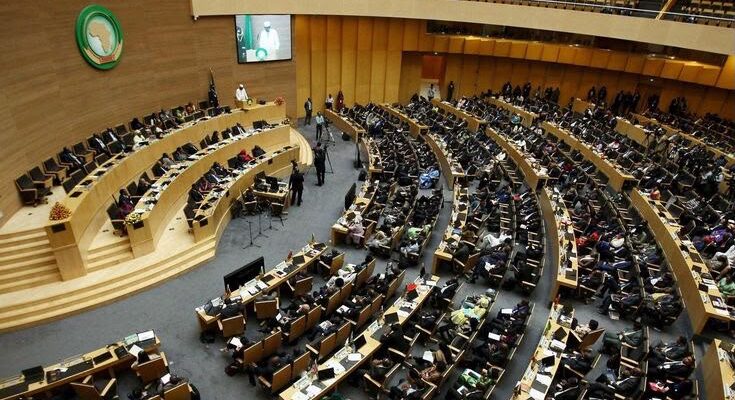
Democracy is not perfect, but it creates mechanisms through which citizens can question those in power. Elections, courts, parliaments, the media and civil society all play different roles in holding government accountable.
The problem begins when these institutions exist on paper but cannot operate independently.
This is why African countries need to focus on institutional strength rather than simply the appearance of democracy.
Political leaders should not be allowed to change institutions whenever those institutions become inconvenient. Electoral bodies need independence. Courts need to be able to make decisions without political pressure. Parliament needs to be capable of questioning government spending and policies.
Civil society also matters.
When governments restrict organisations, journalists or citizens from asking questions, they reduce one of the important checks on public power. Civic space is therefore not a luxury. It is part of a functioning democracy.
But citizens also have a responsibility.
Democracy cannot survive only because governments allow it. Citizens have to demand accountability, participate in elections and defend institutions even when the institution is protecting someone they disagree with.
This is where Africa’s democratic future will be decided.
The continent does not need perfect democracies. No country has one.
What Africa needs are institutions strong enough to prevent political power from becoming personal power.
A president should leave office when the constitution says it is time. A court should be able to rule against the government. A journalist should be able to investigate public officials. A citizen should be able to criticise government without being treated as an enemy of the state.
That is what strong institutions mean.
Africa cannot build lasting development on institutions that become weak whenever political pressure increases.
– Muhammed Sherifdeen Omeiza is a Nigerian researcher and writer whose work explores the intersection of humanitarian action, human rights, gender equality and global governance. With a keen interest in public policy, democracy, and political economy, he examines how local experiences and global decisions shape humanitarian outcomes in times of crisis. His writings draw from African and international contexts, reflecting a commitment to justice, accountability, and people-centered governance in global affairs.
Email: sherifdeenmuhammed001@gmail.com