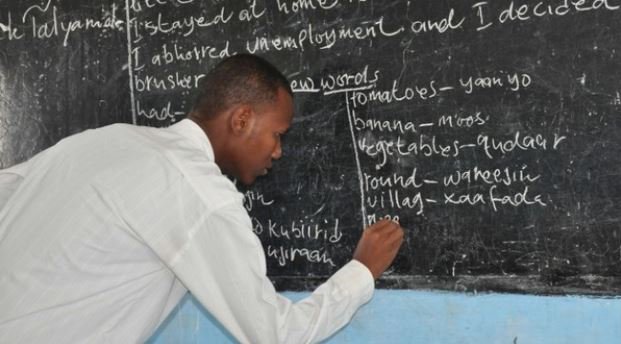

The most urgent challenge confronting public education in Kogi State is not the absence of policies, infrastructure projects, or ambitious declarations. It is the growing shortage of teachers in public schools. Across many communities, classrooms are increasingly understaffed as large numbers of experienced teachers retire without corresponding recruitment to replace them. The consequence is a widening gap between the educational needs of the state’s children and the capacity of the public school system to meet those needs. If Kogi is serious about securing its future, the employment of more qualified teachers must become an immediate policy priority.
The impact of this shortage is already evident. In many schools, the remaining teachers are burdened with excessive workloads, often handling multiple classes or subjects outside their areas of expertise. This situation inevitably affects the quality of instruction and limits meaningful engagement between teachers and students. Education cannot flourish where teachers are overstretched and learners are neglected. The longer this trend persists, the greater the risk of producing a generation inadequately prepared for the demands of a modern economy.
Perhaps the most visible consequence has been the gradual migration of pupils and students from public schools to private institutions. Parents who can afford private school fees increasingly withdraw their children from public schools in search of better learning conditions. Meanwhile, families with limited financial means often have no such option. Their children are left trapped in under-resourced schools or, in some cases, forced out of the educational system entirely. What begins as a teacher shortage ultimately evolves into a crisis of educational inequality.

The social implications are profound. Several communities, school-age children who should be learning in classrooms are instead found on farms, in markets, hawking goods on the streets, or wandering without meaningful engagement. Every child who drops out of school represents lost human potential. Beyond the personal cost to the individual, society bears the long-term burden through increased poverty, unemployment, and social vulnerability. A state that fails to educate its children risks undermining its own future prosperity.
The contrast becomes even more striking when viewed against global realities. In many advanced societies, public investment in education begins from early childhood. Government-supported programmes ensure that children are introduced to structured learning environments from infancy, often spending their days acquiring foundational cognitive and social skills under the supervision of trained educators. Such societies understand that education is not an expenditure but an investment in national development. The nations that dominate the global economy today are those that recognised this principle decades ago and acted upon it consistently.
Kogi State has made commendable efforts in educational development, but infrastructure alone cannot substitute for human capital. New classrooms, renovated buildings, and learning materials are important, yet they cannot teach a child. Only a qualified teacher can inspire curiosity, transmit knowledge, cultivate discipline, and unlock potential. The state government should therefore embark on a comprehensive and transparent recruitment exercise aimed at replacing retired teachers and addressing existing shortages, particularly in rural and underserved communities.
The future of Kogi State will not be determined solely by physical infrastructure or short-term political achievements. It will be determined by the quality of education available to its children today. Every vacant teaching position represents a missed opportunity to shape a future scientist, entrepreneur, engineer, teacher, or leader. By recruiting more teachers, the government would not merely be filling gaps in the workforce; it would be making a strategic investment in human capital, social progress, and sustainable development. The choice is clear: either strengthen public education now or pay a far greater price in the years ahead.
– Inah Boniface Ocholi writes from Ayah – Igalamela/Odolu LGA, Kogi state.
08152094428 (SMS Only)