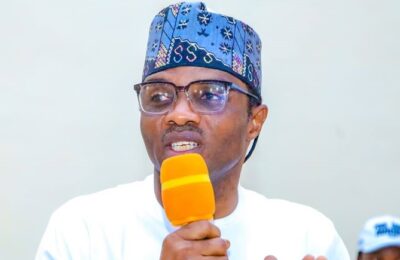

By Alao Adamadamosi Sunday.
For decades, Kogi State has sat on an energy time bomb—not one of destruction, but of missed opportunity. Beneath the rolling hills of Okaba in Ankpa Local Government Area lies one of Nigeria’s richest deposits of sub-bituminous coal. While the rest of the nation grapples with an epileptic national grid and the high cost of diesel and petrol generators, Kogi State bleeds industrially and economically, largely because this “black gold” remains largely untouched.
Yet, as the global energy transition gathers pace, the question is no longer whether coal has a future in Nigeria, but whether we can harness it intelligently as a bridge fuel. For Kogi State, the answer is a resounding yes. Okaba coal is not a relic of the past; it is the key to a decentralized, reliable, and affordable electricity future.

Kogi is a state of industrial dreams. It hosts the sprawling Ajaokuta Steel complex and the Obajana Cement Plant, one of the largest in Africa. Yet, these giants and the small businesses around them are perpetually starved of power. The national grid delivers sporadic and insufficient supply, forcing manufacturers to burn expensive imported diesel. The result: high production costs, low competitiveness, and stunted job creation.
Meanwhile, the Okaba coal field, estimated to hold over 380 million metric tonnes of high-calorific, low-sulphur coal, lies mostly idle. Current artisanal mining and occasional sales to cement industries barely scratch the surface. This coal can fire thermal power plants, provide process heat for industries, and even be converted into briquettes for domestic and small-scale industrial use.
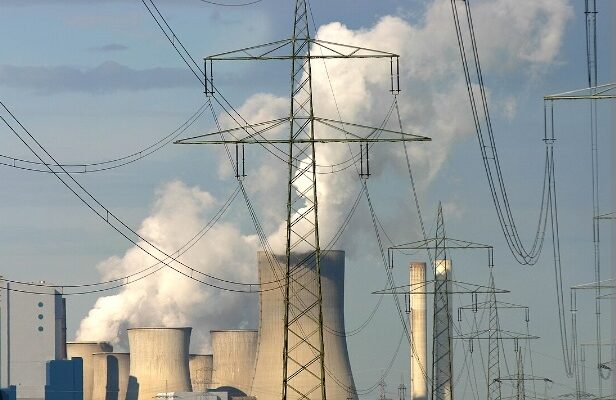
The technology is not science fiction. Coal-fired power plants remain the backbone of electricity grids in countries like Germany, China, and India, even as they scale renewables. For Kogi, a modest 50–100 MW coal-fired captive power plant in Okaba would be transformative. It could supply electricity to the host communities, power the various states institutions of learning, and wheel excess power into the national grid.
More importantly, coal-generated electricity can be a baseload source—running 24/7, unlike solar or wind which are intermittent. For industries that require constant energy, this reliability is priceless. Imagine the Ajaokuta steel mill finally coming to full production using electricity and process heat from Okaba coal. Imagine agro-processing zones in Ankpa running cold storage and milling plants without imported diesel.
No honest discussion of coal is complete without addressing its environmental footprint. However, modern clean-coal technologies—such as fluidized bed combustion and flue-gas desulfurization—drastically reduce sulphur dioxide and particulate emissions. Furthermore, Kogi’s coal is naturally low in ash and sulphur, making it less polluting than the lignite burned in many European plants.
Rather than a wholesale return to the smoky past, what Kogi needs is a regulated, modern, and small-scale coal power sector. The Federal Government’s 2021 National Coal Policy already provides a framework for exploiting coal in an environmentally responsible manner. The state government must now take the lead.
First, the Kogi State Government should partner with the Federal Ministry of Mines and Steel Development to conduct a detailed feasibility study and environmental impact assessment for a pilot coal-to-power plant in Okaba.
Second, attract private investment through a special-purpose vehicle—offering tax holidays, land access, and a guaranteed power purchase agreement with industries and the state’s electricity market. Indigenous firms and foreign technical partners from South Africa or India, where coal power is mature, could be targeted.
Third, develop a coal beneficiation plant to produce washed coal, briquettes, and even coal water slurry—products that can be sold to cement factories, breweries, and other thermal users across northern and central Nigeria.
Finally, build a just transition plan: ensure host communities get electricity, employment, and reclamation funds for mined-out areas. This creates local ownership and prevents the resource curse.
Nigeria’s Energy Transition Plan aims for carbon neutrality by 2060, meaning the window for coal investment is finite—perhaps the next 15 to 20 years. But within that window, Kogi can industrialize rapidly, displace diesel generators, and build the infrastructure that will later be powered by renewables. Coal is not the enemy; wasted potential is.
Governor Ahmed Usman Ododo’s administration has spoken of economic diversification and industrialization. The Okaba coal field offers the most direct path to achieving those goals. It is time to stop seeing coal as a colonial relic and start treating it as what it truly is: Kogi State’s ticket to energy independence.
Let the lights come on in Okaba, and from there, illuminate all of Kogi.
– Alao Adamadamosi Sunday, arpa, writes from Lokoja.