
Dear President Donald Trump,
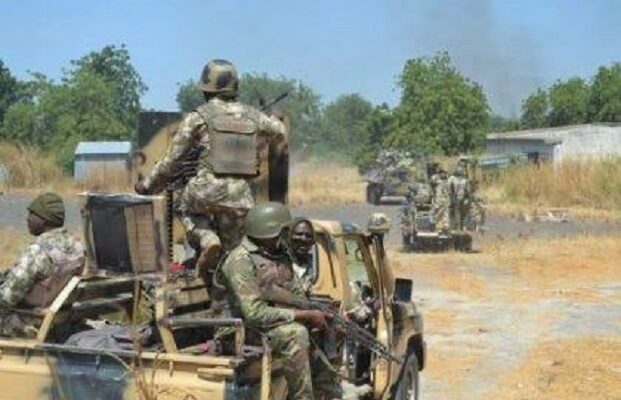
Three days ago, according to local reports and eyewitness accounts from communities along Nigeria’s northern frontier near the Niger Republic, more than seventy five Boko Haram fighters were killed in a coordinated air operation. After more than a decade of insurgency that has claimed tens of thousands of lives and displaced millions across the Lake Chad basin, such a strike should signal decisive momentum. Instead, it underscores a deeper and more troubling reality: Nigeria demonstrates the capacity to win this war, yet the war endures.
This is the central contradiction. Over the years, Nigeria’s military has shown, at critical moments, that it can disrupt and degrade insurgent networks. Command structures have been targeted, territories reclaimed, and operational strongholds dismantled. These are not the markers of a state overwhelmed. They are the indicators of a state with sufficient force projection to alter the trajectory of the conflict. Yet tactical success has not translated into strategic closure.

Conventional explanations remain relevant but incomplete. The terrain is complex, borders are porous, and insurgent groups draw strength from regional instability stretching across the Sahel. But these factors, while real, do not fully account for the persistence of a conflict in which the state repeatedly proves its own capability. At some point, the question shifts from capacity to structure.
One analytical lens, drawn from political economy, is the logic of crisis driven systems, sometimes described as disaster capitalism. The concept does not suggest that conflicts are universally manufactured for gain. It does, however, highlight how prolonged instability can evolve into systems that distribute political and economic benefits. Emergency spending expands. Security procurement becomes routine. Exceptional powers harden into normal governance. In such environments, the line between managing a conflict and resolving it can become blurred.
In Nigeria, this concern is no longer confined to theory. Analysts, civil society organisations, and policy observers increasingly point to a pattern: visible demonstrations of military strength followed by the quiet reconstitution of insecurity. Each successful strike confirms capacity. Each resurgence exposes incompletion. The gap between the two is where questions of incentives, coordination, and accountability must be confronted.
The human cost of this ambiguity is deep. Nigerian soldiers continue to fight and die under demanding conditions. Civilians remain displaced, their livelihoods fractured and communities destabilised. Even among insurgents, many are not foreign actors but citizens shaped by poverty, marginalisation, and years of governance failure. The conflict, in effect, recycles domestic vulnerability into sustained violence.
This is where international engagement, particularly from the United States, must evolve. Security cooperation cannot remain limited to training, intelligence sharing, and equipment provision. It must extend to outcomes. American support should be calibrated to encourage measurable progress toward conflict resolution, not merely conflict management.
That requires clear benchmarks. Greater transparency in Nigeria’s security expenditure. Independent oversight of procurement and operational conduct. Stronger civilian protection frameworks. And sustained investment in governance reforms that address the structural drivers of insurgency. These are not peripheral concerns; they are central to ending a war that has persisted for far too long.
Nigeria does not lack the means to conclude this conflict. What remains uncertain is whether the current alignment of incentives consistently favours its conclusion. Until that alignment is corrected, the pattern will endure: moments of undeniable strength followed by the quiet return of instability.
A war that can be fought effectively should, at some point, be brought to an end. When it is not, the question is no longer whether victory is possible. It is whether the systems surrounding the conflict are designed to achieve it.
Yours sincerely,
– Inah Boniface Ocholi writes from Ayah – Igalamela/Odolu LGA, Kogi state.
08152094428 (SMS Only)