
Throughout history, societies have continually wrestled with the same enduring question: when power rises, who truly carries the weight of responsibility? The tension between authority and accountability did not begin with modern democracies. It stretches back to the ancient world and to the political and moral debates of the Roman Empire. Today that question echoes once more in contemporary Nigeria. It provokes a compelling reflection: are we living in the days of Caesar, or in the days of Tinubu?
The phrase “the days of Caesar” immediately evokes imperial authority. In ancient Rome, the emperor symbolized the fusion of political dominance, military command, and near sacred legitimacy. Julius Caesar himself was not merely a ruler. He embodied the consolidation of power in the hands of a single figure whose decisions could shape the destiny of millions. Subsequent emperors expanded that authority, and the empire gradually became accustomed to a political culture in which decisions flowed downward rather than upward.
Yet even within that system, moral questions persisted. The New Testament records one of the most profound political responses ever spoken when Jesus was asked about paying taxes to the empire. His answer remains remarkably balanced.

“Render therefore unto Caesar the things which are Caesar’s; and unto God the things that are God’s.”
(Matthew 22:21)
This brief statement established a framework that continues to shape political thought. It recognized the legitimacy of political authority while simultaneously placing limits upon it. Caesar could collect taxes, govern territories, and command armies. However, Caesar could not claim ultimate authority over the human conscience.
That distinction remains critically important today.
Modern democracies, including Nigeria, are built upon the principle that leaders are not emperors. They are stewards of the public trust. Their authority is derived not from divine coronation or imperial conquest but from the ballot box and constitutional law. Yet in many developing democracies the temptation toward imperial style leadership still lingers. Political systems sometimes drift toward personalities rather than institutions.
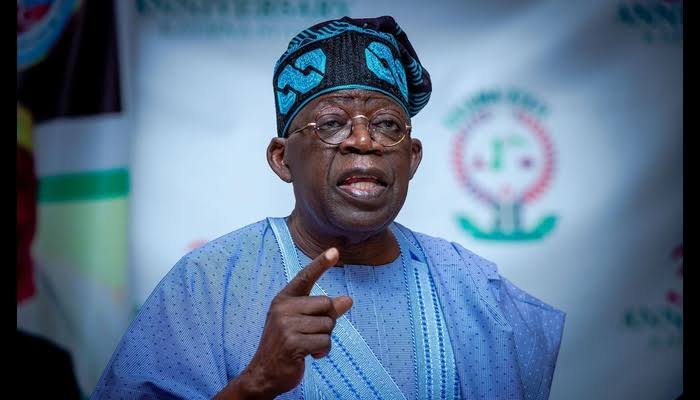
President Bola Ahmed Tinubu now governs Nigeria during one of the most challenging economic periods in the nation’s history. Inflation has placed immense pressure on households, currency reforms have unsettled markets, and the removal of fuel subsidies has dramatically increased the cost of living. Supporters argue that these policies represent difficult yet necessary structural reforms designed to stabilize the economy and attract long term investment. Critics contend that the immediate human cost of these policies has been severe.
Both perspectives exist within the same national reality.
Leadership in such moments extends beyond the mechanics of policy. It requires moral imagination. The true test of governance is not simply whether reforms are implemented but whether citizens can endure them with dignity and hope.
The Roman Empire maintained stability through centralized authority and military discipline. Democratic nations, however, operate within a different moral framework. Their legitimacy depends upon consent, transparency, and public accountability. Leaders must therefore cultivate trust rather than merely command obedience.
The danger emerges when political leadership begins to resemble imperial distance. Citizens begin to feel unheard. Institutions weaken. Public discourse hardens into cynicism. When this occurs, democracy risks becoming a form without substance.
Nigeria now stands at a crossroads that is both economic and moral. The country possesses enormous natural resources, a vibrant population, and one of the largest economies in Africa. Yet prosperity remains unevenly distributed, and governance often struggles to convert national potential into shared progress.
This challenge is not uniquely Nigerian. Many democracies around the world are confronting similar tensions between economic reform and social stability. From Latin America to Southeast Asia, governments are attempting to restructure economies while preserving public confidence. Success depends not only on technical policy decisions but also on the credibility and character of leadership.
The question therefore is not whether Tinubu governs in the days of Caesar. Nigeria is not an empire, and its citizens are not subjects. The real question is whether democratic leadership can resist the gravitational pull of imperial political culture.
In practical terms, this means strengthening institutions rather than personalities. Courts must remain independent. Legislatures must exercise meaningful oversight. Civil society must remain vibrant. Journalists must continue to ask difficult and necessary questions. Democracy functions effectively only when these systems operate freely.
Citizens also carry responsibility. Democracies cannot endure if civic engagement fades into resignation. Voting, public dialogue, and peaceful advocacy remain essential instruments through which societies shape their collective future.
History teaches that strong leaders are often remembered not for the power they possessed but for the restraint they demonstrated. George Washington famously stepped down after two terms, establishing a precedent that limited presidential authority in the United States. Nelson Mandela governed South Africa for a single term before voluntarily relinquishing power, reinforcing democratic norms in a fragile post apartheid society.
These leaders understood a simple yet profound truth: the durability of institutions matters more than the longevity of individuals.
Nigeria’s present moment therefore demands something deeper than political rivalry. It requires a renewed commitment to democratic maturity. Economic reform must be accompanied by social protection. Transparency must accompany authority. Public sacrifice must be matched by visible leadership responsibility.
If Caesar ruled through unquestioned power, democratic leaders govern through earned legitimacy. Their authority is constantly tested by public scrutiny, economic realities, and the judgment of history.
The ultimate verdict will not come from speeches or political slogans. It will emerge from the lived experiences of ordinary Nigerians: the trader in Kano navigating rising prices, the civil servant in Abuja confronting economic uncertainty, and the student in Lagos hoping for opportunity in a changing economy.
Leadership is measured in their stories.
Therefore the question remains powerful but incomplete. It is not merely whether Nigeria lives in the days of Caesar or the days of Tinubu. The deeper question is whether this generation of leadership will strengthen the foundations of democracy or allow the shadows of imperial politics to linger within a modern republic.
History consistently shows that nations eventually become what their leaders and citizens together decide they will tolerate, defend, and build.
The choice, as always, belongs to both.
– Inah Boniface Ocholi writes from Ayah – Igalamela/Odolu LGA, Kogi state.
08152094428 (SMS Only)