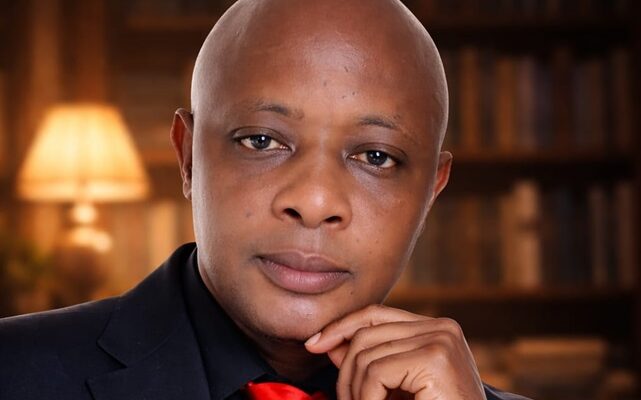

As nuclear tensions rise, wars fracture nations, and poverty deepens across continents, the world urgently needs courageous spiritual voices capable of guiding humanity toward justice, peace and moral responsibility.
Humanity stands at a defining moment. Across continents the echoes of war grow louder, the threat of nuclear confrontation lingers in the background of global politics, and millions remain trapped in the harsh reality of poverty. These challenges are not merely political or economic problems. They represent world deepest moral questions confronting the conscience of our generation. At moments like this, societies instinctively search for voices capable of rising above the language of power and speaking to the deeper values that hold humanity together.
Throughout history prophets and spiritual leaders have often emerged during seasons of crisis. Their responsibility was never simply to predict the future or to provide religious comfort. Rather they served as moral witnesses who reminded societies of their ethical obligations. When power became arrogant and injustice became normal, prophets spoke uncomfortable truths that challenged nations to reconsider their direction.

In the ancient world prophets confronted kings and empires. They warned against injustice, defended the vulnerable, and called leaders to account when authority threatened human dignity. Their message was simple yet profound. A society that forgets justice ultimately destroys itself. A nation that pursues power without conscience risks becoming a danger not only to others but also to its own future.
The twenty first century now faces a similar moral test. The global landscape is increasingly defined by tension and uncertainty. Nuclear weapons remain the most destructive instruments ever created by human hands. Despite decades of diplomatic agreements and international treaties, the world still possesses enough nuclear capability to devastate civilization many times over. The existence of such weapons continues to hang over humanity like a silent shadow.
The danger is not merely theoretical. Rising geopolitical rivalries and regional conflicts have brought nuclear rhetoric back into international conversations. Each confrontation between major powers carries the risk of miscalculation. A single decision taken in fear or anger could unleash consequences that no nation would be able to control.
Yet nuclear fear is only one dimension of the global crisis. War continues to displace millions of people across several regions of the world. Entire communities are uprooted as conflicts reshape borders and destroy livelihoods. Families lose their homes, children lose access to education, and societies struggle to rebuild amid the ruins of violence.
At the same time the silent crisis of poverty continues to erode human dignity on a vast scale. Despite economic progress in many parts of the world, millions remain excluded from basic opportunities. Many struggle daily for food, healthcare, and education. Poverty is not merely an economic statistic. It represents a deep injustice that denies individuals the chance to live with dignity and hope.
These three realities nuclear fear, war, and poverty reveal something deeper about the condition of the modern world. Humanity has achieved extraordinary scientific progress and technological power. Yet moral wisdom has not always advanced at the same pace. The tools created to secure national interests possess the potential to destroy global stability. Economic systems capable of generating immense wealth have also produced widening inequality.
In such an environment the role of moral leadership becomes indispensable. Political institutions and international organizations play an important role in maintaining stability. Diplomacy, cooperation, and international law remain essential tools for preventing conflict and addressing global challenges. However politics alone cannot resolve the deeper ethical questions facing humanity.
This is where the prophetic voice becomes essential.
The statement “Prophet, this is where you are” is not merely a challenge directed at individuals. It is a call to responsibility addressed to all spiritual leaders who hold influence within their communities. Faith traditions across the world carry rich teachings about justice, compassion, peace, and the dignity of human life. These moral principles provide a foundation upon which societies can build more humane and sustainable futures.
When spiritual leaders speak courageously about justice they remind societies that economic development must serve human wellbeing rather than narrow interests. When they speak about peace they challenge the culture of violence that often dominates political thinking. When they defend the dignity of the poor they remind governments and institutions of their responsibility to ensure that prosperity does not exclude the vulnerable.
History demonstrates that prophetic voices have often helped societies navigate difficult periods. During moments of social transformation moral leadership has inspired movements for justice, reconciliation, and human rights. Spiritual figures have reminded political authorities that true strength lies not only in military capability or economic power but also in moral credibility.
The responsibility of spiritual leadership in the modern world is therefore immense. Prophets cannot remain silent while nuclear threats endanger humanity’s future. They cannot ignore wars that devastate communities and uproot generations. They cannot overlook the suffering of the poor while wealth accumulates in unprecedented concentrations.
Instead they must speak with clarity and courage.
This does not mean that religious leaders should replace political institutions or seek to control governments. Rather their role is to illuminate the moral principles that must guide public decisions. They remind societies that policies affecting millions of lives should be measured not only by strategic advantage but also by ethical responsibility.
At its best the prophetic voice calls humanity to rediscover its shared values. It reminds nations that every human life carries dignity regardless of nationality, ethnicity, or religion. It insists that peace is not simply the absence of war but the presence of justice. It challenges leaders to consider the long term consequences of decisions made in moments of political tension.
Our world urgently needs such voices today.
The challenges facing humanity cannot be solved through technological innovation alone. Scientific progress has provided extraordinary tools, yet tools require wisdom to be used responsibly. Without moral reflection power becomes dangerous. Without compassion progress becomes incomplete.
In the face of nuclear fear, war, and poverty humanity requires a renewed commitment to conscience. Political leaders must pursue diplomacy with seriousness and restraint. Economic institutions must work to ensure that prosperity becomes more inclusive. International cooperation must be strengthened to address global challenges that no single nation can solve alone.
Yet alongside these efforts the prophetic voice must continue to remind humanity of its deepest responsibilities.
“Prophet, this is where you are.”
It is a statement directed not only at spiritual leaders but also at anyone who possesses moral conviction and influence. Every generation faces moments when it must decide whether to remain silent or to speak for justice. The future of humanity often depends on those who choose courage over comfort.
In an age marked by nuclear fear, war, and poverty the world does not simply need more power.
It needs conscience.
And the prophetic voice must rise to remind humanity that its greatest strength has always been the ability to choose justice, compassion, and peace.
– Inah Boniface Ocholi writes from Ayah – Igalamela/Odolu LGA, Kogi state.
08152094428 (SMS Only)