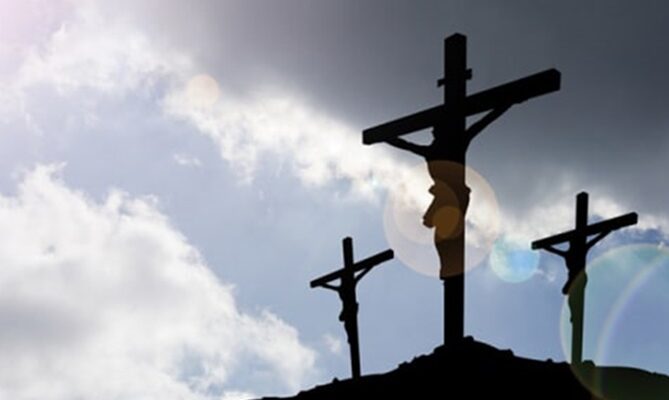

The execution at Calvary appeared, to every observer present, like the final triumph of violence over hope. A teacher who had preached mercy was condemned as a criminal. Religious authorities secured their verdict, imperial power enforced it, and a terrified crowd watched as the movement surrounding Jesus seemed to collapse under the weight of the cross. In the language of human politics, the outcome looked decisive. Power had spoken. The story appeared finished.
Yet history would come to interpret that moment very differently. What seemed like defeat soon became the defining paradox of Christian faith. The cross functioned not as the extinction of Jesus’ message but as the dramatic turning point that amplified it. Within a short time the symbol of execution transformed into the central emblem of a global faith. The instrument designed to silence a voice became the platform through which that voice echoed across centuries. Calvary therefore stands as one of history’s most extraordinary reversals, a moment when the logic of domination collapsed under the weight of an unexpected moral victory.
The irony embedded in that scene is striking. Empires typically maintain authority through spectacle. Public punishments historically served as warnings designed to discourage dissent. Rome perfected this political theater. Crucifixion was not merely a method of execution but a deliberate display of imperial control. Yet the spectacle at Calvary did not produce the intended effect. Instead of extinguishing a movement, it created a narrative powerful enough to outlive the empire that authorized the execution. The cross became a mirror reflecting the moral bankruptcy of unchecked power.

“Father, forgive them, for they know not what they do.”
These words, spoken in the midst of suffering, introduced a radical disruption to the expected script of vengeance. In a world where power often answers violence with greater violence, forgiveness altered the meaning of the moment. The statement reframed the cross not as a defeat inflicted by enemies but as a conscious act that transformed cruelty into testimony.
For early followers of Jesus, this reversal reshaped the very definition of victory. Strength was no longer measured solely by dominance, military control, or political triumph. Instead it became associated with endurance, moral courage, and sacrificial love. The apostle Paul later captured the paradox when he described the cross as an event that appeared foolish to worldly wisdom yet revealed a deeper form of power.
“The weakness of God is stronger than human strength.”
In this formulation Calvary becomes a profound critique of the assumptions that typically govern history.
Modern readers often approach the story through theological language, but the event also carries a wider cultural insight. Societies repeatedly assume that authority rests with those who command armies, wealth, or institutions. Calvary challenges that assumption by demonstrating that moral influence can outlast coercive force. The Roman Empire eventually faded into history books. The cross it once used as an instrument of terror remains recognized across continents.
Seen through this lens, Calvary represents more than a religious symbol. It stands as a dramatic historical reversal, a moment when the machinery of domination inadvertently produced its own contradiction. What looked like the final move of suppression became the beginning of a narrative that reshaped civilizations. The cross, intended to silence, became a proclamation. In that sense the hill outside Jerusalem reminds every generation that history does not always belong to those who appear to win the moment. Sometimes its deepest victories emerge from the places where defeat once seemed certain.
– Inah Boniface Ocholi writes from Ayah – Igalamela/Odolu LGA, Kogi state.
08152094428 (SMS Only)