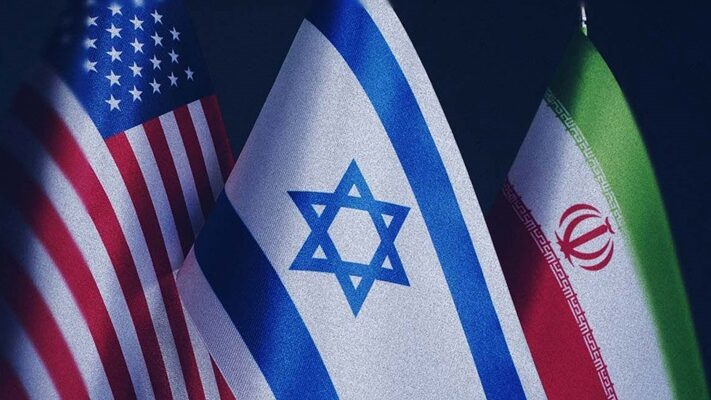

The most important lesson from the escalating confrontation involving the United States, Israel, Iran, and Russia is clear: power without restraint destabilizes the international system. What began as strategic calculations between regional rivals has quickly produced wider geopolitical shockwaves, demonstrating how fragile the global order becomes when major actors operate without strong institutional guardrails. In an interconnected world, crises rarely remain local; they reverberate through energy markets, security alliances, and diplomatic networks across continents.
At the center of the unfolding tensions lies the volatile triangle between Israel, Iran, and the United States. Israel perceives Iran’s military expansion and nuclear ambitions as existential threats, while Iran interprets Israeli operations and Western pressure as sustained efforts to undermine its sovereignty. Washington’s security commitments to Israel and its strategic posture in the Middle East further complicate the equation. When these competing interests collide, escalation often becomes the dominant language of diplomacy.
The speed with which regional conflict generates broader consequences underscores the structural weakness of the contemporary global system. Military exchanges trigger retaliatory strikes, cyber operations, and proxy engagements across multiple theaters. Energy markets react instantly, maritime routes become contested, and diplomatic channels struggle to keep pace with events on the ground. What appears initially as a localized confrontation rapidly evolves into a multidimensional geopolitical crisis.

Russia’s calculated response reflects another dimension of modern power politics. Rather than entering direct confrontation, Moscow has positioned itself strategically on the sidelines, observing how instability in the Middle East reshapes global alignments. Prolonged crises divert Western attention, influence global energy flows, and create opportunities for geopolitical leverage. Such strategic patience illustrates how great powers increasingly exploit instability rather than prioritize systemic stability.
For smaller states and emerging economies, the implications are profound. When institutional frameworks weaken and power politics dominates international relations, regional shocks spread quickly through economic and political systems. Supply chains tighten, energy prices fluctuate, and diplomatic neutrality becomes increasingly difficult to maintain. The ripple effects of great-power rivalry therefore extend far beyond the principal actors involved.
History offers a sobering reminder that unrestrained power rarely produces durable stability. Periods of geopolitical rivalry—from the early twentieth century to the Cold War—demonstrate that restraint, diplomacy, and institutional balance are essential to preventing escalation. The unfolding tensions among the United States, Israel, Iran, and Russia reaffirm a timeless truth of international politics: power alone cannot sustain order; only power disciplined by restraint can preserve it.
– Inah Boniface Ocholi writes from Ayah – Igalamela/Odolu LGA, Kogi state.
08152094428 (SMS Only)