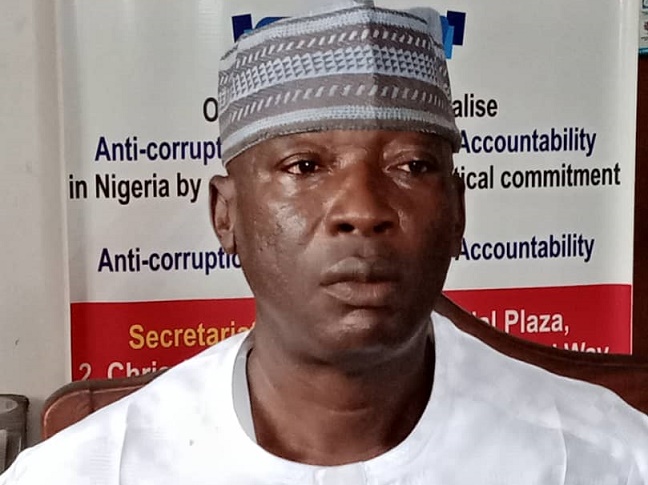

The Executive Director of Conscience for Human Rights and Conflict Resolution (CHRCR), Comrade Idris Miliki Abdul, has called on Kogi state government to look inwards and evolve new strategies to tame emerging security challenges in the state.
In a statement on Sunday, Miliki warned that “the situation now and then are not the same”.
He said the advice became necessary because the state is experiencing fresh security challenges that requires proactive, community-driven responses rather than a reliance on the current approaches.

He called for immediate expansion of vigilante and local hunters structure to re-work grassroot security architecture.
According to to him, the expansion will also prepare the ground for their possible integration into a future state policing structure, when established.
Miliki commended the state government for the recruitment of more vigilante personnel and absorbing them into the state civil service.
“Kogi State now faces new security realities, and new strategies are needed. Building a robust grassroots security network would serve as a preventive measure against escalating threats,” he stressed.
The CHRCR Executive Director proposed the establishment of security committees in all wards across the state.
He described these committees as a “first aid” response mechanism capable of swiftly addressing security incidents within their respective communities before they escalate.
He explained that the proposed ward security committees should comprise of both serving and retired security personnel residing in those communities.
Their experience, he said, would be invaluable in training local volunteers, designing context-specific security strategies, mobilising resources, raising public awareness, and facilitating intelligence sharing at the grassroots level.
He emphasised that such decentralised security structures would enhance early warning systems and strengthen collaboration between citizens and formal security agencies.
“Security is locally inclined and should be treated as such. Communities often possess first-hand knowledge of suspicious movements and potential threats within their environment” he noted.
The rights advocate also called for a non-kinetic approach to addressing insecurity in the state, urging authorities to focus not only on force but also on intelligence gathering, conflict resolution, community engagement, and public sensitisation.
According to him, sustainable peace can only be achieved when local actors are actively involved in safeguarding their own communities.
Miliki maintained that empowering communities to take structured responsibility for their safety would complement existing security architecture in Kogi State and contribute to long-term stability.
He urged the state government, traditional institutions, and community leaders to consider the proposal as part of broader efforts to secure lives and property in the state.