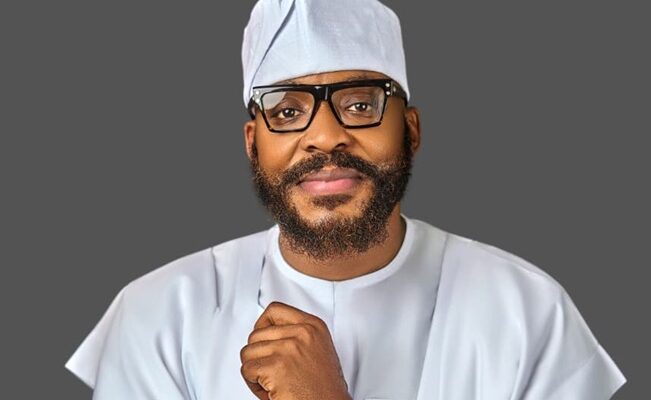

Few Nigerians have the expertise, experience, and vision to change how government works. Dr. Mahmoud Bala Alfa is one of them.
If finance taught Dr. Mahmoud Bala Alfa how systems are funded, political economy taught him why they fail and how they can be fixed. This reform and policymaking phase of his career marked his move from simply working within institutions to thinking deeply about how they should work. He became someone trusted not just to analyse problems but also to design solutions for Nigeria’s most complex reforms.
This is when his work moved firmly into the national and international arena, shaping sectors that affect millions of Nigerians. Let me take you through his journey.

Political economy is often seen as abstract theory, but for Dr. Alfa, it became a practical tool. Between 2015 and 2017, he served as Political Economy Adviser to the Federal Ministry of Environment under the Nigeria Infrastructure Advisory Facility (NIAF). He helped design systems to implement Nigeria’s Intended Nationally Determined Contribution (INDC) commitments under global climate agreements.
He drafted key parts of the Climate Change Bill, supported discussions with the National Assembly, coordinated communication across ministries and states, and contributed to Nigeria signing the INDC agreement at the United Nations General Assembly in 2016. This role gave him rare experience in lawmaking that few future legislators receive.
From 2016 to 2017, he worked as Political Economy Adviser on the Power Team at Adam Smith International, again under NIAF. Nigeria’s power sector is difficult, not just technically but politically. Reforms often fail because of vested interests, resistance in institutions, and inconsistent policies.
In this role, he:
Analysed the power sector across generation, transmission, and distribution.
Mapped key stakeholders and power relationships.
Developed practical reform advice.
Supported programme design and monitored reforms.
This work sharpened his skills in oversight: knowing which questions to ask, spotting bottlenecks, and separating political noise from real problems. These are exactly the tools needed in legislation.
He also worked on the Solar Nigeria Programme, supervising the installation of solar systems in 172 schools and 11 healthcare centres in Lagos, 34 healthcare centres in Kaduna, and other projects in Kano, Katsina, Borno, Adamawa, and Yobe. This showed his dedication to turning policy into tangible results. It is one thing to talk about energy access; it is another to light schools and clinics in underserved areas.
Perhaps his most important work came between 2017 and 2021, as Political Economy Adviser under the DFID PERL programme, on the ARC project. Here, his focus expanded to national governance reforms, accountability, transparency, public service delivery, and inclusion of marginalised groups. He contributed to reforms on the Disability Bill, the Basic Health Care Provision Fund, universal health insurance, and poverty-reduction policies.
This work required constant engagement with governments, legislators, civil society, and international partners. It was slow, complex, and often politically sensitive. Such challenges tested his patience, negotiation skills, and resilience.
What a journey!
Like the wise man would say: politics is never certain, but if Kogi East wants its most resourceful and capable mind ahead of 2027, I present Dr. Mahmoud Bala Alfa.
With his understanding of systems and reforms, Dr. Alfa is well-positioned to bring better governance, accountability, and development to Kogi East. Colleagues recall his patience and meticulous approach in tackling complex reforms, often going beyond the call of duty to ensure policies deliver real results.
Kogi East deserves a leader who can translate knowledge into action.
– Abdul Mohammed Lawal writes from Abuja.