
Nigeria is one of the most religious nations on earth, yet one of the most politically unrestrained. Churches multiply, prayer vigils if not until recently overflow, and faith saturates daily language. Still, corruption deepens, leadership decays, and public morality thins. This contradiction is no longer ironic; it is dangerous. The uncomfortable truth is this: faithful Christians have largely withdrawn from the arena where power is decided, leaving politics to those with the least moral hesitation and the highest appetite for predation.
This is not an attack on faith. It is an indictment of absence.
For years, many Christians have treated politics as unclean terrain; too dirty to touch, too corrupt to enter, too divisive to endure. Retreat was framed as righteousness. Silence was baptized as holiness. But politics abhors a vacuum. When people of conscience withdraw, power does not pause; it simply migrates to those with fewer scruples. Nigeria’s current political condition reflects not only the ambition of the ruthless but also the abdication of the righteous.

The result is a democracy without moral ballast. Elections have become transactional rituals rather than ethical contests. Governance has drifted from stewardship to spoils. Public office is pursued as conquest, not custodianship. In such an ecosystem, prayer alone cannot substitute for presence, and fasting cannot replace participation.
Historically, Christianity did not spread by withdrawal but by engagement. From abolition movements to civil rights struggles, faith shaped politics precisely because believers entered the public square, carried their values with discipline, and accepted the cost of resistance. In Nigeria, however, faith has increasingly been privatized; loud in worship, quiet in policy; fervent in prayer points, timid in civic action.
This withdrawal has consequences. Without faithful Christians insisting on justice, policy debates are reduced to identity arithmetic and elite bargaining. Without Christian participation in party structures, candidate selection becomes a cash-and-connection exercise. Without principled believers contesting power, political offices are left to career opportunists who understand politics as extraction, not service.
Even more troubling is the theology that enables this retreat. A version of faith has emerged that spiritualizes escape and sanctifies disengagement. Heaven is emphasized, while earth is abandoned. Salvation is preached, but responsibility is ignored. Yet faith that does not shape public ethics eventually loses credibility. A church that prays against corruption but refuses to confront it politically sends a confused message to society—and a convenient one to those in power.
This absence is also generationally costly. Young Christians watch elders condemn politics while benefiting from its outcomes. They hear sermons on righteousness but see no pathways for reform. Many either disengage entirely or learn to compartmentalize faith and public life. The long-term effect is a shrinking moral imagination in governance and a widening gap between belief and behavior.
None of this suggests that Christians should dominate politics or impose theology through law. Nigeria is a plural society, and its democracy must remain inclusive. But inclusion does not require invisibility. Faithful Christians are not called to rule over others but to stand among others—advocating integrity, accountability, compassion, and restraint. These are not sectarian values; they are civic necessities.
What is required now is a recalibration. Christians must move from spectators to stakeholders, from commentators to contenders. This means joining political parties early, not protesting late. It means contesting primaries, not just condemning outcomes. It means supporting credible candidates, funding ethical campaigns, monitoring elections, and holding leaders accountable beyond the altar call.
It also means redefining success. Political engagement will not always yield quick victories. It will involve loss, misrepresentation, and sacrifice. But moral influence has never been cheap. The question is not whether engagement is risky; it is whether continued absence is survivable.
Nigeria’s challenges; poverty, insecurity, corruption, broken institutions etc are not merely technical failures. They are moral ones. They reflect choices made by people and tolerated by communities. Faithful Christians cannot outsource these choices to others and still claim innocence in the outcome.
Salt that remains in the shaker does not preserve anything. It must touch what it is meant to change, even at the risk of dissolving. Nigeria does not need louder prayers alone; it needs faithful presence, disciplined courage, and morally serious participation.
The future of Nigeria’s politics is being written; with or without the faithful. History will record not only who ruled, but who refused to show up.
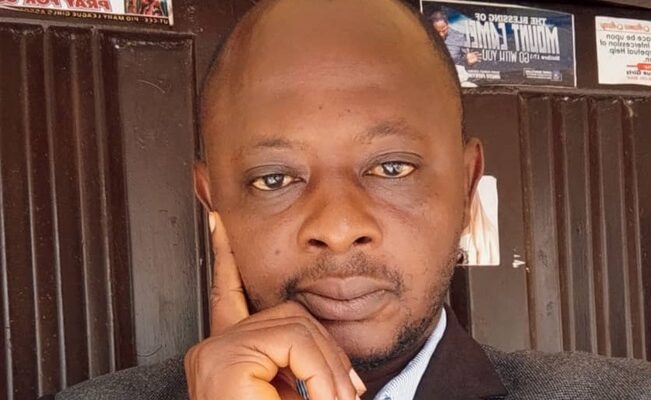
– Inah Boniface Ocholi writes from Ayah – Igalamela/Odolu LGA, Kogi state.
08152094428 (SMS Only)