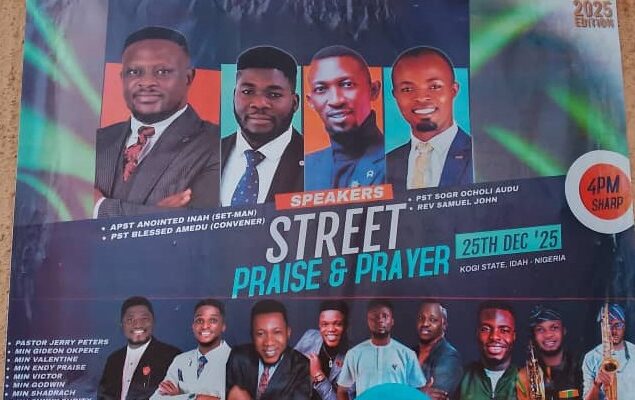

Street Praise and Prayers did not begin as spectacle; it began as defiance. More than a decade ago, when sanctuaries felt too insulated from the anguish of ordinary people, faith leaders like Apostle Anointed Inah and friends took worship to the asphalt. They carried prayers into traffic-clogged junctions, praise into dust-filled junctions, markets, and hope into places long abandoned by power and policy. What started as a modest act of spiritual protest has hardened into a movement. I mean one that insists faith must be seen, heard, and felt where life is hardest.
In 2025, the movement returns with sharpened resolve. Street Praise and Prayers is no longer a fringe gathering of the fervent; it is a public reckoning. Under the convener, Pastor Blessed Amedu, and with Apostle Anointed Inah, the Setman, journeying all the way from Ghana, the streets again become pulpits. Their presence signals a cross-border theology of urgency. That is, one that rejects silence, timidity, and comfort-zone Christianity. This is worship stripped of ceremony and soaked in consequence.
The speakers, Pastor SOGR Ocholi Audu and Reverend Samuel John, represent a new clerical temper: unpolished, uncompromising, and unwilling to spiritualise suffering away. Their message is blunt; praise is not an escape from reality; it is confrontation with it. One of the most earnest and piercing prayers offered was directed at Nigeria’s youth: a solemn call for a return to Jesus Christ and a decisive break from the unholy acts of internet fraud, popularly known as Yahoo Yahoo and blood money rituals which is killing the youths. It was a prayer laced with both grief and expectation, confronting a generation ensnared by fast money and moral erosion, and urging repentance, purpose, and restored dignity.

What makes Street Praise and Prayers unsettling to critics is precisely what gives it power. It collapses the artificial wall between faith and public life. It refuses to ask permission from cynicism. In occupying the streets, it exposes a deeper truth: that religion, for millions, is not a private hobby but a survival language. The movement thrives because it speaks to hunger, fear, injustice, and moral decay in the same breath, daring society to confront what it has normalised.
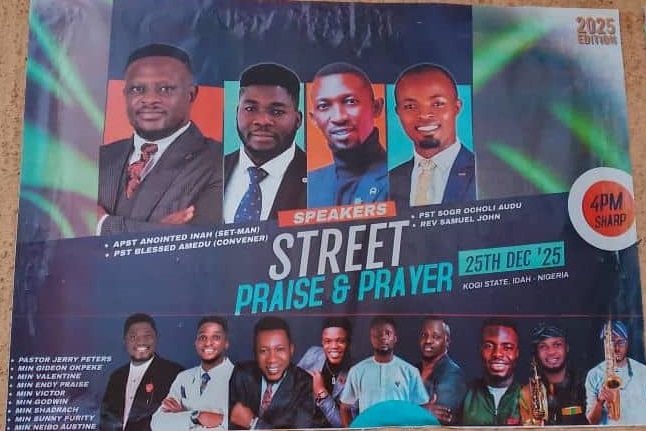
After more than ten years, Street Praise and Prayers has matured from an event into a statement. It declares that faith will not hide indoors while societies fracture outside. It insists that prayer belongs where pain is loudest and where conscience has grown quiet. In 2025, as voices rise again from the streets of Idah the traditional seat of Igala Kingdom, one message rings unmistakably clear: worship that does not challenge lives, reform character, and touch the ground is no longer enough.
– Inah Boniface Ocholi writes from Ayah – Igalamela/Odolu LGA, Kogi state.
08152094428 (SMS Only)