
Nigeria’s electoral politics has long been constrained by a narrow calculus: numbers over norms, loyalty over competence, proximity over performance. Nowhere is this tension more evident than in debates around representation, where the question of who often overwhelms the more consequential question of how public office is exercised and to what end. As Kogi East begins to orient itself toward the 2027 electoral horizon, the region confronts a familiar but unresolved dilemma—whether to repeat inherited patterns or to recalibrate the standards by which representation is assessed.
Kogi East is not short of political history, nor is it lacking in human capital. What it has consistently lacked is representation that converts presence into influence and aspiration into policy traction. This is not a moral indictment of individuals; it is a structural observation grounded in outcomes. Developmental stagnation rarely results from the absence of representation in form. More often, it reflects the absence of representation in substance.
The Senate, by constitutional design, is not a ceremonial institution. It is a space for lawmaking, appropriation scrutiny, and oversight—functions that demand intellectual discipline, procedural mastery, and strategic coalition-building. Yet public discourse too often reduces senatorial relevance to media visibility or executive alignment. This reduction has proved costly, particularly for regions whose interests require sustained advocacy rather than episodic attention.
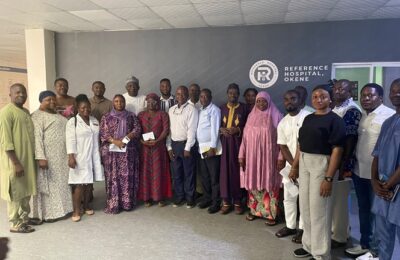
It is against this backdrop that the emergence of QS Aminu Abubakar Suleiman into public discourse warrants serious attention. His relevance lies not in personality or ambition, but in what his candidacy represents: an invitation to interrogate standards. The question is not whether new entrants automatically perform better, but whether they compel the political system to confront its own complacencies.
At a time when cost inflation, abandoned projects, and procurement opacity have become recurring features of Nigeria’s public sector, the quality of legislative oversight acquires renewed importance. Effective representation increasingly depends on familiarity with project valuation, procurement processes, contractual accountability, and dispute resolution frameworks. In this context, technocratic exposure—particularly in construction economics, public procurement, and arbitration—has direct legislative relevance. Such backgrounds do not confer automatic virtue, but they do shift the conversation from patronage to process, and from access to accountability.
Representation is ultimately a function of capacity and orientation. Capacity speaks to competence—professional discipline, analytical rigor, and the ability to engage complex policy environments. Orientation speaks to intent—whether public office is approached as stewardship or entitlement, as responsibility or reward. Where these two elements align, representation acquires depth. Where they diverge, politics devolves into spectacle.
Kogi East’s challenges—ranging from infrastructure deficits and youth unemployment to educational gaps and weak institutional presence—are well documented. What receives less scrutiny is the role of legislative effectiveness in mediating these outcomes. Regions that succeed within Nigeria’s federal framework do so not because they are louder, but because their representatives understand how to translate local needs into national priorities through committee work, budget negotiations, and sustained oversight.
This is where the conversation must mature. Electoral politics cannot remain an exercise in rotation without reflection. Zoning may address questions of inclusion, but it does not resolve questions of quality. Identity may mobilise votes, but it does not draft legislation. What bridges the gap between aspiration and outcome is seriousness—of ideas, of preparation, and of engagement.
The electorate, therefore, occupies a pivotal position. Democracy does not demand blind loyalty; it demands discernment. The task before Kogi East is not to anoint personalities prematurely, but to insist on competence, restraint, and legislative seriousness as the minimum threshold for public office. This insistence is itself a form of political participation—and arguably the most consequential one.
As 2027 approaches, the true test for Kogi East will not be who ultimately prevails at the polls, but whether the region uses the moment to reset its expectations of representation. Politics, at its best, is not about occupancy of office but about the quality of outcomes that flow from it.
Kogi East can choose differently. It can demand representation that treats public office as duty, not entitlement; as work, not performance. The opportunity is present. Whether it is seized will depend not on slogans or sentiment, but on a collective willingness to privilege standards over shortcuts and substance over familiarity.
— Yusuf M.A., PhD
Political Analyst | Governance & Public Policy Researcher
Abuja, Nigeria