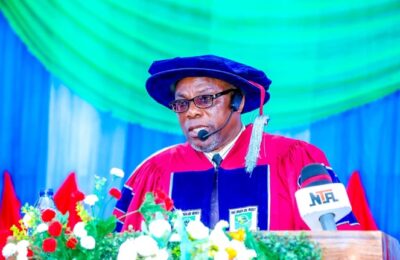

The recent attempt to stir controversy over the appointment of Prof. Gbenga Ibileye as Vice Chancellor of the Federal University Lokoja is fundamentally misplaced and risks doing serious damage to the principles of merit, fairness, and institutional autonomy it purports to defend. What should be a sober, evidence-based discussion about leadership and competence has instead been reduced to ethnic arithmetic and speculative insinuations.
At the heart of the controversy is the claim that Prof. Ibileye should be disqualified – or at least viewed with suspicion – because he shares a village and sub-ethnic identity with the outgoing Vice Chancellor, Prof. Olayemi Akinwumi. This line of argument is deeply flawed. Vice-Chancellorship is not a hereditary office, nor is it allocated through rotational zoning. It is a competitive academic appointment governed by established procedures, including advertisement, shortlisting, interviews, and final selection by the Governing Council. Shared origin, in itself, is neither evidence of impropriety nor proof of entitlement.
Equally troubling is the suggestion that merit and fairness are being eroded without any credible demonstration that Prof. Ibileye lacks the academic credentials, administrative experience, or leadership capacity required for the role. Allegations of patronage within a so-called “Yoruba political network” are speculative at best and inflammatory at worst. They substitute suspicion for facts and risk dragging an academic process into the murky terrain of ethnic politics.

The repeated invocation of the Federal Character principle in this debate deserves closer scrutiny. Federal Character was conceived to prevent the systemic exclusion of groups from national opportunities, not to operate as an ethnic quota system that disqualifies competent individuals by default. Applying it mechanically to Vice-Chancellorship appointments – without regard to merit – undermines university autonomy and lowers the standards of academic leadership. A federal university best serves national unity not by ethnic balancing, but by excellence, credibility, and effective governance.
Calls for transparency in the selection process are both legitimate and necessary. However, transparency does not mean pre-judging outcomes or insisting that only candidates from “different ethnic backgrounds” are acceptable. Such a position merely replaces one form of perceived injustice with another. True transparency ensures that all qualified candidates compete on equal footing and that the best candidate emerges through due process.
It is also misleading to frame the issue as one of sensitivity to minorities. No group is empowered by the exclusion of qualified candidates, just as no group is diminished by fair competition. Nigeria’s universities will not become more inclusive by institutionalizing suspicion or by treating competence as a liability when it coincides with geography or ethnicity.
The Vice-Chancellorship is indeed not a political reward, but neither should it become a symbolic office sacrificed to public sentiment. Universities are centers of knowledge, innovation, and national development. Their leadership must be determined by who is best equipped to strengthen academic standards, improve governance, attract funding, and enhance global competitiveness.
Ultimately, the real danger lies in normalizing the idea that origin should override qualification. If allowed to stand, this logic would discourage excellence, politicize university governance, and erode confidence in academic institutions. Nigeria must choose whether its universities will be driven by merit and due process or by suspicion and ethnic calculation.
The controversy over Prof. Ibileye’s appointment, therefore, says less about any alleged injustice and more about the need for restraint, fairness, and intellectual honesty in public discourse. The Governing Council’s decision should be respected without undue pressure, guided by established procedures and the overriding interest of the university and the nation.
– Ayo Markson wrote from Kaduna.