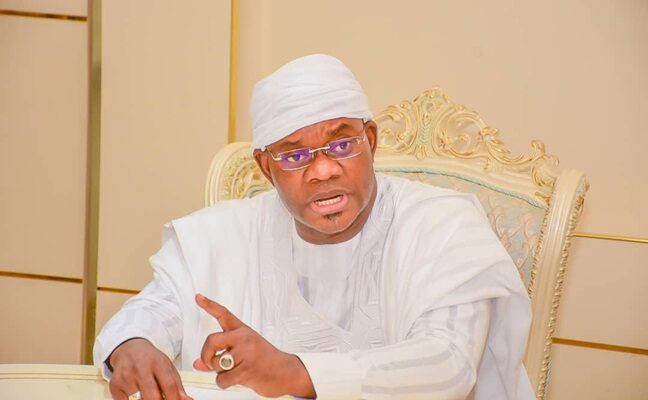

In the politics of Kogi State today, we talk about freedom, we talk about liberation, and we talk about a society where the sons of nobody can rise and become what the old order swore they would never become. But we often forget the man who fought a kind of fight that even people born into political families could not win. A man who sacrificed his comfort and interest for the liberation of kogites! There is a question that keeps coming back to my mind: when will Alhaji Yahaya Bello, CON, sit down and tell the real story of his journey? Too many people are now telling their own versions of his story, leaving out the parts that made many of us believe again.
Before Yahaya Bello, power in Kogi Central was reserved for a select few. It was held by families with long political histories, handed down like a birthright, and guarded like a private inheritance. Many believed leadership was for a certain class, a certain clan, a certain background. Then came a young man who did not fit the story they were used to.
Bello did not come from a political dynasty. He had no ancestral claim to power. He had no “family seat” to fall back on. What he had was belief, courage, and an uncommon ability to confront a system that had already decided who should win and who should remain behind the fence. His rise was a fight against old structures, old expectations, and old limits. It was the fight that many who came before him, even with all their advantages, could not win. And that is why his emergence changed the political DNA of Kogi Central forever.

He became that sacred stick that clears the grass so others can pass. He became the light that showed the younger generation that leadership was not a birthright but a possibility. He became a symbol, not because he was perfect, but because he was the first to break the door open. That is the real history.
Recently, when Senator Natasha Akpoti-Uduaghan celebrated her 46th birthday and built houses for some of her aides, people praised the gesture. It was a kind act, and it deserved appreciation. But, as usual, the media space turned it into something else. Before we knew it, people began dragging former senators and even current office holders into unnecessary comparisons. Then came the strangest part: comparing her gesture with the legacy of former Governor Yahaya Bello. How did we get here? How did a few houses suddenly become the measuring stick for years of deep human investment?
We must be careful not to reduce serious legacies to social media excitement. Trends come and go, but the foundation of a new political culture remains.
No individual leader in Kogi State has invested more in the all-round development of young Kogites. He opened doors that were tightly shut before him. And once those young people entered, their communities entered with them. Some became directors, some became aides, some became advisers, some became chief executives, and some became recognised voices in their areas. Their lives changed, and the people around them grew with them. That is the kind of development that does not fade with time.
One interesting thing about Yahaya Bello’s legacy is that many of the people he lifted prefer to stay silent about it. When I reached out to some of the “GYB generals” to seek permission to mention their names and the people they helped, all of them refused. They said their stories were not for this kind of space. They said their lives had grown far beyond public validation.” One of them said: “I respect people’s privacy and dignity! My silence is to boost their confidence to own the gesture and do the same to others.” And honestly, I understood them.
But even in that silence, I feel compelled to tell the story of someone whose name I will not mention yet, because the person’s humility does not allow it. Bello gave this individual a rare chance to serve, and the person has been doing wonders quietly behind the scenes. It is safe to say the individual’s work has touched every part of the State, even without speaking for themselves. I know at least three members of this person’s staff who now have their own homes in Lokoja because of that support. Who does that for a civil servant? Who invests in their team like that without cameras, without noise, without seeking praise?
This is what happens when a leader builds people who go on to build others. The chain continues. The impact spreads. The legacy multiplies without anyone shouting about it. When he lifted one person, that person lifted five more, and those five are lifting others today. You cannot count the houses built under such a structure. You can only count the lives changed.
There is a part of this conversation that many people avoid, either out of convenience or selective memory. In the good old days, Bello quietly funded foreign scholarships for certain individuals, sending the opportunities through Natasha’s hands. She introduced them, asked, and delivered the opportunities to the young people, who then got the chance to study, grow, and build a better life. These individuals are probably doing well today, and it is because of Yahaya Bello, who gave them life through her. This is the same man now being compared to the building of a few houses.
The truth is, when you build people, you plant seeds, and seeds continue to grow long after the planter has stepped aside. This is exactly what is happening with the legacy of Yahaya Bello across Kogi Central and beyond. The young men and women he lifted are still rising. They are still building. They are still leading. And they are still changing lives in their quiet, steady ways.
Today, homes are being built not because someone wants to impress social media, but because the people Bello empowered now have the capacity to empower others. Jobs are being secured because someone he once lifted now has the authority to lift another. Families are finding stability because one opportunity given years ago has matured into a foundation for many more. This is how real leadership works: you light one candle, and that candle lights many others.
The distance between their impact is wide, and it is not because one person is bad and the other is perfect, but because their areas of influence are completely different in size, depth, and purpose. What Senator Natasha did for her aides is good. It is kind. But placing that gesture beside the legacy of Yahaya Bello is like comparing a river to the ocean. Both are water, but not the same in depth, reach, or strength.
Bello changed the entire political landscape of Kogi State for the Ebira people. He broke invisible fences that held young people back for decades. He created a culture where ordinary young men and women could dream of leadership. You cannot place this kind of foundational change side by side with the building of houses. This comparison falls flat and should not have started in the first place.
It is unfair. It is inaccurate. It is a disservice to a history that many lived through and witnessed first-hand.
The difference between the impact of both individuals is like heaven and earth. Their stories are not similar, their sacrifices are not equal, and their impacts are not on the same table. Trying to merge them only confuses the people and weakens the truth. We must protect the truth of what Yahaya Bello did for Kogi Central.
History should not be rewritten out of excitement. It should be protected with honesty.
– Abdul Mohammed Lawal wrote from Kogi state.