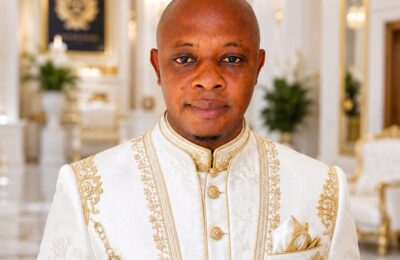
“Good morning fellow compatriots. Speaking negatively about our land wouldn’t take us anywhere. I suggest we stop social media propaganda and focus on bringing development closer to our people. No man is an island. United we stand. Out of 21 Local Government Chairmen, we have 9. I suggest we think positive, dream positive, and collaborate positively. The focus should be apolitical. Let’s drop party lines and work inclusively for the progress of our land.” – Great
I have read these words with admiration, and I acknowledge the sincerity beneath them. Indeed, unity is sacred, and positive collaboration is the lifeblood of progress. But truth—however bitter—is not propaganda. Nations are not healed by silence; they are restored by diagnosis. A physician who refuses to name a disease cannot cure it.
Kogi East’s ailment is not a lack of positivity; it is a lack of accountability. The region has mastered the art of smiling through dysfunction—of calling decay “peace” and calling truth “negativity.” What I have written is not to demean our homeland but to awaken it from its narcotic slumber. Development in Igala Kingdom does not begin with denial. It begins with the courage to confront the rot that has weakened our political spine.
When a man says, “Don’t speak negatively,” he must ask: What defines negativity? Is it criticism, or corruption? Is it the one who speaks, or the one who steals? Silence in the face of moral decay is not patriotism; it is complicity. History has shown that nations rise not through hollow optimism but through painful honesty. South Africa did not heal until it confronted apartheid. America did not reform until it faced its racial sins. Likewise, Kogi East cannot rise until it confronts its self-inflicted wounds—political greed, ethnic rivalry, and the myth of messianic deliverers.

To say “no man is an island” is to affirm interdependence, not indifference. Collaboration is not the absence of critique; it is its refinement. Constructive criticism is a form of love—the kind that disciplines rather than flatters. Those who rebuke the land do so not because they hate it, but because they cannot watch it perish in polite silence. The truth is that Kogi East’s politics is haunted by the ghosts of unaccountable power. Our elites are disunited, and same watching strangers seating in positions of influence yet build no intellectual or infrastructural legacy. We boast of “9 chairmen out of 21,” but numbers do not equal impact. Representation without reform is just arithmetic arrogance.
Our forefathers did not dream of a people afraid of truth. The Igala wisdom says, “The masquerade that refuses to dance well must hear the drumming louder.” If we cannot name what is wrong, we cannot fix it. Speaking truth is not negativity; it is moral surgery. It may hurt at first, but it heals with time.
The call to “be apolitical” sounds noble, but it is a mirage. Development cannot exist outside politics; it must be rooted in political will. Roads are not built by prayers alone; hospitals do not emerge from slogans; education does not thrive on wishful thinking. Politics determines policy, and policy determines progress. The problem is not that we are too political—it is that we are not political enough in the right way. We follow parties like flocks but never question their shepherds. We confuse partisanship with patriotism and mistake silence for peace.
I share the commentator’s desire for unity. But unity built on silence is like a bridge made of cobwebs—it collapses under the weight of truth. Real unity is forged through honest dialogue, not denial. If we must work inclusively, then let inclusion mean intellectual accountability, not collective amnesia.
The Messiah Syndrome we spoke of earlier thrives precisely because of this culture of “don’t talk too much.” It is the breeding ground for impunity. Every time we choose silence over scrutiny, we baptize mediocrity as leadership. Every time we call exposure “negativity,” we protect the same system that exploits us.
Let us, therefore, dream positively—but let our dreams be informed by facts, not fantasies. Let us collaborate positively—but let our collaboration be grounded in truth, not in fear of discomfort. The region does not need empty optimism; it needs strategic realism. It needs leaders who will welcome criticism as a compass, not as a curse.
Our love for Kogi East must be courageous. Love that cannot tell the truth is not love—it is flattery. Development will only come when we have the audacity to say, “This is wrong, and it must change.” Only then can we rebuild our institutions, reclaim our dignity, and restore the Eastern pride.
Kogi East must move from silence to substance, from applause to accountability, from illusion to institution. We cannot heal by pretending the wound does not exist. We can only heal by cleaning it—even if it stings.
– Inah Boniface Ocholi writes from Ayah – Igalamela/Odolu LGA, Kogi state.
08152094428 (SMS Only)